Sunday, 8 January 2012

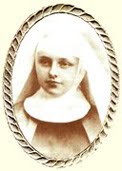
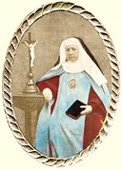
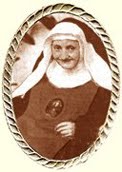
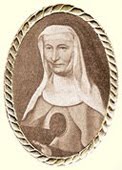
Mother Marie-Philomena of the Divine Providence, O.SS.R. Superior of the Monastery of Bruges (1811-1878)

Chapter IV. Death of Mother Marie-Philomena.
Homage rendered to her memory

We continue with Mother Marie-Aloyse’s account:

“Our good Mother,” she says, “for some time had been having a presentiment of her approaching death. During that summer she said one day: “I believe my death is near, as I always feared that moment my whole life long, but now I desire it so much! My fears have gone, and I am thirsting to go and see the good Jesus! Oh, yes,” she continued, putting her hands together and looking up to heaven, “I want to see Him so much. I might not say much about it, but I love my good Jesus so much. Yes, I love Him with my whole heart.”

Mother Marie-Philomena’s health had already altered considerably. Our Mother was in a lot of pain and was suffering greatly. On the day of the Immaculate Conception (1878), she took communion and assisted at the holy mass and then retired to her room. Shortly afterwards she began vomiting. The doctor arrived about four o’clock in the afternoon and saw nothing serious in her state. But he had scarcely left when she started having a stroke. The doctor was recalled and ordered the last sacraments to be administered to the patient without delay. We had only enough time to transport our dear Mother to the infirmary, and the Rev. Canon Minne, our ordinary confessor, gave her Extreme Unction. The dear soul had lost her ability to speak, and we did not even know if she still retained consciousness. But what consoled us and edified us was hearing her murmuring the Ave Maria continually. She did this all night long, without stopping for a moment, and then we saw the proof of the words of our venerated Father Passerat that she loved to repeat to us: “If you contract the holy habit of always praying, you will do it even at the hour of your death, even without knowing it.” Her consciousness came back to her bit by bit, and our good Mother asked for the Very Rev. Father Kockerols, our extraordinary confessor, to be called urgently. He soon arrived, and she was very consoled by his presence. She made her confession and received Holy Communion. It was a touching spectacle to see this good Mother still trying to recite some part of her office. She never complained, nor asked for any comfort, and when she was asked if she felt all right, her reply was always: “Yes, I’m all right.” – or “I’m very well.” She said several times that she pardoned with all her heart all those who had caused her grief during her life, and her calm was so great that it could have been said that she was already enjoying heaven. – “You are suffering a great deal, my good Mother”, the Very Rev. Father Kockerols said to her. “Our Lord is sending you some very great sorrows.” - “Yes,” she replied, “but also some very great consolations.”

She assured the community that she would not forget them in heaven, recommended them several times to the Very Rev. Father Kockerols, and thanked him with a touching effusion for everything he had done for her. The Reverend Father, moved to tears, thanked her in his turn for what she had done for the Congregation. He assured her of everyone’s prayers, adding that, from now on, they would be interceding for her in all the houses in Belgium.

“Our dear Mother also had the consolation of receiving the benediction of Mons. Faict, the Bishop of Bruges, who esteemed her greatly, and who himself made haste to come to her to be informed of her condition as soon as he learnt of the painful blow we had received. On Thursday 12th December, in the evening, the Reverend Father Kockerols came once more to confess her, and then the Sisters went to receive her last blessing. The good Mother continually recited the Ave Maria, holding her Rosary in her hands, and from time to time making an effort to put it round her neck. Someone did this for her and she became calm. The dear soul was sinking visibly. At about eleven o’clock, the Rev. Father Kockerols recited the prayers of the dying, and on Friday 13th December 1878, at one o’clock in the morning, Mother Marie-Philomena peacefully rendered her beautiful soul into the hands of Him for whom she had worked so hard and suffered so much.

“The grief of the Community could not be described. We lost in her the best of Superiors, the most tender of Mothers, the friend and confident of us all. Each one of us hastened to pay our debt of gratitude to her by praying for her, and by promising to follow her counsels and examples.

“Mons. the Bishop wished to honour her funeral by his presence, to show the great esteem he had for our much beloved Mother. The family of the dear departed attended also, and, a remarkable thing, all the officers then in service in Bruges wished to pay our mother a tribute that no nun had ever received, so they all came to her funeral, wishing to demonstrate to M. the General of Savoy, the august brother of the deceased, that they too knew how to appreciate the virtues of the beloved sister whom he was mourning.”

To this touching biography that we have just read, we add some pious tributes emanating from men and women who knew Mother Marie-Philomena well.

In the first place we mention the funeral notice composed by the Very Rev. Father Kockerols:
J. M. J. A.

Do not forget the teachings of your Mother (Prov. 1:8).

She was a true daughter of Saint Alphonsus. She drummed into us unceasingly through her words and her examples the true spirit of our holy Founder:

The spirit of faith, which makes us live a supernatural and divine life here below.

The spirit of prayer, which maintains our souls in continual communication with God.

The spirit of humility and simplicity, the distinctive characteristic of our holy Founder and his true disciples.

The spirit of sacrifice and abnegation, which produces forgetfulness of self and the most entire devotion to the interests of Jesus.

The spirit of love, ardent love for Our Lord; a tender love for Mary; a love full of zeal for the Church and souls, especially for the most abandoned souls.

The spirit of submission in everything to the divine will. It will make us repeat on every occasion the sacred words that our venerated Superior and much beloved Mother repeated so often during her life and at her death:
Fiat voluntas tua!
May Thy will be done!

A letter by Rev. Father Inghels, dated 3rd January 1879, and addressed to Mother Marie-Aloyse, renders in its turn, in expressive terms, a beautiful homage to the virtues of the deceased:

“We have placed our vows for the new year for our good Sisters of Bruges into the Manger of the Child Jesus. May the Convent in Saint Catherine Street always remain what it has been so far, a joyous vestibule of Paradise! You are there, happy spouses of Jesus Christ, unceasingly praising your well-beloved Saviour, counting no longer for anything from the world that you have left, rejoicing already in the charity that brings you something of the ineffable bliss that awaits you. From time to time, the Angel of deliverance comes to say: “Come, Bride of Christ!” And then, for the happy elect, Paradise opens, and she enters into the eternal beatitude, and receives the crown that the Lord has prepared for her. Oh, undoubtedly, my dear Sister, for those who must still wait in the vestibule, the separation is painful, but what a great consolation to be able to say to yourself: ‘She is happy, and we, sometime later, will go to rejoin her!’

“You can say this, my good Sister, every time your divine Spouse invites a member of your happy community, but can you now not add that your good Mother Marie-Philomena has had the good fortune to be invited? Oh, how beautiful must her crown be! Has she not served the divine Providence as a docile instrument to form the sanctity of a huge number of souls? Do you not owe to her the fervour that reigns amongst you? Did she not bear her name well, and was she not truly a most adorable Providence for each one of you? And not content to take care of you, what did she not do for those whom Providence has brought into the vestibule? Ah, if the grilles of your convent could only speak! What acts of charity practised by Mother Philomena would be revealed! How fitting it was to choose as the text on her mortuary card the words of Saint Augustine: “Pious towards God, affectionate and tender towards her own, benevolent towards all those who approached her”, and the word of Ecclesiastes: “She loved God and mankind and her memory is a blessed one.”

“This is so true of our good Mother Marie-Philomena. After such a life, it is not astonishing that her end was so beautiful.”

Let us now listen to some pious Redemptoristines who knew their venerated Mother well:

“Our dear Mother Marie-Philomena,” said one of them, “always appeared to me as a holy Superior whose power and meekness made her government just like what our Father Saint Alphonsus describes about the perfect Superior. She had a great devotion to the Divine Office, which she accompanied with so much devotion. She was always ready to console her daughters, and even the least of them had recourse to her with confidence.”

Another one writes: “I remember our good Reverend Mother as always sweet and smiling. You could never spend time with her (even if you were burdened or were not feeling well) without feeling yourself changed. Whatever it was regarding her, everything disappeared and changed in front of her kindliness, as if an angel suddenly appearing chased away all the demons. She helped the souls of her children pass through the thorns of great trials without being torn by them. She sometimes told me at the beginning: “Do not be one of those religious who must be handled with gloves on.”

Finally, a third witness to the virtues of this good Mother gives us a portrait drawn of the deceased in the following lines:

“As for our much beloved Mother Marie-Philomena, who received me into the community of Bruges, what I particularly admired in her, from the very first day I had the pleasure of meeting her, was a supernatural quality of soul which was never shaken even in the midst of the greatest pains and difficulties. One day when I expressed my admiration to her on the subject of her imperturbable patience, she replied: “My dear child, if the good God wants something or permits it, why would we wish otherwise?”

The charm that grace gave to her energy attracted all hearts to her so she could bring them to God. I have in my hands some lines written by this venerated Mother. Here is a copy of them, in case they can be of use.

“You have asked me, my dear little Sister M., for some lines of consolation: here is my reply. Before all, dear child, I wish you to have courage. Even well before the invention of the railway, Saint Teresa said that with courage you could go a hundred leagues an hour. Courage is therefore the electric telegraph of the spiritual life. And why go on foot or by a postal van when we have the railway or the telegraph at our disposition?

“I see that you still have a trace left of your ancient infirmity: discouragement. Mister Darkness is trying to make use of it, so send him packing. For the rest, we must never be discouraged or dismayed when we see ourselves still imperfect. We cannot become a saint in one day, and God is pleased to leave us a feeble and vulnerable side so that we can constantly be humbled and feel the enormous need that we have of Him. In your temptations, never think of the temptation, but of Jesus Christ and Mary; and in general, when your spirit wishes to dream, reflect and consider, fasten your glance with good humour on the adorable figure of Jesus Christ who is in you, and His holy Mother who is beside you. There you will find what you should dream of for all eternity.”

This necrology is translated from Fleurs de l'Institut des Rédemptoristines by Mr John R. Bradbury. The copyright of this translation is the property of the Redemptoristine Nuns of Maitland, Australia. The integral version of the translated book will be posted here as the necrologies appear.

Sunday, 11 December 2011

Mother Marie-Philomena of the Divine Providence, O.SS.R. Superior of the Monastery of Bruges (1811-1878)

Chapter III. Letters by Rev. Father Mauron to Mother Marie-Philomena.

The beautiful pages that we have just read will be happily completed by some extracts from the letters addressed to Mother Marie-Philomena by Rev. Father Mauron, the Rector Major of the Congregation of the Most Holy Redeemer. In them we will see how this good Mother was profoundly esteemed by the holy priest whom we have mentioned.

“Very Reverend Mother,” he wrote to her on 13th January 1863, “I have been touched by the prayers that you never cease to offer for me, and in particular the communion that your community offered me on my feast day. I thank you also, in a special manner, for the beautiful Infant Jesus that you have had the great kindness to send me. It was passed on to me by Mr. de Splentere last Saturday, on the eve of the Finding of Jesus in the Temple. On the day of my feast, I had it with me in recreation. It is useless for me to tell you that everyone admired this beautiful piece of work, both the little Child, so adorable and so gracious, and the cradle so finely worked. To give it honour, the Community spent the recreation chanting some beautiful canticles in its presence. So you can see from this, my Reverend Mother, how much your present gave us pleasure.

“But in return, what can I offer you? – Since the adorable little Child Jesus is so much loved in your community, I would not be able to wish you anything more precious that the full, perfect and constant possession of this divine Saviour. For there is nothing more beautiful on this earth than a religious community in which Jesus Christ lives with His spirit of simplicity, humility and ardent charity, in which you both think, live and breathe only for Jesus Christ; a community in which, finally, Jesus is the centre, the link, the soul and the life! – May the Immaculate Virgin Mary and blessed Father, Saint Alphonsus, whom you love and venerate so much, grant you, in all its fullness, the spirit of Jesus Christ! For as you know, loving Our Lord fully and making Him known to others was the insatiable desire of the heart of Saint Alphonsus, and such must therefore also be the first preoccupation of each one of his children.

“This is why I am happy to know that you never cease to address fervent prayers to Our Lord for the good success of the missions and works of the Congregation. So continue to storm our divine Saviour. Through your prayers you will rejoice the heart of God and the heart of Saint Alphonsus, and you will contribute in an efficacious manner to the salvation of souls.”

On 15th January 1866, the Rev. Father Mauron wrote:
“I have been especially touched by the recommendation made to these two saintly ladies [2] who have gone to receive their reward in heaven, to pray from up there for me and for the whole Congregation. The number of his children in heaven continues to grow, and there also the number of intercessors with Our Lord in favour of the family of Saint Alphonsus. All of this is very consoling, especially since I have received from the mouth of Mons the Bishop of Bruges the confirmation of what I have already learnt from elsewhere, that regular observance and a good spirit continue to flourish in your Monastery.”

Regarding an image of the Ven. Father Hofbauer [3],
Father Mauron adds:
“I have offered up my prayers that one day we will also be able to introduce the cause of some holy Redemptoristine, and the best means of arriving at such a desirable result is for you to become adept in the precious counsels that Saint Alphonsus left us as his testament to the religious of his Congregation of the Most Holy Redeemer. These forty four counsels truly contain all the essence of the religious perfection of a true Redemptoristine, and in practising them faithfully, a daughter of Saint Alphonsus will certainly merit being venerated one day on the altars.”

Another time, he enlivens his zeal: “I am persuaded”, he wrote on 2nd January 1867, “that you should pray as much as possible for the needs of the holy Church and for its venerable chief on earth, Our Holy Father Pius IX. It is a duty for all the children of the holy Church in the sad times that it is passing through, but most especially for all those who, in their religious life, draw must often at the fountain of graces of which it is the repository.”

Rev. Father Mauron recommends to her the same interests the following year, and he brings her up to date with an important matter. “You would perhaps have learnt,” he tells her, “that the Holy See has favourably received our request to see Saint Alphonsus solemnly placed among the number of the Doctors of the Holy Church. The cause has been officially introduced and is progressing favourably. I recommend it to your prayers, as well as that of the beatification of the Ven. Father Clement Hofbauer.”

In this year of 1868, death claimed four victims in the Monastery of Bruges. [4] Father Mauron consoles the good Superior in these touching lines: “During the night of Christmas that you have had the good fortune to spend at the foot of the Manger, I am sure that the divine Child will have happily received all your supplications. You can be even more sure of seeing them heard than you can believe that four of your good companions have had the good fortune of spending this feast in Paradise, and, on this occasion, they will certainly not have forgotten you. Continue, my Reverend Mother, to recommend to Our Lord and to our dear Lady of Perpetual Succour the present and forthcoming needs of the Congregation. Certainly the future is a sombre one, and God alone knows if some of the trials with which Providence has just struck our flourishing houses in Spain is not reserved here for us too.”

On 23rd June 1874, Father Mauron stretched out his hands to Mother Marie-Philomena on behalf of the Redemptoristines of Vibonati, in the Diocese of Policastro (Kingdom of Naples), deprived of their property by the Italian government. Three weeks later he wrote back:

“I have recently received your good letter of 1st July, enclosing two banknotes of 100 francs each, which your charity offers as alms for your poor fellow Sisters of Vibonati, so worthy in every respect of commiseration. I sent this money on to them straight away, and the Superior, Sister Maria Raphael, has just let me know she has received it, never ceasing in her thanksgiving in her own name and in the name of her forty Sisters, for this providential assistance. She begs me to be kind enough to express all their gratitude to you in their name, and to assure you that they will return it to you in fervent prayers for their benefactors.

“I was very happy,” he adds, “to learn that the business of your foundation at Louvain is progressing so favourably and I hope that, there like Bruges, a good spirit will reign, and the spirit of prayer and the interior life that Saint Alphonsus has inculcated so much into his Daughters. I am truly consoled, and Saint Alphonsus in heaven rejoices to see them so numerous in Belgium.”

Mother Marie-Philomena had expressed the desire that the history would be written of the first times of the Institute of the Redemptoristines. Rev. Father Mauron gave a very consoling reply. He brought her up to date with everything he had already done to bring this project to fruition one day, and ended his letter in the following manner: “I am busying myself with your history with all the more interest, as I know the fidelity and fervour with which the Redemptoristines serve and love God.” It was a beautiful eulogy for the Sisters of Bruges, but it also extended to all their fellow Sisters. So before her death, this good Mother knew that one of her most cherished desires would one day be fulfilled.

Footnotes

[2] Sisters Marie-Cécile of the Child Jesus and Marie-Alphonse of the Immaculate Conception.
[3] Beatified.
[4] They were: Sister Marie-Dominique of the Mother of God, Sister Marie-Ildephonse of the Holy Spirit, Sister Aloyse of Jesus and Mary, and Sister Marie-Paul of the Child Jesus.

This necrology is translated from Fleurs de l'Institut des Rédemptoristines by Mr John R. Bradbury. The copyright of this translation is the property of the Redemptoristine Nuns of Maitland, Australia. The integral version of the translated book will be posted here as the necrologies appear.

Sunday, 27 November 2011

Mother Marie-Philomena of the Divine Providence, O.SS.R. Superior of the Monastery of Bruges (1811-1878)

Chapter II. The offices she exercised.
– She is named Superior. – Her virtues.

Our dear Sister Marie-Philomena spent another year in the novitiate, and when she finished it, she was made Mistress of Educandes. She devoted herself completely to the young souls that Heaven entrusted to her, and in spite of her numerous occupations, she formed them most carefully in religious life. Her examples, moreover, made an even greater impression than her words, and everyone admired her exactitude, her regularity, and her great courage in bearing all the privations imposed on her by poverty. The provisional convent was nothing more in fact than an old house that let the wind and the cold in through badly-fitting windows. Everyone froze beside the fire, and the Sisters had nothing that could guarantee them against the inclemency of the weather. The food was very meagre and little suited to a health like hers. But she was happy to suffer and encouraged her educandes to bear the same privations as joyfully as she did. She often worked far into the night, sometimes to bring order into the affairs of the house and examine the accounts for the new building, and sometimes to prepare the music necessary for the chanting of the sacred office or the flowers destined to adorn the holy altar. In spite of all this, she was the first one in choir in the morning for the canonical Hours.

On 23rd June 1845, the community moved to its new Monastery. Sister Marie-Philomena was then put in charge of the novitiate, which she directed until 11th August 1851, when she became the Vicar. Her zeal for observance had always been great, but now it redoubled. The Superior, because of her health, was not able to take part in the community acts, so our dear Mother Vicar seemed to multiply herself to preside at all of them, without harm to her occupations, and when Mons. Malou, seeing the community so numerous, expressed his desire for a foundation to be made at Brussels, our dear Mother, through her rare prudence, successfully sustained and defended the interests of the house of Bruges, without harm, however, to the first swarm which was to go forth from this blessed bee-hive. The unanimous voices of the Sisters, as well as the wishes of their Bishop, then called upon her to assume the burden of the Superiority. It was an even more heavy one at this moment, considering that with the financial concerns, the building of the convent, and the difficulties of a new foundation, it had never been possible to establish regular observance in all its vigour. It therefore required a rare prudence to set aside ancient customs dear to feeble souls and to moderate too great an ardour in some of the others. This is what our good Mother did. She soon managed to gain all hearts, and the holy Rule being observed with cheerfulness and fidelity, there soon reigned with it joy, fraternal union, silence, the love of mortification and prayer.

Mother Marie Philomena occupied herself actively in regulating the affairs of the Monastery, paid the debts, and by establishing order and economy everywhere, and practising holy poverty exactly, she attracted to that dear house all the divine, spiritual and temporal blessings.

It was at the price of prayers prolonged well into the night and great mortifications, that this good Mother thus obtained from Heaven everything which could contribute to the good fortune of her daughters. Always the first to give them their example, she also procured for them all their spiritual helps, which would assist them in travelling in the footsteps of our good Saviour, and she could in reality say with the Apostle: “Imitate me as I myself imitate Jesus Christ.”

Numerous vocations permitted her to found, in 1858, a house at Velp, in Holland. She led five Choir Sisters and two converse there, and after establishing the enclosure there, she returned to Bruges. In the following year, she conducted a new swarm to Ireland to begin a house in Dublin, and it was also at the cost of much suffering, great efforts and numerous sacrifices that she established this new foundation. Upon returning to Bruges, she continued to govern her community, making it continually progress in fervour and love of regularity, sparing nothing of whatever could contribute to the good of her daughters, and giving a good example in everything.

Her wisdom, her prudence and her gentle firmness gained hearts so securely for her that at each triennium, she received the votes unanimously, and she thus found herself obliged to remain in charge for the space of twenty four years, in other words, until her death. They were years full of fervour, suffering and merits for her, and good fortune and prosperity for the community.

The good God had already sent new vocations to replace those Sisters who left us for the foundations at Velp and Dublin, when a favourable occasion presented itself to establish a foundation at Louvain. Mons. Dechamps, then Archbishop of Malines, who knew and esteemed our dear Mother, joyfully granted her the necessary permissions. However, this foundation cost her a great deal of effort, as her health was already greatly altered. She conducted ten Sisters there on 25th July 1874. The good God paid her in the money with which He rewards his dearest friends – numerous crosses began to add brilliant pearls to her crown.

The living faith of our dear Mother made her see the hand of God directing every event. She was never heard to murmur or complain about whatever was causing her pain. “It is the good God who wishes it so,” she would say, “and we have to submit and wish for it also.” She had to support some great crosses – some very undiscerning people made false reports about her that brought her great humiliations and harsh reproaches from her superiors. She remained calm, persuaded that God would make the truth appear, and in fact, this is what happened, as the calumnies by which people wished to blacken her only served to increase the esteem which she already enjoyed among her superior authorities, and beginning with this moment, she was accorded an unlimited confidence, which she never abused. Some people to whom she had done some good manifested a profound ingratitude to her. Her good heart suffered greatly from it, but her living faith still let her discover the designs of God in it. She said, “The Lord has wished to purify whatever would have been too much of nature. – I would never have believed I would be paid like this for what I have done for N. and for N… It makes me suffer, but I thank Our Lord, for it is from Him that I await my recompense.”

Sometimes, however, the wounding of her heart bled more strongly. One day, when she appeared to be lost in thought, she was asked why she was so sad. She said, “I have examined myself and I am trying to work out if I have done anything to merit the reproaches and behaviour of such a person, but I can find nothing. And I wish her so much good! Yes, this detaches me from everything! How foolish we are if we do not act for God alone! If I had not done such and such a thing for Him, I would have had nothing.”

Her confidence in God always sustained her in the painful circumstances that she had to endure. From her childhood, through the misfortunes of her family and later on when she found herself at the head of her community, where almost everyone had to be formed, our dear Mother put all her trust in God. She rested on divine Providence, and her hope was not in vain. Under her wise direction, the community became a model of fervour, and the Lord poured out the most abundant blessings upon it.

Her love for God was also shown in her works; for never, in all her long religious career, did her fervour ever slacken. It was this love that inspired such ardour in her for the observance of the holy Rules and for the advancement of the souls that Jesus Christ had entrusted to her. She found her delights before the sacred tabernacle, but when her duties called her, it was her love of God that led her to leave God for God’s sake. It was the same love which caused her to love silence and solitude, which brought her to sacrifice herself and devote herself to her daughters, and impose very harsh penances upon herself for their sake. She even shortened her days by doing pious excesses of them, which she carefully kept hidden. The admission she let slip one day left her quite confused. “My God,” she said, “why did I say that? I didn’t want anyone to know about it.”

Our dear Mother was a model of charity towards her neighbour. She could not endure anyone going short. “You make me sad,” she would say, “when you wound charity; and this makes me tremble, because in afflicting the Heart of Jesus, you deprive the community of heavenly blessings.” Her joy, on the other hand, burst forth when she saw unity and charity reign. “Oh, how good this makes me feel!” she would say, “The good God will be pleased with us.” Her good heart never refused a service that she could render, and she suffered when this service was impossible for her. She was always ready to console her Sisters and help them, and she received them courteously and took care of them in their illness. So we had recourse to her with a filial confidence in our spiritual and bodily necessities, and we always found in her what we were looking for. We would always see her deprive herself, unknown to anyone and to comfort a tempted soul, of a warm and light garment that she considered was necessary for her.

She greatly loved the Divine Office, and she recited it and chanted it with such ardour and joy that she inspired the same in the Sisters, and she could not endure anyone being negligent in this holy exercise. She would say, “Just remember, we are now doing what we will be doing in all eternity.” We could see her hasten to arrive there among the first. “I assure you,” she would say, “that my greatest penance is not being able to be present in choir, and if I become feeble and incapable of assisting at the holy office, it would need God’s help for me to resign myself to it, as I do not know how I would make this great sacrifice.”

Her love for poverty made her fear everything that could damage this virtue, which had to be so dear to a daughter of Saint Alphonsus. She had nothing superfluous for her own use and she was happy when the good God permitted her to be forgotten. She complained only of the too great care that was taken of her. She never asked for anything; however, her always delicate health made her very sensitive to the changing of the seasons and to fatigue. Very often she would leave the table, having scarcely touched what was served up to her, as the feebleness of her stomach could bear scarcely any food.

In a word, this true daughter of Saint Alphonsus loved everything that our holy Founder himself loved. Her favourite devotions were devotion to the Blessed Sacrament, the Childhood and the Passion of our good Saviour; and these great mysteries were the continual object of her meditations. She had the same love for the Blessed Virgin as a child has for her mother; and she made a vow to recite the rosary daily, and she never omitted this pious exercise. She prayed a great deal for sinners. The souls in purgatory also excited her compassion. She applied to them all the indulgences that she could gain for them.

This is how our good Mother rapidly advanced in perfection, and her divine Spouse, who was pleased to see her thus united to Himself, also wished, towards the end of her life, to send her a very harsh cross, to complete her purification. She accepted it with great love and a perfect generosity.

This necrology is translated from Fleurs de l'Institut des Rédemptoristines by Mr John R. Bradbury. The copyright of this translation is the property of the Redemptoristine Nuns of Maitland, Australia. The integral version of the translated book will be posted here as the necrologies appear.
Sunday, 30 October 2011

Mother Marie-Philomena of the Divine Providence, O.SS.R. Superior of the Monastery of Bruges (1811-1878)

This biography is due to the pen of the Rev. Mother Marie-Aloyse of the Immaculate Heart of Mary, whose Life we have just read.

Chapter I. Her childhood.

Her entry into the Monastery.

This much-beloved Mother, who was truly providential for the community of Bruges, was born in Ath on 29th June 1811, and at her holy baptism she received the names of Rosalia Dieudonné [God-given] Benoîte Joseph. She was the second child of Mr. Joseph Ignatius of Savoy and Mrs. Rosalia Joseph Nève, his wife.

Heaven was lavish with its gifts for this lovely child, who was perfectly endowed on the side of nature, and soon became the object of all the predilections of her dear parents – they neglected nothing to develop the precious seeds she brought with her when she was born through the medium of a first-rate education.

She was scarcely nine years of age when she lost her father, and a great reversal of fortune followed this premature loss. Rosette (this is what they called her at home) already understood the misfortunes of her family; but her great soul and her generous heart were sensitive only to the sorrows of her beloved mother, whom she tried to console, support and sustain by her love and her tenderness, so it was not without much keenly-felt pain that she departed from her to go to Lille to finish her education. In the boarding house in which she was placed, she cultivated all the talents which were to adorn her young person. She became a perfect musician. This talent was always dear to her, because she was able to employ it to the glory of God in chanting His praises, and in playing the organ to accompany the Divine Office.

Her happy character and her good qualities soon made her sought after by a number of parties. Rosette, who did not yet understand God’s designs upon her, decided to accept the hand of a young man who was as pious and good as she was. This marriage was greatly desired by both families; however a secret foreboding told the young lady that it would never happen. In fact, at the moment when the wedding day had just been decided, her fiancé was attacked by a violent fever which carried him off in just a few days. This unexpected death caused her a terrible sorrow and detached her from the world, and when new setbacks assailed her family, she wanted to use her talents in order to console her mother. Madam the Countess of Malet welcomed her with joy to supervise the education of her only daughter. “Come to me”, she wrote, “because you will be a sister and a friend to me, and more the mother of my daughter than her governess.” Rosette soon gained the heart and trust of this virtuous lady, who loved her tenderly. In her home she was able to enjoy all the comforts which could have attached her to a soft and tranquil life, but God soon gave her to feel that He wanted her completely to Himself. Moreover, she had one of those dreams which God sometimes employs to manifest His designs to souls. Saint Philomena appeared to her calling her to her side, and it seemed to her that she was then enjoying all the joys of heaven. After that day, the world inspired in her nothing more than disgust, and she aspired with all her soul to the blessings of the religious life.

But great difficulties lay in the way of her pious design. The tenderness of her mother, who counted on her to console and support her in her old age; her attachment to her family; the affections of the pious Countess, to whom she owed so much gratitude; and finally, her health, which was extremely delicate: all this caused her a great deal of heart-searching, but grace rendered her victorious.

Our holy Institute was being founded in Belgium, and she was one of the first to be admitted into it; but, to conform herself to a desire expressed by the Rev. Mother Marie-Alphonse, she delayed her entry by several months, so as to perfect her talents as an organist. She accepted this sacrifice with a cheerful heart for the good of the community, and finally, on 18th December 1841, she entered the Monastery, provisionally established in the street of Puits-aux-Oies.

The winter was a most rigorous one, and to the cold there was also added everything that poverty could add by way of privations and sufferings in this beginning of the foundation. But nothing daunted her great courage; she had come in order to dedicate herself to a crucified Spouse; and she burned with the desire to follow in His footsteps and share in His sorrows. The Superiors soon became aware of the great treasure that the good Providence had sent them, and they made haste to ask for the necessary dispensations so that she could join the first six postulants and be able to receive the holy habit with them. On 25th February 1842, she took the veil and with it, the name of Sister Marie-Philomena of the Divine Providence. She spent the year of her novitiate with an exemplary fervour, and applied herself to practising the holy Rules with a perfect exactitude. So the day on which she was able to pronounce her vows was a most keenly desired one.

On 23rd March 1843, the first seven novices were to offer their sacrifice with all the joy of their souls, but a most sorrowful event came to sadden this wonderful day. Sister Marie Anne Joseph of the Precious Blood, who had begun her retreat in full health, became so gravely ill that she had to receive the last sacraments on 22nd March, and at the same time she pronounced her vows on her death-bed. Our dear Sister Marie-Philomena, on this occasion, gave proof of her great charity and her devotion by spending the whole time of her retreat at the bedside of her pious companion, who from time to time told her, her eyes moist with tears of gratitude: “Poor Sister, how you devote yourself to me! But when I am in heaven, I will make it up to you by praying for you.” On 23rd March, everyone left the choir chanting the Te Deum which ends the ceremony of profession, and the newly professed went to stand by the bedside of their dying Sister, who looked at them once again as if to bid them a last farewell. The Angelus rang, and the poor soul spoke the words Ecce ancilla Domini [Behold the handmaid of the Lord], then her head tilted gently to one side and she gave up her beautiful soul to God.

This necrology is translated from Fleurs de l'Institut des Rédemptoristines by Mr John R. Bradbury. The copyright of this translation is the property of the Redemptoristine Nuns of Maitland, Australia. The integral version of the translated book will be posted here as the necrologies appear.

Sunday, 23 October 2011

Mother Mary-Aloyse of the Immaculate Heart of Mary, O.SS.R. Superior of the Monastery of Bruges [2] (Brugge) 1822-1889

The Funeral Eulogy of Our Good and Holy Mother Mary-Aloyse.
By the Most Reverend Father Kockerols,
Provincial of the Province of Belgium.

My dear Sisters,
This week you are attending a very great and moving spectacle! Death has made its appearance in your Monastery and has taken from you your venerated Superior. The appearance of death is always a silent sermon. It reminds us that we are only dust and ashes, that everything passes away in this world, and that nothing is great except holiness. It teaches us the nothingness of everything, so it is a great teaching for us. The author of the Imitation says, “If you have ever seen someone die, remember that you will pass along the same way.”

But, my dear Sisters, the death of a holy soul, such as your venerated Mother was, contains a very special teaching for us. Divine Providence has willed that she was for you in some way a preparation for a retreat. I think that, after having assisted your Mother for so long with all the devotion of which I am capable, I cannot let these circumstances pass without telling you something about this dear soul.

Yes, my dear Sisters, you are indeed convinced that you have lost a treasure, a veritable treasure beyond all treasures. God, who gave this privileged soul the mission of governing you and working day and night for your sanctification, had prepared her for this mission. He had ornamented her spirit and her heart with all the gifts of nature and of grace. Everything was great in your Mother: her heart and her spirit, her charity and her intelligence. In her there was nothing small or petty. She was a superior woman, and with what a great heart and character! We can quite justly compare her to Saint Thérèse. Endowed with an upright and enlightened spirit, with a superior intelligence and a sure judgement, she had a heart which could truly say with the Apostle, St. Paul, “I will very willingly give everything I have and I will even give my own self for your souls.” A heart in which were allied the power of a man and the tenderness of a woman, as in the Mother of the Maccabees. No, I am not afraid to compare her to this mother who is more admirable than words can say. She can be compared to the strong woman of the Bible, of whom it is said, “Where shall we go to find her? We must go to the extremities of the earth.” Your good Mother, my dear Sisters, possessed the firmness without which the responsibility of Superior is harmful to her who exercises it and to those on whom it is exercised. Her guiding principle, in all her actions, was to act firmly and sweetly, - Fortiter et suaviter, - God having given her everything which could inspire respect, esteem and affection. To these gifts of nature, God added all the gifts of grace. My dear Sisters, I who have received the secrets of her heart, I am the only one, perhaps, who can tell you with how great a profusion and magnificence of them God had ornamented her beautiful soul. Yes, since her earliest childhood, God pursued her so as to make her a veritable saint. He watched over her, surrounded her with very special graces, and gave her a very admirable purity of heart, an instinctive horror of sin, a fear of even the shadow of evil, and a tender love towards her God, towards Our Lord Jesus Christ, towards the Holy Church! She herself, as humble as she was, avowed to me on her death-bed, that God had heaped His graces upon her during her whole life, and this is why she said she feared nothing at this supreme moment. Rather, she paid tribute to Him in her gratitude for so many graces received, suffering with joy for love of Him. Ah, my dear Sisters, in eternity you will see the progress that your venerated Mother made constantly in virtue, the point of perfection she attained and the numerous sanctifying and hidden graces she received.

As Superior, she was a veritable model. Her virtue shone forth above all in charity and devotion to the community. There is no-one among you who cannot testify that night and day she sacrificed herself or thought of you, forgetting her own self. And above all, what charity and affection she had for the sick!... What a concern to take care of them! She could truly say with the Apostle Paul, “Who is there among you who has suffered as I myself have suffered?” Her charity went as far as excess, as far as prodigality.

What rendered her so great in the eyes of God and in the eyes of man was her forgetfulness of self, for even in the midst of her most cruel sufferings, she was still always concerned for others. My dear Sisters, it is this forgetfulness of self which is the distinctive character of sanctity. Charity is only genuine when it is accompanied with this sublime forgetfulness of self. Who can say that she did not arrive at the supreme degree of character typical of a true religious, to this spirit of sacrifice, abnegation and devotion to one’s neighbour? But this forgetfulness of self naturally produced humility. I myself can testify to the horror she had of all pridefulness, and her humility was the distinctive sign of her love for God. And didn’t God want her to be exempt from all feelings of pride, because of this perfect abnegation which she possessed!

And patience! How much did she shine out with this in her last illness? My dear Sisters, do not think that this virtue grew all by itself in her, or all at once. You have to practise a very great patience when you are well so that you are not impatient when you are ill. But, in regard to her patience, we have never seen her like. Look at the two months when she was nailed to her bed of suffering, and what suffering! I know something about it, since God ordered me to become aware of it. She told me, “I am enduring unheard-of suffering, incredible suffering (that was her expression), impossible to bear without the special assistance of God.” And yet we all saw how that poor soul remained calm and serene. It was simply because, for all her religious life, she secretly practised patience and mortification, in submission to the will of God.

Not only this, but during her life she had personal troubles, as under that rather rough bark was hidden a great heart which felt things keenly. She keenly felt the cross of her responsibilities and the pains which one or the other of you laid on her at times. She suffered from your faults. The least relaxation or lack of fervour had a great repercussion on her soul. She feared it in almost an excessive manner, and all her efforts were designed to maintain fervour. You know very well that this maternal concern extended to other houses of the Order and she suffered greatly when she learned of anything which was to the least detriment, either to fervour, or to the Rule. And so she exercised a great influence over the other Monasteries.

This concern also extended to the whole Congregation. Some hours before her death, she also told me that she had never made any distinction between the Congregation and you, and she offered herself to God to endure His cruel sufferings for all eternity, if such was His good pleasure, for you and the Congregation. Already in the arms of death, she then exclaimed, Fiat, fiat, fiat voluntas Dei! (Let the will of God be done, be done, be done!), and never ceased to say that she was ready to give everything and even give her own self for souls. She loved the souls of poor sinners and all the souls ransomed at the price of the Blood of Jesus Christ.

And so, my dear Sisters, here are the examples given to you by your good Mother! You should all imitate her. And first of all she who will be elected to replace her and all those who have responsibility in the Community. Above all they should practice this forgetfulness of self, of which she has given such beautiful examples. This will be to their own personal profit. Sanctity does not consist of retiring into a corner and being occupied simply with yourself. It consists in sacrificing yourself for the salvation of others, just as your good Mother has taught you.

Do not desire any other place than what you have been assigned. Do not forget your Mother’s last words, her last farewells. Think of God, be all for God, occupy yourselves with nothing else but God, souls, and above all, abandoned souls, deprived of all spiritual succour in the world. If you have some responsibility in the Community, do not grumble if it displeases you, but accept it for the glory of God and for the salvation of souls. Your venerated Mother is a true model for Superiors and myself alike. I am trying to profit from it. As I have said to my colleagues, the wonderful examples I witnessed in the course of my visits to this holy invalid have done me more good than a retreat. May they not be lost on my poor soul! These examples should also be repeated in all your religious lives. But first of all, we should be intimately convinced that we can do nothing without humility, us Redemptorists and Redemptoristines above all. We must take as the basis of our own perfection that beautiful virtue of humility and simplicity. Your good Mother was so penetrated by it that she said at the end of her life, “After my death, I hope that no-one will try to pass me off as a saint, but will preach instead all my defects and faults, so that prayers will be said for my poor soul.” What an example of humility! Also remember how much she loved the Rule and practised it in every way as Saint Alphonsus would have wished. And how anxious she was to see it done also in all the other houses of the Order! She had an almost child-like obedience. And here now is a little secret which I think I can now reveal to you. She had made a vow to obey her director in everything, and in her last hour, I was able to assure her that she had never failed in any way at all to fulfil this vow which she had made for the love of God.

And how much she loved poverty. She deprived herself of everything, making simplicity reign in the house, and she unceasingly recommended it in practice.

What shall I say about her spirit of mortification? How many times have I not had to stop her! When she was already in the arms of death, she still wanted to do some small mortifications and suffer some privations. So on this point, be good imitators of your Mother, my dear Sisters. She had a supreme horror of exceptions, and she was very austere with herself, while at the same time being indulgent towards others. So let us imitate her as much as we can, so if we had to die some years ahead of time, our good God would be most happy to send some other vocations to reward our love.

And imitate your holy Mother’s recollection too. Even the most distracting occupations did not tear her away from her God. She knew that genuine piety consists of pleasing God in everything, and so her soul was in a continual union with Him. From where did she draw her virtue, her patience and her submission to the divine will? In her love for Jesus Christ she was truly able to say with Saint Paul, “My life is Jesus Christ, and death to me is a gain.” She loved the Blessed Sacrament so much! How much she longed every day, especially during her last illness, to receive it during Holy Communion! And she drew these fine virtues from meditating on the Passion of Our Lord and Mary’s sorrows. So sometimes it seems that Jesus lifted a corner of the veil for her with which He hides His divinity. She avowed to me, at the end of her life, that the graces she had received were so powerful and so strong that she was devoured by the desire to see God face to face. And it is certain that without these extraordinary graces, she would never have been able to speak of God and eternity the way that she did. For me it was a consolation to hear her words.

Yes, my dear Sisters, you have lost a real treasure! Alas, my dear Sisters, you will never see her again in choir, where she sang and recited the praises of the Lord so often and with such fervour. You will never see her again in the long corridors where she edified you by her recollected air. You will never see your dear Mother again in the refectory, which has witnessed so many mortifications. You will never see her again in that room where she so often consoled and encouraged you. You will never see her again in the recreation room where she was so good at uniting to the gravity required by her responsibilities the joy and the saintly happiness of the children of Saint Alphonsus. You will never see her again, your dear Mother, here in the corner of the Conference room where she listened with so much attention, eagerness and love to the words of God. Today you have brought her on your shoulders to the door of the enclosure, and I have had the consolation of accompanying her to her last resting-place. No, you will never see her here again, but with your eyes of faith, you will see her in heaven among all the Redemptoristine saints who have proceeded her, and among them I am certain she will shine like a bright star for all eternity. Go to her now just as you used to go to see her in her cell, tell her all your needs, and she will obtain all the spiritual graces for you that you require. She has suffered so much for you, and she promised not to forget you! Oh, my dear Sisters, do not forget your Mother’s teachings, nor the fine examples she has left you. She can say to you like the Apostle, “Imitate me as I have imitated Christ.” So let us all say, “I wish to remember unceasingly the good examples which our venerated Mother has left us, and try to imitate them. Oh, if only our own death will be the same as hers!” And so it will be, my dear Sisters, if we are good at doing what she has done, and if we are good imitators of Our Lord, for then we will see Him face to face with her in that beautiful Paradise where we shall sing of His mercies in all eternity.
Misericordias Domini in aeternum cantabo.
I shall sing of the mercies of the Lord in eternity.

This necrology is translated from Fleurs de l'Institut des Rédemptoristines by Mr John R. Bradbury. The copyright of this translation is the property of the Redemptoristine Nuns of Maitland, Australia. The integral version of the translated book will be posted here as the necrologies appear.

Sunday, 9 October 2011

Mother Mary-Aloyse of the Immaculate Heart of Mary, O.SS.R. Superior of the Monastery of Bruges [2] (Brugge) 1822-1889

Chapter XI.
The death of Mother Mary Aloyse – The Tribute paid to her Memory.

The teachings which we cited in the preceding chapter were not all known by the community. However, the Sisters greatly desired to make their last farewells to their good Mother and receive her last recommendations. The Most Rev. Father Kockerols, who was consulted in this regard, shared the same thoughts and let the invalid know that she owed her daughters this supreme satisfaction.

So on 5th December, the community assembled in Mother Mary-Aloyse’s room. And when she saw them all thus around her bed of sorrows, she could not restrain her tears.

“Pardon me,” she said forthwith, “if you see me weeping like this, my dear Sisters. It is because of the love I bear you.”

Making an effort to control herself, she continued, “Yes, it is the love that I bear you which brings me to address a few more words of farewell to you.

“Be saints, all of you, and great saints. To do this, you only have to be faithful to all the duties of your vocation, and you will be so forever if you quite forget about your own selves. Forget your own selves so as to occupy yourselves only with the glory and interests of Jesus.

“Be great in your spirit, in your heart, in your requests. When you suffer, do not be forever thinking of your pains. Try to forget them and imagine the sufferings of Our Lord instead, and then you will see that your own are nothing in comparison. Sometimes it is a little disagreeable remark which wounds us, perhaps a look, a little ambition, a little susceptibility, a tiny trifle. Forget it. It is not right to let such things turn you away from Our Lord Jesus Christ by making you worry about yourselves. Instead of wasting your time being upset, just say, “I am going to sacrifice it so as to give souls to Jesus Christ.” They are only minor pinpricks. If they make you suffer, say, “All the better, I am going to offer this up to Our Lord.” In appearance, they are nothing, they are petty trifles, but in the eyes of God, they mean a lot, they are very great. And believe me, you will be greatly rewarded at the time of death. You have to have experience of it to be able to understand it. When you spend your whole life trying to forget about yourself for the sake of Jesus Christ, at the time of your death, this good Saviour lifts a corner of the veil which still hides Him, and what delights He gives to the soul, when He lets her glimpse His marvellous beauty!”

The Reverend Mother interrupted herself for a moment to give free course to her tears. Then she continued, “Ah, my dear Sisters, I have always loved you more than you have ever been able to understand, and if sometimes I have brought sorrow to your hearts, it has only been, believe me, for love of your souls, for the sake of your great good, and to attach you to Jesus Christ alone.

“Yes, seek for just Jesus alone, and be great in your thoughts. When you go into His presence, do not go there always thinking of yourselves, or speaking about yourselves. Do not go there to ask for a long list of little things, but think of Our Lord, of His interests, for the salvation of souls. Do not go there so much to recite a whole quantity of litanies and prayers, but rather to ask for some real virtues so as to win souls for God. You will then obtain much more, and that will weigh very differently in the balance. Be great in your affections, love Our Lord well, the most holy Virgin, and Saint Alphonsus. Be always closely united to your Superiors through respect, affection and confidence, and remain just as strongly united among yourselves. Love the Congregation a great deal. Have great love for the poor. So suffer generously for Jesus Christ in both your great and small trials. Forget your own selves in order to think only of Him and of souls.”

The Reverend Mother insisted on this capital point of religious life. “My sufferings are very great,” she added, “I suffer a great deal, but I look at Jesus, I think of His Passion, His sufferings, and I force myself not to think of my own, so that I consider only His. Do not forget, my dear Sisters, that we ourselves are not the aim of our vocation: it is God and souls.” - “You will do this, won’t you?” she said, turning to those who were listening to her. “Promise me that you will forget your own selves in order to become Saints?” They all replied in a single voice, “Yes, good Mother, we promise you.” - “Oh well,” replied the invalid, “now I am tranquil and consoled. I shall never forget you and I shall bring all of you in my heart to Paradise. If you are very faithful, we shall be reunited there one day and sing together like Saint Thérèse.” - And the good Mother, gathering her strength, sang out loud: Misericordias Domini in aeternum cantabo (I shall sing the mercies of the Lord in eternity). - “I love all of you and I shall take you all with me to Paradise.”

The moving dialogue continued. Turning now to the novices and the educands, she told them, “And the novices? And the educands? Do they also promise me? Will they also be faithful?” They all replied straight away, “Yes, Reverend Mother!” - Then she said, “My children, understand the happiness of religious life. It is immense. It has, no doubt, its pains and sufferings, but God rewards us for it greatly at our death, and the sufferings of the world are also great. Be on your guard for anyone amongst you who wishes to leave, because I shall come back to retain her.” - And making allusion to their habits, she added smiling, “I would like to see all these dark little heads become white.”

Then that was all. The good Mother wanted to give her daughters a last blessing. She did it using an image of Our Lady of Perpetual Help, which she then kissed devotedly. Then the Sisters left her, bringing from that touching scene an ineffaceable memory.

However, her last days were approaching rapidly. The Most Reverend Father Kockerols, the Reverend Mother’s director, did not fail to assist her in her last moments. A short note from him has been preserved, which breathes the joyous confidence he had in the final combat: “Please tell the Reverend Mother that I have not forgotten her for a moment before God, that I bless her most cordially, that we are all praying fervently for Jesus and Mary to support her right to the end in this great and wonderful combat, that her guardian angel, if he could perspire, would sweat great drops in the effort to record her merits, that she must hold firm to obedience and patience, and that her name is written in the Book of Life. So let her be reassured. Let her keep her presence of spirit, and I shall be there to help her soul fly away to the third heaven.”

No more than Father Olivaint, the Most Rev. Father Kockerols too did not admit that one died reluctantly. A death peacefully and joyfully accepted was in fact the nature of the death of Mother Mary-Aloyse. The zealous director had prepared her for her last journey. On 17th October he administered her the last Sacraments. Some weeks passed by, with the invalid lingering constantly between life and death. Finally on 11th December, the Rev. Father Kockerols was called urgently. He arrived with enough time to address some kind words to the dying Mother and encourage her one last time. This was a supreme consolation for her. Some instants afterwards, her agony began. It was neither long nor painful. On 12th December, at 10.45 in the morning, this good Superior peacefully rendered her soul to God. A heavenly calm immediately spread over her face, and then everyone could approach her, not merely without fear, but also with an interior joy, on her funeral bed where she rested.

The funeral notice was composed by the Most Rev. Father Kockerols. We have decided to give in full:

Jesus, Mary, Joseph, Alphonsus
--------
Pray for the repose of the soul
of the Very Reverend
Mother MARY-ALOYSE
of the Immaculate Heart of Mary,
in the world Miss
Isabelle-Fulvie-Albertine Fabri,
Superior for eleven years of the Monastery
of the Most Holy Redeemer at Bruges,
born at Sény on 22nd October 1822, deceased
piously at
Bruges on 12th December 1889, in the 46th year
of her
religious life and the 44th of her holy profession.

She was full of faith and the Holy Spirit. Acts V. 6.

Jesus Christ is my life, and death to me is a gain, Phil. 1. 21.

I shall willingly give everything I have and I shall even give my own self for your souls, “ Cor. XII, 15.

Until the moment of her death, this Mother, who was more admirable than we can say, and worthy to live eternally in the memory of the good, encouraged her children with a great wisdom and firmness, allying a male courage to the tenderness of a woman. 2 Mach. VII, 20, 21.

Do not forget the teachings of your Mother. Prov. I. 8.

Let the Sacred Heart of Jesus be loved everywhere. (100 days indulg.).

Blessed be the holy, immaculate and most pure Conception of the Blessed Virgin Mary, Mother of God. (300 days indulg.)

R. I. P.

The universal sorrow and regrets that this sweet death provoked were the best commentary on this pious notice, but of all the tributes of veneration that were paid to the deceased, the most important we think was the funeral eulogy given by the Most Reverend Father Kockerols to the assembled Sisters. We reproduce it the same way it was received by a religious in the Monastery. These praises, given by a man who ordinarily was so reticent, are a singular testimony to the virtue of she who merited to receive them.

(Father Kockerols Eulogy will follow on the next posting.)

This necrology is translated from Fleurs de l'Institut des Rédemptoristines by Mr John R. Bradbury. The copyright of this translation is the property of the Redemptoristine Nuns of Maitland, Australia. The integral version of the translated book will be posted here as the necrologies appear.

Thursday, 22 September 2011

Mother Mary-Aloyse of the Immaculate Heart of Mary, O.SS.R. Superior of the Monastery of Bruges [2] (Brugge) 1822-1889

Chapter X.
The Superior. - Her Government, her Charity, her Patience.
Her last Illness, her last Teachings.

Mother Mary-Aloyse never governed her Monastery according to her own views, but in conformity with the spirit of Saint Alphonsus. The prescriptions of the Rule laid down by the holy Doctor, the teachings enclosed in his books, the instructions left behind by his best disciples, all dictated the manner in which she should act. And so she liked to remind her daughters of the solid exhortations addressed to the Community in 1842-1843 by Fathers Joseph and Paul Reyners, and most especially by the Venerable Father Joseph Passerat during the two years that he spent at Bruges (1848-1850). The numerous notes taken down by her or by the Sisters made this work easier for her, and this was how she was able to maintain this traditional spirit of regular observance in her Monastery, and the apostolic zeal of which we have already spoken.

She also liked to inculcate the practice of the twelve principal virtues, a practice that was special to her Institute. She even composed a very useful little work concerning these twelve virtues, using the teachings of the Ven. Father Passerat. The love of Our Lord is its soul, and she shows perfectly how religious who work in this way for their perfection can give a wonderful aid to the work of the missionaries.

A religious who knew her well has left us some very instructive details on the venerable Superior’s manner of action. “She would most willingly speak of the little habitual mortifications. They win the heart of God.” she said. She also said, “N (she quoted her secular name) should obey Sister Mary N (her name in religion).” In other words, nature should obey grace.

“While severe on herself, she would not allow her Sisters to lack necessities.

“When conversing with people, she was very spiritual and private, giving her opinions according to the advice she had received from the Venerable Father Passerat and other fervent Redemptorists.

“She was truly a mother to the sick and ill. She worried on their behalf during the night, always seeking to procure them some comfort. In the morning, for example, when she went to see them, she would say, “I was thinking last night about something that would help you. I have sent someone out to buy it... Try it.”

“One of the Sisters who was sick wanted to have exactly the same food as the rest of the community. The Reverend Mother did not wish to contradict her, but one day she said to her, “I would so much like to look after the Child Jesus, but He doesn’t want me to.” - “The Child Jesus would like it a lot,” replied the invalid. “The Child Jesus is you, my good Sister!” and the sick nun accepted her care. The Reverend Mother’s face immediately lit up with joy, and she ran off to find the infirmarian and the dispenser, telling them, “She has accepted our care.” And she would immediately lavish her maternal care on her.

Her charity towards her neighbour was also full of thoughtfulness. Towards her religious family she would show herself to be the most tender of mothers. Towards her family who were left in the world, she was always full of kindness and attention. Her sister-in-law died at the age of forty six, leaving seven children of whom two were under age. She wrote the most affectionate letters to her brother to support him in this terrible trial, and gave him her best advice for the education of his children. Her brother died in his turn, and she had as it were a presentiment of it. During his last visit, he was in very good health, but after he departed, she went to see Mother Mary-Philomena and told her. “I shall never see Victor again.” Six weeks afterwards, he died of a stroke. After his death, Mother Mary-Aloyse let slip to her Superior, “I saw his soul in Purgatory.”

Her charity towards the Congregation was affirmed chiefly in her generosity towards the house at Beauplateau, which was the house of study for the Belgian Province. Nothing much mattered to her from the time she decided to support this foundation, which she quite rightly regarded as a nursery for missionaries and apostles. The Most Rev. Father Kockerols wrote to her one day about it. “You have lost your vocation. Your royal generosity seems to indicate that you have a vocation as queen. I prefer, however, to see you as the poor little daughter of Saint Alphonsus on earth, and queen in heaven.”

It is time to speak about her patience in illnesses. Ingenious at hiding her sufferings, she never appeared so jolly as in the moments when some illness troubled her. Two years before her death she felt the first symptoms of the illness which was to carry her off. She only spoke about it when the pain had become insupportable. Then she went down to the ground floor, into the room where she usually stayed. Every day she took holy communion, and every day everyone could admire her heroic patience. She never said a word about her sufferings, or she only spoke of them through obedience. She was always attentive to her neighbour’s needs, and worried unceasingly about her Sisters, and listened to them one by one in spite of her own fatigue, giving them her best advice. This is how her last teachings were recorded, from 17th October to 12th December 1889. We shall cite a part of them here. Better than anything we have said, they typify and show the spirit which inspired this fervent religious. We shall group them under certain headings to give them maximum impact.

I. The Love of Jesus Christ. - The cross.

1. “Love our good Jesus. He is always adorable, even when He comes with the Cross, even when it hurts. Always do His will. Do not ask for sufferings, but accept those He sends you. We are not sure of having grace for those we ask for, but we certainly are for those He gives us. For in them there is nothing of ourselves.”

2. The apostolic virtue of suffering. - If we are truly on the Cross, then we are with Our Lord, so we have nothing to complain of. Everything for You, my God, for the salvation of souls, and there are still so many of them to save; for the conversion of sinners, the deliverance and relief of souls in Purgatory, for the Community, the Congregation, my family, and the holy Church. My God, whatever You want, for as long as You want it, my God, help me, rescue me, and give me Your patience.”

The suffering and Passion of Jesus Christ. - Night and day, she followed Our Lord in His Passion and joined herself to the sorrows of the most holy Virgin. She said, “We must accept our sufferings without consolation, but with love. It is so good to just simply look at Our Lord on the cross, and rest our own souls in His! Just remain at the foot of the Cross and rest in the heart of Our Lord. Look at Him with the eyes of the soul, without saying anything. Get into the habit of it, and you will see, whenever you are ill, how useful it will be to you.

It is better to have ten crosses than just one alone.

“How good it is to be at the foot of the Cross, so that the Precious Blood of Our Lord may fall upon us, wash us and drench us! Ordinarily, after holy communion, I draw from the wounds of Our Lord. Today I said, “My God, I do not know how much to take, so let You Yourself give me what I should have. Perhaps I do not take enough from Your wounds, or perhaps I take what I shouldn’t have. Plunge me into Your precious blood.” And then she added, “This is where I should be.”

“We should always act with a view to pleasing Our Lord. You will find in Him the strength necessary to do your duties and sanctify yourselves.

“Forget about yourselves by thinking of Jesus Christ. He is the one true good. All the rest is folly and vanity.

“It is good to suffer for Jesus Christ.

“Our souls are very beautiful, but Our Lord makes them far more beautiful still through the graces He grants us. How great His mercy is! Misericordias Domini in aeternum cantabo (I shall sing of the mercies of the Lord in eternity).

“Give Our Lord nothing by halves. Be generous, and He will be the same with you.”

II. Will of God.

“Heaven on earth is when you do the will of God.

“You do not need just submission, but conformity with the will of God. Learn to understand the difference.”

III. Sufferings.

It is a great grace to suffer. Sufferings are of an incalculable and inestimable value. Our good God has created a very great miracle by giving me the patience to be cured by them.

The doctor wanted to give her a sedative to relieve her pain, but she said, “You want to take away my treasure.”

After passing a night without suffering, she said, “I have passed the night like an animal, just sleeping and drinking.” It was only a little drop of milk!

“Poor Mother!” someone once said to her. She replied, “It’s better to say “Happy Mother” because I have nothing to complain of.

“Sufferings are worth more than consolations, for there are no illusions possible in them. Crosses are graces.

IV. Love of God.

She often said, “Ask our good God to let me love Him perfectly before I die.”

“Refuse nothing to God. Give Him immediately what He asks of you. Then He will also give you what you ask of Him. He is making me wait before He gives me His wonderful Paradise, and that is to punish me for making Him wait when He asked me for a small sacrifice or some small act.

“When she was seized by a choking fit, she said, “My God, I’m choking. Let me choke with love.”

At every new suffering, she said, “Thank you, my God, thank you. Give me patience. For as long as You want, my God. Fiat! Fiat! (Let it be. Let it be!).

“When you have the occasion to make a little sacrifice, an act which costs you, say, “For You, my God!” Then, do not think of it again, as our nature easily slips in our acts without our knowing it, and makes us lose the merit from what we have just done. So say with Saint Paul, “I know whom I have entrusted my treasure to, so it will not be taken from me.”

“I have always spoken to our good God and the most holy Virgin as a child to her father and mother. I have asked them to help me with everything, to solve a problem, do a job, and other things of this kind. I have always been looked after.

V. Obedience. - Poverty. - Detachment.

“Obedience to your confessor and confidence in him are a source of peace.

“Put obedience above everything” she said on the eve of her death. Seek after God, and you will find Him, if you put something else before Him, you will never find Him.”

She loved poverty and she greatly loved the poor. When she noticed them putting the milk she was taking into the ice-box one day, she asked them to give the poor the money for the ice and said:

“Our Lord would like it, and I too would be happier than if I had iced milk to drink.”

One day she said to her niece, a religious in the Monastery, “The Venerable Father Passerat used to say, “When we do not think of the person we loved and have now lost, but rather of our good God, this sacrifice is so agreeable to Him that He brings this person straight to Paradise. I did this for my own father, and he was looked after. Try to do this for me.”

VI. Jesus and Mary.

“Love Jesus and Mary. This is everything.

“A blessing by the Most Holy Sacrament is so very precious! Never miss out on one voluntarily, or a Mass. - Go to Mass for me, I beg you.

“What a happiness it is for us to be able to communicate so often. Ask this evening not to lose any of the graces that God will grant you tomorrow.

“How good God is to me! It is two months now since I was able to swallow a piece of bread, but I have no trouble with the sacred Host. I can take nothing except what comes from God and (indicating the water from Lourdes) from the most holy Virgin.”

To satisfy her devotion to the Most Holy Sacrament, she greatly loved to hear them singing the Adoro te (Devoutly I adore thee, hidden Deity). One day when they sang it in the community room, which was right next to her own, she could not keep herself from weeping, and cried out during the last verse, Jesu, quem velatum nunc aspicio, (Oh Jesus, Thou whom veiled I now behold) “Ah, Lord, You are too good to me. I am not worthy.” And she told her nurse, “Tell the Sisters that I am praying to Our Lord to grant them the same number of graces as the delights I had during this wonderful song.”

“Oh how nice it is to die when we have often said to the Holy Virgin during our lifetime, “Pray for us at the hour of our death.”

VII. Christian death.

Sursum corda!
(Lift up your hearts!). “Do everything for our good God. At death, this is all that remains. All the rest is lost.

*
* *

“Death does not separate us, but makes us arrive at our end. One before, the other after.

*
* *

“When we seek only for God during our lives, He shows Himself to us at our death.

*
* *

“At death, everything disappears. All that remains is confidence in God and in the merits of Jesus Christ.

*
* *

She often liked to repeat either one verse from the Psalms or another. Sometimes she also sang the Adoro te, especially the last verse, or the Magnificat or the Laudate (Praise Him), and would say, “This is how I keep myself going. When you’ve done it all your life, you do it easily when you’re dying.”

*
* *

She clasped the little crucifix that she always held in her hand closely to her heart, and looked at it affectionately and said, “Oh, how true it is what Saint Alphonsus used to say to his own crucifix, “When all the others abandon me at the hour of death, You alone will remain with me, my Lord.” In fact, everyone else is powerless to help me, but my Jesus, who alone remains with me, gives me strength, help and consolation.” When she said this, she lovingly kissed the image of her Saviour.

To a Sister who was having trouble making the sacrifice of her Superior, she said one day:

“Always have God before your eyes, do everything for God alone, and, at the hour of your death, you will find God alone, whom you have sought. Attach yourself only to God, only to Jesus, and think only of loving Him, knowing Him and imitating Him. The imitation of Jesus Christ includes all the duties of a good Redemptoristine. In your pains, think of the pains of Our Lord. When you have certain desires to overcome, tell yourself, “Jesus did not have this. All He sought was humiliation.” And at the hour of death, what is all this anyway? Everything disappears.”

VIII. The Redemptoristine.

During their good Mother’s illness, the Redemptoristines of Bruges did not wish to lose their custom of asking her every evening for her blessing. The pious invalid would address some words of edification to them. We are citing some of them to complete the moral portrait of this true Redemptoristine.

“Always have recourse to the Sacred Heart of Jesus,” she told them one day. “Go to Him. You must ask Him for everything through the Heart of Mary, as it is through the Heart of Mary that we will obtain everything.

“Ask God Himself to teach you the art of loving Him. How did He love? Look at Jesus crucified. He gives everything, sacrifices Himself and forgets Himself.”

On 8th December, she made up this beautiful prayer, “Oh Mary conceived without sin, pray for us who have recourse to you. Preserve them all in your love and in the love of Jesus Christ. They are all your children. May Mary Immaculate bless you and preserve you all pure, and may this fine day end for me in heaven!”

As a faithful disciple of Saint Alphonsus, she could not fail to speak of her blessed Father. She did this on several occasions, and in a remarkable fashion:

“Remain always,” she said one day to her daughters, “remain always faithful to the teachings of our Fathers and the doctrine of Saint Alphonsus. This is our own way to perfection. If you go by another, you will never arrive there.”

“I believe,” she said one day, “I believe that God is granting me so many graces at my death because I have always loved Saint Alphonsus and his works.”

She also said, “Avoid devotions which are not founded on the teachings of Saint Alphonsus.”

“I am dying as a submissive and grateful daughter of the Most Reverend Father General, the representative of Saint Alphonsus.” We saw in the letters that the Most Reverend Father Mauron addressed to her how truly devoted she was to the works of the holy Doctor.

She also reminded her daughters of the end that they must unceasingly have before their eyes:

“Always bring everything back to the salvation of souls. This is our vocation.” And when she had received the last sacraments, she indicated, for the last time, this sublime end of approaching in a compelling manner the silence of Calvary and the silence of the life of a Redemptoristine:

“Live completely tranquil at the foot of the Cross. The great work of Redemption works in a profound silence. Jesus communicates with his heavenly Father without saying a word. Nobody notices what is happening, not a single word is heard aloud, and yet the Redemption is accomplished, and souls are ransomed and saved. Mary, at the foot of the Cross, keeps the same silence. She unites herself to the sentiments and intentions of Jesus, and this is all. Do the same. Ask what Jesus Christ asks. Offer what He offers. Desire what He desires. Enter, in other words, into His Heart, and contribute by the sacrifice of yourselves to the salvation of the world.”

This necrology is translated from Fleurs de l'Institut des Rédemptoristines by Mr John R. Bradbury. The copyright of this translation is the property of the Redemptoristine Nuns of Maitland, Australia. The integral version of the translated book will be posted here as the necrologies appear.

Sunday, 28 August 2011

Mother Mary-Aloyse of the Immaculate Heart of Mary, O.SS.R. Superior of the Monastery of Bruges [2] (Brugge) 1822-1889

Chapter IX.
The Superior. - Her religious virtues.

Mother Mary-Aloyse brought a very serious preparation to the exercise of her new responsibility: a profound piety, a knowledge of affairs, a perfect devotion and a well-tested virtue.

On this last point, it is of benefit to listen to one of the Sisters who knew her best. “The spirit of sacrifice,” says Sister Mary-Anne-Thérèse of the Sacred Heart of Jesus, “was, in my humble opinion, the distinctive character of her soul. Abnegation and forgetfulness of self became in her like a second nature. These two virtues were often the subject of her exhortations to novices while she was their mistress, and the community when she became their Superior.

“Her faith was lively and efficacious. She did not want her Daughters to have a faith which was no more than just a simple sentiment. When one of them said to her one day following a high Mass, “Oh how much I love the chant of that beautiful verse Et homo factus est!”, the Reverend Mother replied to her, “Are you then making an act of living faith in the mystery of the Incarnation?” - This faith showed itself in her maintaining herself in choir, in her piety when she was chanting the Divine Office, and in her zeal for the observances of the least of the rubrics. It was manifested above all in her devotion to the Most Holy Sacrament. During her retreats, she loved to remain before Jesus, veiled in the Eucharist. One day when speaking of the hermitages which are often mentioned in the lives of the first Carmelites, she exclaimed, “They have their hermitages, but we have the Tabernacle!” One day a religious was tempted by discouragement. She said to her, “Why don’t you just go up to Our Lord exposed in the Oratory and ask Him if He could ever abandon you, when He let Himself be taken captive for love of us.”

“She was very sensitive to the outrages offered to the Divine Host of the Tabernacle. If she learned that a sacrilege had been committed, even if it was in a distant country, she would immediately celebrate a Mass in reparation to the injury done to the Most Holy Sacrament.

“Following the example of Saint Alphonsus, she loved to go during the afternoon rest-time and pick some violets, which she then placed straight away on the altar in the Oratory.

“The Redemptorist Fathers of Tournai kept seven lighted lamps before the Holy Sacrament. When our Mother learned of it, she wanted to imitate them, and supported by many benefactors, she did not delay in realising her project. The seven lamps in the sanctuary are therefore a permanent witness to her devotion to the Eucharist.

“As a true daughter of Saint Alphonsus, the Reverend Mother Mary-Aloyse had a special devotion to the Passion of the Saviour. When she became Superior, she had a very beautiful bas-relief placed in the Oratory, representing the agony of Our Lord in the Garden of Olives. She had a great stone sculpture made for the convent garden, representing Jesus bearing His cross. She also increased the number of crucifixes placed in the corridors of the Monastery. She also sought to elevate our hearts and spirits more and more towards our divine Redeemer. To excite us to make reparation for the blasphemies which so cruelly wound the Heart of Jesus, she had some pictures of His Holy Face placed in the church and in various parts of the convent. Every week a lamp would shine before them from Thursday afternoon to Friday evening.

“Our venerated Superior also witnessed her faith by her devotion to the holy relics, the Agnus Dei (Lamb of God) and holy water. She had a remarkable ability for making reliquaries. How great was her joy, then, when she had custody, for a period of time, of Saint Alphonsus’ pectoral cross! She allowed it to be venerated, not just by her Daughters, but also by all the Redemptorists who visited Bruges.”

Her Hope. - She expressed herself entirely in this prayer that she composed on the basis of the advice given to her by the Ven. Father Passerat, and which this great Servant of God annotated with his own hand.

“My God, I firmly believe that You are all-powerful, infinitely good and faithful to Your promises. You have said that You will refuse nothing of what is asked of You in the name of Jesus Christ. You are able to make me a saint: I ask it in the name of Jesus Christ and through His merits. I would like You to accord me this grace. You cannot fail in Your promise. I also wish You to grant me the ability to correspond faithfully to the lights, inspirations and graces that You will accord me (I have no doubt of this) so that I may become a saint, a great saint, a true bride of Jesus Christ, a fervent Redemptoristine who has all power over Your heart, to obtain everything I am requesting for Your glory. Finally, I wish to love You absolutely with all my heart and also be greatly loved by You. I wish to become so agreeable to Your eyes that I can console Your heart from the outrages that it receives every day.” - The Venerable Father Passerat wrote the following lines in his own handwriting, after this prayer. “From Your goodness and greatness I have an even more heightened idea of how I, earthworm and poor sinner that I am, can dare say to You, I want this grace, without You being offended by it, but are rather honoured by it, oh great God. Tell me: who am I and who are You!”

“The Reverend Mother’s hope had, moreover, passed through the crucible of tribulation. For a rather long time, at the beginning of her religious life, she was assailed by scruples and interior pains. Her obedience to her director (who was then Father Paul Reyners) saved her. From that time on she had a very maternal compassion for souls afflicted in that way. It so happened that one day, a young religious often tormented by her fear of having failed at poverty, went to see her. She accused herself of some trifling wastefulness in her manual work, and added, “In the world, I would never have stolen, but in the convent I often commit little acts of theft.” The good Mother explained things to her and calmed her down. But some days later, meeting up with the same Sister and finding her probably still a little bit worried, she said to her pleasantly, “What have you stolen today?” The little joke completed what reasoning had begun. The temptation disappeared and never returned.

“Finally we would like to indicate the Reverend Mother’s confidence in the divine Providence. Some days before her last illness, she went for a walk in the garden with the community. Seeing the trees being violently shaken by the wind, she said to us, “This is a good example of life. At certain moments everything is agitated in us and around us, and we think that all is lost, but at the moment willed by God, everything calms down and falls back into order. Never lose sight of this Providence which governs us.”

“This confidence attracted great graces to her. Often, when the occasion to do a fairly considerable good work was offered to her charity and zeal, she would receive unexpected help which she had asked for only from our Heavenly Father. We can be sure, without fear of being wrong, that this virtue was perfected even more in our Mother when she passed under the direction of the Rev. Father John Kockerols, in 1874. This eminent religious, this Father of our community, said one day that he could not be even ten minutes in prayer without feeling dominated by the thought of God’s Providence.”

Her love for God. - This love was very noticeable in the Reverend Mother Mary-Aloyse. All her works and her holy life were based on her faith. The will of God was the mover of all her actions, and was also her consolation in her sufferings.

“Just remember”, she said in her final days to a converse Sister, “just remember that holiness does not consist of a communion or a way of the cross, but in fulfilling the will of God. The most holy works harm our souls if they are done outside the will of God. You will understand this later on. I shall ask our good God and Saint Alphonsus to enlighten you about it, and when I am in heaven, I shall ask it even more urgently because of the love I have for your perfection. I shall bear you in my heart to Paradise.”

To this tender love for God, our good Mother added piety to the Saints. She professed a particular devotion to the Most Holy Virgin. Above all she loved to invoke the Immaculate Conception and Our Lady of the Seven Sorrows. This last point is quite remarkable. The Mother of Sorrows is always particularly dear to those who most greatly love Our Lord and pray for the salvation of souls.

Saint Joseph, the saint with the kind and tranquil heart, “the father of cordial love”, was dear to her also. She loved to invoke him in all the spiritual and temporal needs of the community. Her devotion to this good Saint was candid and simple. Around the neck of a little statue of the holy Patriarch she hung a letter one day in which she expressed her difficulties and desires to him in entire confidence.

The heart of this true daughter of Saint Alphonsus beat strongly for this great Saint. She loved him as her Father and holy Founder. She loved and propagated his works, which are so pious and so clear. She inculcated his teachings in her daughters. Above all she loved to preach to them her own zeal for the salvation of souls, and it was with a profound joy that she saw the Rev. Father Bloete give an entirely apostolic character to the solemn Octave of Saint Alphonsus, preached every year in the Monastery chapel. What joy she had when she learnt that many sinners were converted during these days of salvation, and how much she loved to reward in her own way the Fathers who preached the exercises there! She would obtain for them the relaxation of being able to go and spend a day by the sea at Ostend to recover their strength. (Great progress has been made since then, and even Bruges has become a seaport!). And so a certain proverb soon became true, “It is through the Mother of Bruges that we go to the North Sea.” *

The good Mother honoured Saint Gerard and blessed Father Hofbauer with a tender devotion. These great servants of God recalled so many memories and blessings to her! And another remarkable thing! Among Saint Alphonsus’ first companions, she especially venerated Father Alexander de Meo, of whom the holy Doctor said that his wisdom gave an idea of God’s wisdom.

She often recalled the venerable Father J. Passerat in her conversations. His great virtues and his admirable teachings often furnished her with material for pious dialogues, but what she also loved in him were his social virtues and his good education which added so greatly to his true piety.

Every Order has its devotions and its prayers, and its chosen customs. Mother Mary-Aloyse loved those of her own Order. Speaking just now of just prayers, she wished to preserve them intact and facilitate their usage. To this end she assembled in a little volume all the exercises of piety which are in use in the Redemptoristine Institute. She published them in 1887, on the occasion of the first centenary of the death of Saint Alphonsus, under the title of Manuel de prières à l’usage des Religieuses du T. S. Rédempteur (Manual of Prayers used by the Religious of the Most Holy Redeemer). Mons. Faict, the Bishop of Bruges, approved them as “excellent”, the Most Rev. Father Mauron declared them to be “very well done” and the Most Rev. Father Kockerols, in a prefacing letter addressed to the Reverend Mothers Superior of the Redemptoristines at Bruges, Malines, Louvain and Soignies, demonstrated clearly their incontestable utility.

We have already admired in our good Mother her love for the poor. She loved them tenderly and sought to help them in every way. And so she was happy to see her daughters, on her feast day and offer for them some manual work or surprises intended to help the poor. And also, with the same intention, she also set up a little clothing room to which she sometimes had recourse, in winter for example, in favour of her own daughters.

Poverty and obedience, these two principal virtues of religious life, also shone out with a supreme brightness in the life of Mother Mary-Aloyse. “She loved poverty, as the Rule said, even more than worldly people love their wealth, and she had the ambition of being poor in everything. What she had for her own use was marked with the coin of poverty, which is a detail rather rare among people who are very generous to others. However, this generosity had its limits. “During her forty-six years of religious life,” says a well-informed witness, “she refused herself the satisfaction of sending the least picture to her family, and if, on the approach of death, she gave her own folk some poor little prints, it was only on the insistence of her religious niece, and after having obtained permission from the Most Rev. Father Kockerols, the extraordinary confessor of the community.

Her obedience was no less edifying. Once elected Superior, she followed the advice of the Most Rev. Father Kockerols about her personal conduct with a perfect submission, and this man, so wise and so reserved in his judgements, paid a resounding tribute to this humble obedience.

Her humility was genuine. Her attraction for a life hidden in God never deterred her from courageously fulfilling her duties, but in carrying out her obligations to her best ability, she paid no regard or indulgence to herself. She never let her family know about the responsibilities she had in the convent, and if they learnt one day that she had become the Superior, it was through her niece, already a Redemptoristine at that moment. Never at any time did she boast of her position to grant herself privileges or exemptions. It cost her extremely dear, she avowed one day in private, to preside over the Chapter of faults. She would then go and pray for her Sisters and abase herself before God for her own faults.

There was no lack of people who asked her for her blessing, in the parlour for example. She would get out of it all good-naturedly, “May Jesus and Mary bless each one of us!” she would reply, and that was all. This was a little touch worthy of the Little flowers of Saint Francis of Assisi. In July 1886, the Reverend Mother Mary-Anne-Joseph, the Superior of the Redemptoristines at Malines, came to Bruges with her Mother Vicar (Sister Mary-Marguerite, still living) with the purpose of discussing some points relative to the Institute with Mother Mary-Aloyse. She was received at the door of the cloister by this dear Mother, accompanied by her counsellors. The good Mother from Malines could not wait to prostrate herself at the feet of Mother Mary-Aloyse, but she in her turn went down on her knees, and the benediction turned into a fraternal accolade. Then the good Mother led her dear visitors into the recreation room, where the community welcomed them with the chant of the Ecce quam bonum (Behold how good).

Such were the sweet virtues which were practised at the Monastery of Bruges. Under the influence of such examples, all hearts opened to confidence and to the love of Jesus and Mary, and the practice of the most difficult virtues were despoiled of their harshness to give way to the love of our divine Redeemer and His most holy Mother.

* There is an untranslatable pun in French here. Mère (Mother) sounds exactly the same as Mer (Sea): “It is through the Mère (Mother) of Bruges that we go to the Mer (sea) of the North.”

This necrology is translated from Fleurs de l'Institut des Rédemptoristines by Mr John R. Bradbury. The copyright of this translation is the property of the Redemptoristine Nuns of Maitland, Australia. The integral version of the translated book will be posted here as the necrologies appear.

  © Blogger templates The Professional Template by Ourblogtemplates.com 2008

Back to TOP