Sunday, 3 June 2012

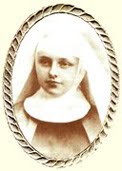
Sister Marie-Bernard of Jesus, O.SS.R. of the Monastery of Louvain (1872 – 1899)

Dear Sister Marie-Bernard of Jesus, in the world Miss Odile-Marie-Alphonsine Séren, was born of devout and honourable parents in Profondeville, a charming little village of Between-Sambre-and-Meuse, not far from the city of Namur, on 9th May 1872. She lost her mother at the age of four. Her worthy father confided her with her younger sister and her two brothers to the devoted care of her aunts and an old and faithful domestic servant. When his little Odile made her First Communion, he sent her to board with the Sisters of Saint Mary in Namur, where she spent several years. Once her education had finished, she went back to the paternal home, good and serious no doubt but not extraordinarily pious. Her clothes and worldly entertainment gave her some pleasure, but for fear of having a religious vocation she avoided paying a visit to her former Mistresses. This was however what God had reserved for her in His infinite mercy and to attain His goal. He made use of an apparently petty incident. As lady and mistress of the house, since she was the family's eldest daughter and because her father had abandoned the care of the house to her, Miss Odile could act as she wished and dispose of everything as she saw fit. But in December 1893 it was her whim to celebrate the feast of Christmas as joyously as possible, which she justly regarded as the greatest solemnity of the year. Consequently, she undertook the organization of a magnificent dinner that she wanted to offer her relatives and acquaintances. Once the great preparations were finished, she sent her invitations to everyone expecting a great success. A terrible disappointment awaited her. Influenza, an illness that was everywhere at this time, all of a sudden ravaged the district of Namur and mainly affected Miss Odile’s guests, evidently by the providential permission of God Almighty, who holds the elements and events at the service of His intentions. Jealous of this soul, whose whole and absolute possession He coveted, He decreed that this misfortune that He had brought about so opportunely, would be the generating principle of the choice of life that He wanted her to make. Since they were all more or less confined to bed due to this epidemic, her relatives and friends were forced to send apologies and decline the invitation. Great was the young lady’s disappointment at seeing her beautiful project suddenly founder, and she started thinking about the fragility of the pleasures here below, was disgusted by the world and resolved to leave it forever. The Lord, who was watching over her, immediately sent her help for her weakness and her inexperience in the ways of the Spirit, by sending two good and valiant Religious Redemptorists to Profondeville to give a mission there in the month of January 1894.

The eloquent sermons of the missionaries achieved what grace had begun in this soul and finally determined her to embrace the religious state. She opened herself up to the Reverend Father * * *, who, after having put her somewhat to the test, encouraged and approved her resolution. It only remained for her to know what Order she had to enter… she turned with confidence to glorious Saint Joseph whom she greatly loved and who soon saved her from distress, because on 19th March, his feast-day, he revealed to her internally that God wanted her in the Order of the Most Holy Redeemer. Once she heard the divine call and had it confirmed by a wise director, the dear child hesitated no more, but went to her father to inform him of her desires and ask him for his consent, which, we may say, to the praise of this respectable and truly Christian man, was granted to her very easily. Full of gratitude towards Heaven, she made it her duty to present herself to the Redemptoristines of Louvain, who made her very welcome, accepted her with joy, and fixed her entry for the following 31st May, the feast of Our Lady of the Sacred Heart. When this beautiful day arose, the excited young lady, tearing herself from the arms of her father, her sister and her beloved brother, generously sacrificed all expectations of this world. She bade an eternal farewell to the world which had charmed her for an instant and entered the enclosure of our monastery with a firm step, under the very eyes of her tearful relatives, to enrol herself under the banner of Jesus our Saviour. Feeling herself in her true home, from the very first hour she tasted how kind the Lord is to those who abandon everything for love of Him. Sister Marie-Bernard was one of these great and noble souls who, once in God, never withdraw and never look back. And so she sighed ardently for the blessed day when she could bind herself forever to the service of the King of kings, by taking the holy vows of Poverty, Chastity, Obedience and Perpetual Enclosure. She prepared herself with great devotion, by applying herself to becoming an exemplary Novice, irreproachable in all regards. Once the time of probation had passed, she had the signal grace of seeing her wishes fulfilled. On 11th June 1896, the minister of the Lord united her irrevocably to the Spouse of Virgins, after she had sworn fidelity to Him by holy Profession. This date, blessed before all others for our dear Sister, was never erased from her memory, because no one could ever say how much she loved to think and to speak of it. In the words of her first confessor in religion, Sister Marie-Bernard was indeed born to be a Redemptoristine and daughter of Saint Alphonsus, whom she cherished as her father and founder. She applied herself especially to resembling him by her tender and filial devotion to the Blessed Virgin Mary. Born in the month of May and consecrated to the Madonna, she took pleasure in glorying in it and talking about it to her Sisters. She prepared herself for it by fervent novenas for each one of her feasts and readily seized every opportunity to prove her love for the Queen of Heaven. It was at her request that she was given the beautiful name of Marie-Bernard of Jesus upon taking the habit, because it had already been made illustrious by little Bernadette, the visionary of Lourdes, the privileged child of the Immaculate Virgin Mary, but especially because it was the name of one of the greatest servants of the august Mother of God, the glorious Saint Bernard.

Before entering in religion, our dear Sister had wanted to visit one of Mary's most famous sanctuaries, the grotto of Lourdes. She had brought back the most wonderful impressions of it, and she was never happy until Our Lady of Lourdes was made the subject of conversations at recreation during her Novitiate. It was a happy coincidence, as all the Novices had seen like her, the visit of predilection and the little valley sanctified by apparitions of the Virgin without stain. Thanks no doubt to the protection of her heavenly Mother, who loves those who love her according to the words that the Holy Church puts on their lips, Sister Marie-Bernard was honoured to wear the name and habit of the Redemptoristines while progressing each day in the practice of the virtues. She distinguished herself especially by a simple and solid piety, by her exactitude, her regularity, her modesty and her humility. Calm and peaceable, she appeared not to notice what could try her patience as she focussed on the holy relationship she maintained with Jesus present in her heart; because she was an interior and singularly recollected soul, who scrupulously observed all the little pious customs proper to our holy Order.

The liturgical ceremonies and the sacred chants delighted her although she was not naturally enthusiastic. The Divine Office was all her delight and prayer her consolation. A particularly believing soul, a soul of duty, she fulfilled all her obligations conscientiously. No matter what the difficulties, she never consented, at any cost, to the omission of the least observance, unless her Superiors commanded her otherwise. A lover of holy poverty, she edified her Sisters by her detachment from the things of this world, diverting her eyes from the ephemeral goods of the earth to place all her affections in the Lord who alone was sufficient for her. While still a Novice, she disencumbered herself of anything which she could rigorously do without, placing no importance on the small objects which young religious sometimes hold dear. Always content with whatever she was given, she never allowed herself to complain. At most, some devout pictures excited her desire, especially those representing the Blessed Virgin and the holy Child Jesus, whom she loved with a childlike love. Being one day at the table of her Mother Mistress who was copying the chapter of a book called: “Poor Jesus and poor I” the dear Sister repeated these words with an unspeakable satisfaction, adding: “Yes, indeed I can say that in all truth.”

They thought she had a presentiment of a premature death, because nothing could ever captivate her soul during her religious life. Her precocious wisdom made her long for the imperishable goods of the other life that she made every effort to acquire by multiplying her acts of virtues and mortification. She singularly loved the hidden life, estimating herself happy to be able to practice it and imitate the Saint Family, especially the divine Workman of Nazareth. This is why she had great devotion to Saint Joseph, the patron of contemplative souls. A faithful observer of silence, she spoke only from necessity and always in a low and soft voice. Extremely serious and reserved, she had a religious bearing, always trying to efface herself and to avoid people’s eyes. Thus her Novitiate passed in the sustained exercise of the monastic virtues. In community our dear Sister never declined from her first fervour, and her good dispositions always remained.

In August 1897, she was named Assistant Housekeeper and she acquitted herself of her new functions to general satisfaction. She made herself liked by the Converse Sisters through her goodness, meekness, affability, and readiness to help them when she/it had the leisure. She did so with calmness, without delay and without undue haste. She was so charitable and devoted that she sacrificed her recreations and even her rest to oblige the Community that she sincerely loved. She would pleasantly say at mealtimes, “I am going to accomplish the precept of the divine Master, by giving food to those who are hungry and drink to those who are thirsty.” Being obliged, because of her employment, to dine at the second table, if it happened that the kitchen was short of meat, or something else, our good Sister deprived herself spontaneously of her portion and if she had been served, she passed her plate on to one of her Sisters. Many times she was seen coming in from the garden soaked through, when torrential rain had surprised her while she was gathering fruit or vegetables.

Nonetheless, she did not complain: her zeal and her courage made her quite compliant and helpful when it was a matter of the interests of her dear Sisters, whom she helped with good grace as frequently as she could. So we may say that she spent herself generously in the service of the Monastery. And in the evening, after a rough day, when she could have a moment of recreation, she happily profited from this by asking after her Sisters and exchanging a pleasant word with them. Although she had a character that was melancholy rather than jovial, like all children who never knew a Mother's caresses, she knew how to laugh and have fun with her Sisters, if need be play little tricks on them and lend herself amiably to their innocent jokes. The next day she would get back with renewed ardour to her laborious work. But soon, alas, her strength betrayed her and she was no longer in any state to fulfil the requirements of her tasks.

Suffering from a stubborn and troubling cough, she declined from day to day. Her complexion, her features, her gait, all in her seemed to display the secret devastations of the pitiless illness that was to carry her away. Yet the dear Sister suspected nothing, and so as not to frighten her too much by condemning her to idleness, the Reverend Mother entrusted the refectory to her, and it was there that she exhausted the rest of her powers. She kept going as long as she could remain standing. Endowed with much moral energy, she wished, in spite of her extreme weakness, to still attend all the conventual exercises, and force herself until the end to do penance in the refectory according to the Rule.

Seeing that our dear Sister was sinking rapidly, the Reverend Mother managed, under some good pretext, to confine her to the infirmary. First of all she refused to accept the gravity of her state. She often had beautiful dreams for the following year. But her illness worsened from day to day and she finally understood that she had consumption and death was rapidly approaching. They made use of this to suggest Extreme-Unction to her, which she accepted with joy. She received this Sacrament and the Holy Eucharist with all the fervour of her soul, after asking pardon for all her faults from the Community, with a calmness and a humility that edified us. From this moment on, far from still wanting to be cured, our dear patient called for death with all her heart so as to go and enjoy her Jesus. She spoke only now of heaven and asked for someone to sing her some canticles. As it was the month of March, she began some prayers in honour of Saint Joseph, so as to obtain from him the grace of dying on the day of his feast. The good Saint seemed first to grant it, because in the evening of 19th March there was a crisis of a more alarming character than the others. The Community was convened to recite the prayers of the agonising. The Reverend Mother sent for the Rev. Father de Kerchove, our confessor, who arrived in all haste. After addressing a few pious words to her, he leaned over her bed and said to her: “Do you not know, Sister Marie-Bernard, that I would like to be in your place!” “I will not change places with you,” she answered, as she still had all her presence of mind, “as I have worked far too hard to get here.” This reflection made the whole Community laugh. “So you will pray a lot for us up there, especially for your Sisters,” continued the Rev. Father Confessor. “My Sisters? I love them! They are Angels of charity,” she said with a very expressive gesture. Her dry lips betrayed the thirst that tortured them, so they offered her something to drink. “No, no,” she said, “Jesus on the Cross also endured thirst,” and then she murmured softly: “Good Jesus, come and find your poor child.” Feeling life returning, she told us sadly: “I have missed this train and I will have to wait for the next one.” The Reverend Mother then advised her to abandon herself to the divine good pleasure, which she immediately did. Wednesday 22nd March 1899, on the feast of Our Lady of Foggia, who is particularly honoured in our Community, she fell asleep peacefully in the Lord at about 7 o’clock in the morning, after a short agony, in the midst of the prayers and tears of her Sisters whom she had edified during the five years she spent in the midst of them. The funeral of our good Sister Marie-Bernard took place on 25th March, on the feast of Mary's Annunciation, who herself wished to close the casket of her much-beloved child, just as she had opened her cradle on 9th May 1872 on the feast of the Ascension of Our Lord.

This necrology is translated from Fleurs de l'Institut des Rédemptoristines by Mr John R. Bradbury. The copyright of this translation is the property of the Redemptoristine Nuns of Maitland, Australia. The integral version of the translated book will be posted here as the necrologies appear.


Monday, 21 May 2012

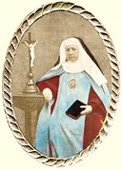
Sister Marie-Marguerite of the Holy Family, O.SS.R. of the Monastery of Louvain (1851 - 1882)

Louise-Marie-Thérèse Van Velthoven, the daughter of Mr. Pierre Van Velthoven and Mrs. Marie-Thérèse Van Gelmeten, was born at Antwerp on 1st January 1851. Her parents, as good Christians, made sure their three children were given an excellent education. Louise, the youngest, attended the class of the Sisters of Notre-Dame from her tenderest years. Later, at the time of her First Communion, she became a boarder with the Ladies of Christian Instruction. Endowed with a cheerful spirit, she enlivened her companions there by her impishness and her love of play. A leaning towards vanity and coquetry was always noticed in her. After leaving the boarding-school, far from decreasing, these little faults increased, to the point that she delivered herself to petulance, when her vain desires were not immediately satisfied. Having a proud character, she studied her least movements and her every step, in order to attract attention, esteem and affection…

At about the age of 25 she was sought after in marriage, but at the time of signing the contract, the parties could not agree, and the project of union lapsed, which led young Louise to think seriously… She put herself under the direction of a Reverend Redemptorist Father, who reignited her taste for piety and made her appreciate the blessing of virginity. Grace, at the same time, touched her heart, and, open to its attraction, she resolved to consecrate herself to the Spouse of Virgins. She made rapid progress in virtue, asked to be admitted to the Redemptoristine Sisters of Louvain [1], and made her entry there on 1st May 1877. From the very next day, her passions that had appeared to be asleep, woke up strong and vigorous, and caused her violent struggles. She understood that a fierce struggle had opened up for her, but she determined, with God's grace, to vanquish or die. In truth, we may say that, from this moment until her death, our dear Sister valiantly fought the obstacles and temptations that the enemy of good suggested to her. Wishing to make up for lost time and prove her love for Jesus Christ, she applied all her strengths to recollection and the practice of all the virtues. In a word, her life was a perpetual constraint.

The first year of testing being finished, she was admitted on the unanimity of the voices, to put on the livery of the Most Holy Redeemer on 1st April 1878, and changed her name from Louise to that of Sister M. Marguerite of the Holy Family. She spent the year of her Novitiate with the same fervour and was admitted to holy Profession on 23rd April 1879…

Our dear Sister was distinguished by her great devotion to the august Trinity of the earth and dedicated herself to them as their little servant. Her heart was an oratory where, as in the interior of Nazareth, she lived under the eyes of Jesus, Mary and Joseph, making it her happiness to often prepare them pleasant surprises, by the practice of different acts of the virtues, and by the victories that she won over herself. When she finished her Novitiate, she entered the Community. Her primitive fervour was preserved intact, and she applied herself to the practice of the hidden virtues, opportunities for which frequently appear in the common life.

When for one or another reason, she could not attend recreation, she did not enquire about what had happened, finding in this act of abnegation a flower to offer the dear Child Jesus. She confessed to her least faults in the refectory, and asked pardon of it with a touching humility.

Our Lord was satisfied of the good will of our dear Sister and seemed to want to help her expiate her former vanities, so He sent her an illness that was both painful and humiliating for her. All the glands in her head, neck and throat swelled up so enormously, that it was both a painful and frightening spectacle to see… Resigned to God's holy will and courageous in supporting her infirmity, her patience never failed. She was scrupulously obedient and submitted to the least desires of her Superior, as well as to the doctor’s least prescriptions. In spite of everything, all the remedies were useless, her illness kept getting worse and she understood, from the swelling of her legs and her lack of blood circulation, that her pilgrimage on this earth of exile was coming to its end. Nevertheless, our dear Sister continued to be amongst us, and attend the common acts, until 22nd November, the feast of Saint Cécile. From then on she kept to her room. On 5th December, the physician warned us that it was time to administer the Sacraments to her. She received them with joy and fervour, calling with all her soul for the hour when she would be able to go to be united forever with her divine Spouse. And this is what made her say continually: “Come, Lord Jesus, come.” On 7th December, after the greetings, Reverend Father Verhaege, of the Congregation of the Sacred Heart, and Director of the Community, visited our dear invalid. He gave her the Holy Communion, and also the apostolic blessing.

Until ten o’clock in the evening, our dear Reverend Mother, the Mother Vicar and the Sisters infirmarian remained praying with her, after which our good Sister Marie-Marguerite asked them to retire, in order to take some rest, adding that as soon the time was right, she would have them called…

She spent the whole night in prayer and at about five o’clock in the morning, she sent for the Reverend Mother. When she entered the room, she said to her: “My Mother, the agony is beginning, soon you won't have your Grietje any more!” Indeed, the symptoms of her approaching end were appearing. The Community was assembled and the prayers of the Agonizing were recited… The dear dying Sister, who enjoyed her presence of mind until the last moment, joined in and responded with a clear and distinct voice, and, casting her eyes around her bedside, she gave an amiable smile in all Sisters as a sign of farewell, thanked them again for the good care she had received, and assured them that she would not forget them when she was in Heaven… The prayers continued. From time to time she interrupted us, making one or another remark, like this: “The entire earth has disappeared for me, only my God remains for me! ...” Some minutes later she added: “Now I can hear nothing, but I am united to everything that the Reverend Mother says.” Finally, some moments before her death, she said in a weak voice, but still intelligible: “Long live Jesus, Jesus, Jesus!!!” They were her last words. We added “Long live Mary, Mary, Mary!!!” And at six o'clock, the Virgin without stain, whose Church was celebrating the Immaculate Conception (on 8th December 1882) came to find her child to present her to her divine Son. It was the anniversary of her consecration as the child of Mary…

Straight after her death, the excessive swelling of her face that made her hardly recognizable at the end of her life suddenly disappeared, and our dear Sister regained her natural freshness. The legal physician, who came to verify her death, witnessed his surprise that the fourth finger of her right hand, where she had so faithfully worn her ring as a sign of her alliance with Our Lord, had remained flexible, and made us aware that it was a very unusual circumstance… Her calm and radiant air, during the two days that she was laid out, attracted us constantly to her, and so it was with a great deal of distress that we brought ourselves to close the coffin… We retired saying to each other: “May my soul die the death of the just.”
Footnotes

[1] This Monastery was founded in 1874.

This necrology is translated from Fleurs de l'Institut des Rédemptoristines by Mr John R. Bradbury. The copyright of this translation is the property of the Redemptoristine Nuns of Maitland, Australia. The integral version of the translated book will be posted here as the necrologies appear.

Sunday, 6 May 2012

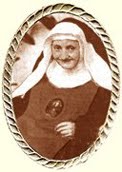
Sister Marie-Cécile of the Blessed Sacrament, O.SS.R. of the Monastery of Malines (1836 – 1898)

Our dear Sister, in the world Miss Cornélie-Marie-Joséphine Peyrot, belonged to a very honourable family in Antwerp. Her mother was allied very closely to Mons. Corneille Van Bommel, the bishop of Liege, from where the name of Cornélie comes, that she gave to her daughter.

Sister Marie-Cécile entered the monastery on 2nd July 1863 and received the habit the following year. Endowed with a beautiful character, and cheerful and charitable, her manner pleased and produced a good impression. As she had a heart of gold, full of goodness, kindness and compassion, as soon as she saw or suspected some pain, she immediately tried to ease it.

In this good Sister no self-seeking was seen. Although she possessed a superior talent as a musician, with a remarkably fine voice, she did not wish to shine in the world, but faithful to the voice of grace, she came to consecrate herself to God in our Monastery, where, following the example of her Patron, Saint Cécile, she employed her magnificent talent to sing God's praises. Singing was little developed amongst us at this time because of a dearth of voices, so she was happy later on when new vocations brought her some reinforcements. She had hardly revived the spirits of the new and existing singers than it pleasing God to come and suddenly take our dear Sister and assure us her efficacious assistance in heaven.

Nothing forewarned us that her death was so close. Just before Holy Week in the year 1898, a general unwellness seized our good Sister. On Palm Sunday she came once more to sing the Hosanna filio David with us, and on Holy Thursday, she accompanied the great Mass. Pain accompanied by fever seized her the following day, and on Easter Tuesday she suddenly died. The rupture of an aneurism, said the doctors, put an end to her life. Having contributed greatly, for the space of thirty-five years, to the beauty of the Divine Office, she went to sing the eternal Alleluia in heaven..)

This necrology is translated from Fleurs de l'Institut des Rédemptoristines by Mr John R. Bradbury. The copyright of this translation is the property of the Redemptoristine Nuns of Maitland, Australia. The integral version of the translated book will be posted here as the necrologies appear.

Sunday, 15 April 2012

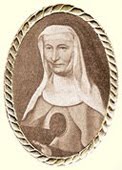
Sister Marie-Clementine of the Holy-Family, O.SS.R. of the Monastery of Malines (1827 - 1903)

Miss Flavie-Catherine Pétronille Rovoys was born at Antwerp on 27th March of profoundly Christian parents. She entered the convent on 24th September 1865, received the habit of the order on 10th October 1866 and made her profession on 13th November 1867.

“Our Sister,” says the Monastery Chronicle, “used her early youth to help her mother. Two of her younger Sisters had already preceded her into religion and when her mother fell sick, she took care of the business until she died. She practiced beautiful acts of charity in regard to the country people who came to her for provisions. Deeply understanding the duties of filial love, she procured the last help and supreme consolations of the church for her mother, and thanks to her devotion, one of her uncles was equally provided with these supreme passports to eternity.

“In the course of her novitiate, Sister Marie-Clementine obtained through a novena to the Venerable Father Passerat, the cure of pains in her knee that could have prevented her from being admitted to profession. [1] Her aptitudes for cutting and sewing led to her being named robe-maker, a task that she fulfilled with zeal and a great spirit of poverty. In her last years, she helped again as best she could, in spite of her infirmities. She was quite original, and her rejoinders in recreation, sometimes provoked general hilarity. Two months before her death, feeling her strength declining, she asked not to be named again in the distribution of tasks; however, until her last days, she was always seen in Holy Mass and Holy Communion.

“One the day of the immaculate Conception, 8th December 1903, she asked of her own accord for the last sacraments. They were administered to her in the afternoon by the community confessor. In the evening, seeing that Extreme-Unction had only fortified her spiritually, she said: “Everything is accomplished, now I can die.” But God only came to take her the following morning. Shortly after the community Mass, the Sister infirmarian, noticing the change in her features, warned the Sisters, who assembled beside her bed to help her with their prayers. The chaplain made the recommendation of her soul: some moments afterwards, at about 8:30, and with no agony, our good Sister fell asleep peacefully in the Lord.

Footnotes

[1] It is not the only cure that the Redemptoristines obtained by the intercession of the Ven. Father Passerat. From 1858, and only a few days after the death of the venerable Patriarch, there took place in Bruges a very astonishing cure. We borrow the account of it from the opuscule called: God's great servant, the Most Rev. Father Joseph Passerat, of the Community of the Most Holy Redeemer. – A biographic note, by Father Girouille, of the same Community. Montreuil-sur-mer, Notre-Dame-des-prés press.
In the monastery of the Redemptoristines of Bruges, there was a young postulant, Annette Berwaerts, later Sister Marie-Cécile of the Child Jesus, who was seized by an illness that began to inspire serious concerns. “It was,” the chronicles of the convent say, “A sort of erysipelas with blisters that covered both her legs.” The wounds discharged an abundant suppuration and appeared so inflamed that the physician feared gangrene. On 31st October the monastery learned of the great news of the vigil (the death of the Rev. Father Passerat). Immediately the poor patient and her infirmarian felt the inspiration to offer a novena for the holy religious. But their confidence was too lively and too eager to wait nine days for the intervention they so much desired. They decided to recite nine times, on the same day, on different occasions, five Paternosters, five Ave Marias, and five Gloria Patris.
Through a sentiment of filial piety as charming as it was naive, they had to add a De Profundis, in case that the dear departed still had need of it. It was under this expeditious form that the novena began and finished on 31st October. The two nuns added this urgent invocation to their prayers: “Father Passerat, if you are in heaven, you must obtain this grace for us.” The following morning, when the infirmarian went to examine the wounds, a cry of joy escaped her lips. There was no more trace of the malign humour that, even that evening, was flowing like a spring. Her flesh was as clean as before her illness, and her recovery was beyond doubt and complete.
Two days after this event, Father Passerat’s funeral ceremony took place.)

This necrology is translated from Fleurs de l'Institut des Rédemptoristines by Mr John R. Bradbury. The copyright of this translation is the property of the Redemptoristine Nuns of Maitland, Australia. The integral version of the translated book will be posted here as the necrologies appear.

Sunday, 1 April 2012

Sister Marie-Aloyse of the Crucifix, O.SS.R. of the Monastery of Malines (1857 – 1884)

A Vocation – Marie de Courtebourne [1]

It is a beautiful and gracious history of this young girl of the great world. Vowed since her birth to Saint Louis Gonzaga by her devout mother, Marie de Courtebourne grew up in innocence. She knew of the world only to appreciate its vanity. She opened her entire soul to the sweet influences of piety, and finished by embracing the religious life.

Are we to follow her in the different stages of her short existence? No. We shall see our humble heroine neither in Ghent where she was born, nor in Oostacker, [2], nor in Rome, nor in Assisi, nor even at Malines where she became Redemptoristine nun. We shall content ourselves to some degree by drawing the moral portrait of this beautiful soul, while borrowing from her the traits under which she was painted unbeknown to her.

I. –In the World.

One day Marie de Courtebourne opened a publication used by her father. Her pious mother arrived in the meantime. Fearing that her daughter's eyes would fall on dangerous pages, she took it away from her forcibly. – “O my mother,” the young girl said later while remembering this circumstance, “what a service you rendered me by forbidding me to read anything without your permission!” – “Yes, the scene in that room,” replied her mother; “I remember it now. I was too stern, my child.” – “It was the only time you spoke to me severely,” replied Marie, “and you were right a thousand times. I never forgot the way you looked at me. It impressed me even more than your words. You appeared so angry that I thought: “Such reading must be very dangerous for me, since mother seems so alarmed”, and every time since then that I have been tempted to read something, I remember what you told me, and it prevented me from succumbing. I never disobeyed your prohibition.”

The pious child read “The Imitation of Jesus Christ” assiduously. She also had a tender devotion to the Blessed Virgin. “I love the Virgin Mary very much,” she told her cousin, Marguerite of Limbourg, one day. She is a tender mother to me, and I love to call myself her child. But imagine how unhappy I am. I have tried in vain, but I do not have the same devotion to my guardian angel, as my aunt Matilda had.”[3]

In her quality as an older sister, she initiated her young friend into the practices of the spiritual life. One day, she taught her to make a private examination, and she was very sincerely humbled in scarcely knowing how to succeed in it herself. “As for me,” she said, “I have a great deal of trouble in doing it, so I never manage to correct myself of my defects, and I always have my dominant defect warring against me.” –“You?” replied her little cousin. “But what defect do you have then? I don't know of any dominant defect in you.” – “I have too much human respect,” replied Marie. – “It would not have come to anyone’s mind,” says her historian, “to assign this defect to her, so much did her oneness with the Church excluded any preoccupation of this kind! She prayed with a childlike simplicity, speaking to Our Lord at all hours of the day and night, and confiding to Him with a supreme abandonment all her joys, troubles and desires. Her prayers were both naive and fervent. It was the ingenuous language of a heart that goes in all confidence to Jesus.”

Even when very young, Marie de Courtebourne loved the poor. One morning, her father gave her a beautiful new shiny coin as a reward. The child looked at it and had everybody admire it. In the evening, a poor man came by. Marie ran back hurriedly into the castle. “Where are you running to, Marie?” her grandmother asked her. –“To find my new coin to give it to this poor man!” And she wanted to put it herself into the poor man’s hands.

A little later, she felt an irresistible attraction for the religious life. “If I enter the convent”, she wrote to her director one day, “It would not be to live a tranquil life. I have already seen enough religious houses to know that all the human miseries are found there. Characters are more or less soured by the common life, the austerities, the monotony of the places and the occupations. I do not want to delude myself. There they will treat me like a useless piece of furniture, a burden on the community. I will be tormented and harassed by the confessors, who will want to make me advance in perfection, and the demon will not let me alone. Even the good God will hide from me very often and He will send me trials, or rather His caresses of love.

“I would like my life to be a continual sacrifice, a continual act of love. I would like to have no more liberty, to obey blindly, and give myself to the good God as much as we can give ourselves here below. I would do anything for this.”

But her father? And the wonderful husband that would be offered to her? – She replied: “I am just as astonished as you at my idea and this stubbornness in wanting to shut myself within four walls in, bringing pain to my family, and having everyone against me, when I am so feeble and timid. Humanly speaking, it would be better to lead happy life, see the world, and contract the wonderful marriage that my father spoke to me about at Assisi, with one of the best suitors in France. I replied to my dear father that I was still very young and that we would think about it later. In the depths of my heart, I told myself that the good Jesus would call me to Himself, either in heaven, or in the convent.”

She marvellously understood the price of religious obedience: “The whole life of Our Lord,” she wrote, “was but a succession of afflictions and privations. I would not really have had the moral strength to enjoy my liberty all my life. The good Jesus was obedient unto death, and to death on the cross! In the world, perfect obedience is impossible, even less to be renowned for it. You cannot always run after your confessor, nor live in hermit, especially in my position.”

Finally, her attraction to the life of privations became irresistible: “My desire for the religious life,” she wrote to her director, “is always increasing. It is costing me to live in abundance, while poor Jesus suffered so much. I would like to be hidden, and forgotten, and have no more liberty. But above all I want to do the will of God.” – “My attraction,” she added, “is for the Order of the Redemptoristines, founded by Saint Alphonsus of Liguori. I very much like its spirit of abnegation and detachment. – No, my Father, I am leaving everything or rather nothing, in order to find everything. Even if I was the daughter of a king and had a million dollars to spend every day, I would not hesitate, with the grace of God, to become a religious.”

II. –In the Cloister.

Such admirable sentiments were to lead Marie de Courtebourne to the port she desired. She entered it in 1878. Of the convent of the Redemptoristines of Malines she wrote after fifteen days: “I did not believe that my happiness would be so great. You would not recognize me. I am usually sleepy and shy, but now I am extraordinarily lively, my sight alone makes even the most serious Sisters laugh and I prattle on like a little magpie. Everyone is very good to me. I am the youngest of all. I have no trouble following the community exercises. You would think I have always been doing them!

“I am so happy to sleep on straw!” she wrote another day. “In the world, I had too soft a bed, and I cried with frustration at seeing myself so mollycoddles, while the good Jesus had so much to suffer.” “She asked,” said her historian, “to continue the mortifications that she did at home: to choose the dishes that most repelled her, depriving herself of seasonings, and using other little industries dear to Christian penance. She added: “I have suffered enough from living in abundance, having everything I could wish for, and resembling the poor and suffering Jesus so little. I always wanted to be poor and suffer to give pleasure to the good God.”

She told the Mistress of Educandes one day: “I did not know that you could love the good Jesus so much. I have not yet told you how I learned this. I was about sixteen years old. One day when I had just received communion, I believed I heard a voice immediately afterwards telling me: “Love me.” – I was afraid and I did not dare to say anything. At the following communion, I heard the same words again. Then I was really afraid, and I said: “If it is You speaking to me, O my good Jesus, tell me what I must do to love You. I am so lowly! I know nothing. – Then I understood that the good Jesus would Himself teach me to love Him, and that love consists in suffering.”

In the convent, she had no human respect. “In recreation,” one of her companions tells us, “And at table when she was permitted to speak to us, she often told the Sister beside her: “Let us speak of Jesus. Tell me something about Jesus. Let both of us really, really love Jesus, because everything consists of love, in loving only Jesus.”

She had a little old crucifix made of copper that she kept carefully before her, on her table, or that she carried with her. How many times she was surprised kissing it! And she would say: “You don’t need to have beautiful Christ's to love Our Lord. In this manner at least you can always have one with you.”

Her humility was sincere. “I am very arrogant,” she told her Mistress during her first days. “When you know me better, you will see how much self-esteem I have. However, here I am reassured, because I think you will always warn me when I don't act well. I don't dare count on myself. I have so much arrogance!”

On June 5, 1879 the vesting ceremony filled the pious young girl with joy. She was happy to receive the name of Sister Marie-Aloyse of the Crucifix, which united her favourite devotions so well and reminded her constantly of her poor and crucified Jesus Christ, the Blessed Virgin Mary, and the angelic Saint Louis of Gonzaga to which her mother had dedicated her since her birth.

One of the most agreeable features of religious life and one of the most recommended by the masters of spiritual life, is simplicity. Sister Marie-Aloyse of the Crucifix was of this character. “She read but little” says her historian, “and only the simplest books, especially those of Saint Alphonsus, attracted her preferences. She told us more than once, that one of the motives that had made her choose the Order of the Redemptoristines was the simplicity that distinguished the spirit of the holy founder. During her days of retirement, it was sufficient for her, outside the prescribed readings, to have her crucifix close to her, and to look at it and converse with “her good Jesus,” as she said piously. This expression was familiar to her, and she repeated it with such an accent of sincerity and fervour, that these words alone revealed all her soul. Yet it was not only the name of Jesus that she liked to savour; communion had for this naive soul its ineffable delights. Through the Eucharist she experienced those mysterious attractions known by in which Our Lord maintains the precious grace of infancy. When the Blessed Sacrament was exposed, she could not do her hour of adoration without pouring out abundant tears, and it was a profound edification for her young companions, when they happened to surprise her in this state that recalled the touching piety of her aunt Mathilde.”

Her love for work was no less remarkable. Sister Marie-Aloyse forgot what she once was, what she could have been, and took the apron and the broom, and indistinguishable in the ranks of the other beginners, red with pain and beaming with joy, washed, swept, dusted, polished furniture, and stopped only when the task was finished. If there was linen to mend, she asks that her part of this work be what was least pleasant, the coarse and worn-out stockings, the aprons made of grey canvas, and she said merrily: “I had so much pleasure in mending this old stocking!”

On June 10, 1880, the fervent Novice was admitted to religious profession. She then wrote the following lines to her grandmother, the Marchioness de Courtebourne:

“It would be impossible for me to express to you exactly the happiness, peace and sweetness I felt after pronouncing my holy vows. You would have said that I was in heaven. I also felt my good parents blessing me from the highest heaven, and were rejoicing in my happiness. How short the time seemed to me! I am going to have a provision of the love of God and patience for all my life, during the first beautiful days of marriage, the honeymoon, as we say in the world, in order to well prepare myself for everything that the divine Spouse will ask of me later on.”

The good Sister Marie-Aloyse had something of a presentiment of the troubles that were going to pour down on her, and the trials that she had to pass through. While she is waiting, let us listen to her once more. She had embraced the common life of the Professed Sisters and she was given a task. “On the first days,” she wrote, “I was a little out of my element, but now I have learned what to do. I have been nominated as assistant housekeeper, under the orders of the good Sister who takes care of the provisions, the housekeeping and work to distribute to the Converse Sisters. It amuses me a lot to trot around in a white apron and to prepare what is necessary for the Sisters. You would be pleased, I am sure, to see me in my new task.”

What most pleased Sister Marie-Aloyse in the functions that were entrusted to her, was not so much the novelty and the picturesque nature of the costume, but rather the opportunity to spread around her the charity overflowing from her heart. Her happiness lay in giving pleasure to others while sacrificing herself. With the gentleness that only charity can inspire, she knew how to render service, give comfort and console, while accommodating herself to all characters and differences in education. When the appointed housekeeper was indisposed, the young Sister was obliged to provide for everyone by herself, and in the exercise of her functions, she distinguished herself her tact, her judgment, and her spirit of poverty.

We shall not speak here of the interior trials of Sister Marie-Aloyse of the Crucifix: we refer the reader to the beautiful book by Abbé Laplace. Nevertheless we shall quote one of her letters before we finish. She was suffering from a chest illness that would not diminish. Novenas followed novenas, and brought only an increase of suffering. However the patient was always cheerful, resigned and happy. She wrote to her maid-servant, with whom she had remained in correspondence.

“I can take several steps with the help of a charitable arm. But I don't have the time to be bored, my dear Pélagie. I am occupied very peacefully, and I tell you to amuse you, that I have become an artist in mending stockings. My whole pleasure is in mending big holes. I pray, I read, I write and the days pass very quickly. Also I often have a few hearty laughs, as in the convent we are never sad. On the contrary, the service of the good Jesus cheers up our hearts, which are, if not always joyful, at least are always calm and tranquil. If I told you that I am the happiest creature in the world, even without being able to walk, you would not believe me, and yet it is the truth. True happiness consists in fulfilling the will of God. So long as He is happy, what does the rest matter?

It was with this holy joy that Sister Marie-Aloyse bore her painful illness. How many interesting details could we still mention! But we must limit ourselves. 25th August 1884 was the day of her supreme sacrifice. The fervent nun received the last sacraments with the most tender piety. Then she collapsed, but without losing anything of her presence of mind, or the lucidity of her intelligence. “Now I understand everything,” she repeated, “I understand everything!” When the Reverend Mother approached her bed with the Infirmarian, she asked her if she recognized them. “There is only God,” she replied. They were her last words. It had been her motto all her life..”

Footnotes

[1] See the charming biography called A Vocation. – Marie de Courtebourne, by Abbé Laplace, the Superior of the Institute of Saint Peter at Bourg (1 vol. in-18, Lecoffre, Paris ;) Vandenbroeck, Brussels; Vitte and Perrusel, Lyon.
[2] t was in the castle of Oostacker that the famous Derudder was a servant. His miraculous cure has been very well recounted by Father Bertrin in his beautiful book : Lourdes, Apparitions and Cures.
[3] Miss Matilda (Mathilde) de Nédonchel, deceased at Rome in an odour of sanctity on 27th June 1867, at the age of 24. Her Life was written by Abbé Laplace. (1 vol. in-8°. – Casterman, at Tournai).

This necrology is translated from Fleurs de l'Institut des Rédemptoristines by Mr John R. Bradbury. The copyright of this translation is the property of the Redemptoristine Nuns of Maitland, Australia. The integral version of the translated book will be posted here as the necrologies appear.

Sunday, 11 March 2012

Mother Marie Anne-Joseph of Jesus, O.SS.R. Superior of the Monastery of Malines (1834-1895)

Superior of the Monastery of Malines [1]
In the world : Baroness Amélie Marie Hyacinth
VAN DER STRAETEN-WAILLET


Coming from a family more worthy of commendation still by its faith and by its virtue than by its nobility, Mother Marie-Anne-Joseph of Jesus understood very early on the vanity and the nothingness of things that pass away, and her great heart made her despise all the advantages that her birth and spirit could procure her in the world, so as to don the humble habit of a postulant of the Most Holy Redeemer in our provisional convent of Brussels.

She made her entry there on January 23, 1857, at the age of 33. A small incident showed her energy, and the self-control she already had over herself. While giving the kiss of peace to the Sisters, her veil caught fire from the candle one of them was holding. Immediately, without being moved in any way at all, she unfastened it, threw it on the ground, trampled on it, and continued to peacefully give everyone the kiss of peace. A singular or providential particularity had signalled her admission. A young person, who had some desire to enter to the convent, had come to ask a novena for the purpose of knowing her vocation. The Reverend Mother Marie-Alphonse of the Will of God, while indicating this intention in her prayers, made a mistake and instead of saying: “For Miss Mathilde”, she announced: “For Miss Amélie.” At recreation, the Sisters hastened to tell the Reverend Mother: “My Mother, are we going to have an Amélie, a new companion? You prayed for her.” The Reverend Mother replied: “Did I say Amélie?” – “Yes, my Mother! Oh! We are going to have an Amélie!” A remarkable thing! Only a few days went by, and then there was an announcement that Madam the Baroness Van der Straeten had come to present her daughter, who was anxious to enter the small Redemptoristine community… Oh what joy and thanksgiving for this new reception! Two more vocations had come to strengthen the newborn foundation, transferred from Brussels in Malines October 6, 1858 indeed.[2]

When her educandate and novitiate were finished, Sister Marie-Anne-Joseph of Jesus made her profession at Malines, between the hands of M. Bosmans, the Dean and Archpriest of the metropolis of Saint-Rombaut, who made the usual speech. It took place on March 2, 1859. The ceremony was held with great solemnity: it was the first profession since the transfer of the community to Malines. The pious Sister distinguished herself, during her novitiate, by her love of prayer and her sincere charity; and so she had given rise to the most beautiful expectations.

* * * * *

These expectations were not disappointed. After the second year of her novitiate, granted by the Rule to perfect herself in the exercise of the virtues, Sister Marie-Anne-Joseph was employed in helping with the housekeeping. It was an office of abnegation that she fulfilled with docility and the goodwill of a true child of Saint Alphonsus. She was then successively called to the tasks of Sacristine, Tourière, Infirmarian, Linen-maid, etc., and she exercised them all with the same goodwill and the same devotion, applying herself to vanquishing herself in the small things and refusing nothing to God.

Humility was the principal object of the prayers and efforts of our good Sister ; but in this she saw the most supreme means of arriving at God's love that she was seeking above all else. And so she entered into a long and hard struggle with her own self-esteem, happy or at least resigned to be humiliated and contradicted. Her character was inclined somewhat to the spirit of contradiction. She triumphed over it while profiting from all occasions for showing herself as cordial and considerate towards her neighbours.

A friend of mortification and penance, she rightly considered habitual contrition as a source of precious favours, and drew profit from the little sufferings that presented themselves. She imposed certain privations on herself and was attached to imitating her divine Saviour, while loving the poor, humbling and painful side of religious life. What was she in her own eyes? Simply nothing and she meditated gladly, like the Saints, on her own lowliness, knowing full well that we never mortify ourselves unless we have learnt to hate ourselves first.

As with blessed Father Saint Alphonsus, she made all her perfection consist in perfect conformity with God's will. “I understand,” she wrote one day, “that indifference is indeed the corner-stone of purity of intention. It desires only to know what You desire, O my God, in order to accomplish it. It is therefore myself that I am seeking when I want You to want something rather than something else. How much seeking I have had to arrive here, O my good Jesus! I ask pardon from You for it, and by this love that made You suffer so much to merit for me the grace to be all Yours, grant me, I implore you, so great a love for you that I shall forget myself in order to think of nothing more than You and Your interests.” So she made every effort to fulfil the beautiful words of the Apostle: “I live, but it is no longer I that lives, it is Christ who lives in me.”, words that Saint Alphonse understood as perfect conformity with God's will.

The filial piety of Mother Marie-Anne-Joseph towards Saint Alphonsus, and the high esteem that she had for his holiness and teachings, led her to find in his writings a substantial food, free from all pretension and full of the wisdom of the Saints. To use the words of Father Monsabré, “She did not like writers who speak of the things of God in too far-fetched and precious a style that invites ridicule, if it does not fall into it. She preferred the tender effusions of the pious authors who do not make our minds spin, and do not torment the dictionary to make their hearts speak.”[3]

As a worthy daughter of Saint Alphonse, she had a quite special devotion to the Holy Childhood, the Passion of Our Lord and the Blessed Sacrament. Her confidence in the Blessed Virgin and her love for her was that of a child towards her Mother. Her devotion to Saint Joseph, her Patron, was also very solid. She especially liked this admirable conformity to God's will in the holy Patriarch that characterized him. Finally she tenderly loved the Holy Angels, her guardian angel in particular, and she prayed to him to remind her constantly of her good resolutions.

* * * * *

All the many graces, lights and good sentiments that filled her soul were exactly the right qualities for her to perfectly fulfil first the task of Mistress of Educandes, then that of Mistress of the Novices, that were confided to her. Understanding how important these function were, she applied herself to examining the dispositions of her young plants, in order to be sure if they were destined to bear fruit conforming to the spirit of our Institute. And this is especially why she did not spare either her cares or her prayers, forgetting her own self in order to help, fortify, encourage and console as required, the souls entrusted to her solicitude.

She was elected Vicar on June 10, 1878 in place of Sister Marie-Véronique, who was leaving to help found the house at Grenoble, and then named as Superior in 1879. She was named again in 1886, and also for the next two triennia, with an Indult being granted by Rome to this effect.

Reverend Mother Marie-Anne-Joseph of Jesus governed with wisdom, prudence and charity: her solicitude extended to all; she responded to the needs of the Sisters, and showed herself especially eager to procure them every relief when they were seriously ill, and devoted herself entirely to the good spiritual and temporal government of her community.

Zealous for the cult of the Blessed Sacrament, she got the Archdiocese to permit the holy Ciborium, from Holy Thursday until Holy Saturday after the office of Matins, to remain, no longer in the exterior sacristy, but in choir, in a tabernacle placed on a little altar, devoutly decorated. It is also to this good Mother's that we owe the beautiful arrangement of the treasury of the relics that surmount and surround this small altar. Her heart was as if flooded with joy on the day when the great and numerous bones of these good Saints were brought from the Convent of Saint-Trond and offered as a present by one our Fathers. Her piety, at the sight of these relics, lit up her face, and her words expressed her great gratitude for so precious a gift.

The Sisters who had resort to her maternal solicitude were sure of finding her full of the insights, advice, wise counsels and encouragement which they needed ; her virtues had acquired a general esteem for her, and persons from outside themselves were able to appreciate her great qualities and her generous charity.

Deposed from her task in 1894, then named Vicar, Mother Marie-Anne-Joseph was henceforth a living example to her Sisters of the most exact and edifying obedience. Nevertheless, she was not long in receiving her reward for her works.

Towards the end of February 1895, she had a cold that degenerated into bronchitis, and then pneumonia, and reduced her suddenly to the verge of death. On March 6, at eight o'clock in the evening, she devoutly received the last sacraments. Immediately after this imposing ceremony, she said gravely: “I have received many holy things in a short time: all the rest is nothing.” And as the Sister infirmarian told her: « Look, it is the influenza which is making you suffer”, she replied: “It is not the influenza, it is God who wants it.” They offered to call the Rev. Jesuit Father, her brother, to her; but she refused this consolation and offered it in sacrifice to God.

The night of 9th to 10th March was a painful one. In the afternoon, the good Mother was confessed for the last time, received the apostolic benediction and urgently asked to receive communion. This blessing was procured for her; a few moments had hardly passed when she peacefully rendered her soul to God. The memory of her wonderful examples will not perish in the hearts of those that knew her, and they will remember the words which she took as her motto: “I believe that God loves me with an infinite love: I believe that Mary loves me with a very tender love, a Mother’s love; I abandon myself to their love, and I want to love them as much as I can on earth so as to love them even more in the eternity.”

Footnotes

[1] About the foundation of this Monastery, consult the work by P. Nimal mentioned above. – It took place in 1858.
[2] The reception took place on 10th February 1858.
[3] P. Monsabré. Drops of truth, p. 52. (1 vol. Lethielleux).
May we permit ourselves in this regard to mention here some appreciations borrowed from the correspondence of Saint Alphonsus concerning several of his ascetic works. On the subject of the Glories of Mary, the holy Doctor wrote to Remondini : “It is the book I spent the most time working on and maybe the one that had the most success.”
Regarding the numerous opuscules such as the Novenas to the Sacred Heart, the Holy Spirit, to Saint Michael, Christmas, Reflections and affections on the Passion of Our Lord, etc., Saint Alphonsus wrote: “They are short, but had a lot of work done on them and are full of things; and to compose these small works, I read the hundreds of books from which I took the best.”
The Practice of the Love of Jesus Christ has thus been judged by its author: “This little work is perhaps more devout and useful than all the others.” The Pious Reflections on different subjects of spirituality “were composed expressly for the souls that wish to be entirely in God.”
Finally, “The true Spouse of Jesus Christ” or “The nun sanctified”, as Saint Alphonsus also called it, is “of all his books of spirituality the most beautiful, the most worked on; it is so to speak, the epitome of everything that the other authors have written on the sanctification of nuns.” See Correspondence, T., IV, P. 112. –IV, P. 68. –IV, P. 347. –II, 480. –IV. 133.

This necrology is translated from Fleurs de l'Institut des Rédemptoristines by Mr John R. Bradbury. The copyright of this translation is the property of the Redemptoristine Nuns of Maitland, Australia. The integral version of the translated book will be posted here as the necrologies appear.

Sunday, 26 February 2012

Sister Marie-Paul of the Child Jesus, O.SS.R. of the Monastery of Bruges (1849-1868)

The characteristic devotion of this good Sister was her devotion to Saint Alphonsus.

Josephine-Jeanne de Mortier was born in Brussels of very Christian parents, on 8th June 1846. She shared the lessons that tutors gave her brothers and sisters at her home. Her bright, lively and affectionate character made her beloved by all those who knew her. Her piety developed with her age, and as she had only good examples before her eyes, this good child never knew evil. – She devoted herself with a great deal of zeal to propagating the Work of the Holy Childhood, and spared neither pain nor efforts for her dear little Chinese (this is what she loved to call them). She also occupied herself with a great deal of charity in teaching the catechism each Sunday to the little children of the poor, and her patience found much opportunity for exercise.

The divine Saviour, who cherished this pure and innocent soul, and destined her to bear the crown of Virgins eternally, hastened to withdraw her into His sanctuary in order to win this crown that she was to receive while still young.

Since her childhood, Josephine had been under the direction of the Redemptorist Fathers. She loved nothing but Saint Alphonsus, she said, so she soon thought to become his daughter and went to present herself to the Monastery of the Redemptoristines of Bruges in the month of June 1866. The Reverend Mother Marie-Philomena of the Divine Providence recognized the precious qualities of her postulant very quickly and received her as a present from Saint Alphonsus himself. She made her entry on 15th August 1866. She immediately bore herself with fervour in all the exercises of the religious life. She would go to choir with a very special joy, and she so much loved chanting the office that when the state of her health deprived her of this blessing, this sacrifice drew many tears from her. Her devotion to the Blessed Sacrament was such as to make her find the moments that she was able to spend at the foot of the holy Tabernacle much too short. Her love for prayer made her employ this holy exercise all the time that she could give to it. She prepared for it carefully and made great progress in it.

She was very bright, but out side the times of recreation, she greatly loved silence, because she felt the good it does to the soul who seeks to be united to her God. Her charity made her ingenious in helping others. She did it with such a good heart that you could see her jump for joy when a work was entrusted to her. – Her heart was completely devoted to her Superiors. She had entire confidence in them. She loved them and obeyed them like a docile and affectionate child. A word on their part was sufficient to tranquillise her in her pains.

Josephine, when her educandate had finished, received the holy habit on 20th August 1867, and at the same time the name of Sister Marie-Paul of the Child Jesus. She passed the time of her novitiate with great fervour and made her holy vows on 20th August 1868. After a year, her health had greatly altered. From an illness that she had suffered a feebleness remained that degenerated into consumption. The dear little Sister, always courageous, finally, on 20th September, had to descend to the infirmary. The illness made rapid progress, and she was soon reduced to not being able to walk alone, so great was her weakness.

However she preserved her pleasant character, and was pleased with everything and never offered a complaint about her sufferings or the privations that resulted from her illness. She said: “I accept that I need all my courage so as not to lose patience; but I look at the good Jesus on the cross and then I feel strong and happy to suffer.” – She keenly felt the blessing of dying in religion: “I understand it even better now than on the day of my Profession,” she said, “and I renew my holy vows at least fifty times a day. Oh, what a blessing to die in the convent, where everything speaks to me of God, and where I can still take communion so often!”

One single thing hurt her. It was leaving her good Superior, Mother Marie-Philomena. Whenever she thought of it her tears would flow, but the thought of seeing her again one day in heaven dried them up very quickly. A word from the Reverend Mother made her forget all her sufferings. She loved to speak with her of heaven and the blessing of chanting the praises of the Lord there. Sister Marie Paul would then rally and exclaim: “If I love music so much here below, what will happen then in Paradise?” But this moment delayed too long for the vivacity of her desires – she found the time very long, and she had to make acts of resignation to await the moment indicated by the divine will. – One day she wanted to see the novices, her companions, say goodbye to them, and give a picture to each one of them as a souvenir. She promised to pray for them in Paradise and made them promise her to pray a great deal for her after her death.

On the day of the Immaculate Conception 1868, she asked for the Consecration to the Sacred Heart of Jesus to be made in the infirmary just as it was being made in public that same day. The dear child offered herself to the divine Heart as a victim of expiation. She offered her life for poor sinners, for the needs of the Church, and to obtain graces for the community. On the eve of her death, she asked if the blessed candle was in the infirmary, because she felt the moment approaching. On 10th December she received Holy Communion once more and passed the morning quite peacefully. About twelve thirty, the confessor gave her the last absolution. She was perfectly conscious and smiled when she saw the Sisters praying round her bedside. She looked confidently at the picture of the Blessed Virgin and in this way, without a moment of agitation, without even a sigh, she peacefully rendered her soul to God.

This necrology is translated from Fleurs de l'Institut des Rédemptoristines by Mr John R. Bradbury. The copyright of this translation is the property of the Redemptoristine Nuns of Maitland, Australia. The integral version of the translated book will be posted here as the necrologies appear.

Sunday, 29 January 2012

Mother Marie-Philomena of the Divine Providence, O.SS.R. Superior of the Monastery of Bruges (1811-1878)

Mère Marie-Philomène de la Divine Providence
Supérieure du Monastère de Bruges
décédée le 13 décembre 1878i.
__________

CHAPITRE I

son enfance. – son entrée au monastère.


Cette bien-aimée Mère, qui fut une vraie providence pour la communauté de Bruges, naquit à Ath le 29 juin 1811, et reçut au saint baptème les noms de Rosalie-Dieudonnée-Benoîte-Joseph. Elle était la seconde enfant de M. Joseph-Ignace de Savoie et de Mme Rosalie-Joseph Nève, son épouse.

Le ciel avait été prodigue de ses dons pour cette aimable enfant, qui, parfaitement douée du côté de la nature, devint bientôt l'objet de toutes les prédilections de ses chers parents : ils ne négligèrent rien pour développer par une éduction soignée les germes précieux qu'elle apporta en naissant.

Elle avait à peine neuf ans quand elle perdit son père, et de grands revers de fortune suivirent cette perte prématurée. Rosette (on l'appelait ainsi familièrement) comprenait déjà les malheurs de sa famille; mais sa grande âme et son coeur généreux n'étaient sensibles qu'à la douleur de sa mère chérie, qu'elle s'efforça de consoler, de soutenir et de soulager par son amour et sa tendresse; aussi ce ne fut pas sans une vive peine qu'elle se sépara d'elle pour aller à Lille achever son éducation. Dans la pension où on la plaça, elle cultiva tous les talents qui doivent orner une jeune personne. Elle devint parfaite musicienne. Ce talent lui fut toujours cher, parce qu'elle pouvait l'employer à la gloire de Dieu en chantant ses louanges, et en touchant l'orgue pour l'accompagnement de l'office divin.

Son heureux caractère et ses belles qualités la firent bientôt rechercher par de nombreux partis. Rosette, qui ne connaissait pas encore les vues de Dieu sur elle, se décida à accepter la main d'un jeune homme pieux et bon comme elle. Ce mariage était vivement désiré par les deux familles; cependant un secret pressentiment disait à la jeune fille qu'il ne s'accomplirait jamais. De fait, au moment où l'on allait fixer le jour des noces, son fiancé fut attaqué d'une fièvre violente qui l'emporta en peu de jours. Cette mort inopinée, en lui causant une vive douleur, la détacha du monde; et de nouveaux revers ayant atteint sa famille, elle voulut, pour soulager sa mère, utiliser ses talents. Mme la Comtesse de Malet l'accueillit avec joie pour surveiller l'éducation de sa fille unique. "Venez chez moi, lui écrivait-elle, vous serez pour moi une soeur et une amie, et plutôt la mère de ma fille que sa gouvernante." Rosette eut bientôt gagné le coeur et la confiance de la vertueuse dame, qui l'aimait tendrement. Elle jouissait près d'elle de tous les agréments qui eussent pu l'attacher à une vie douce et tranquille; mais Dieu lui fit bientôt sentir qu'il la voulait toute à Lui. Elle eut alors un de ces songes dont Dieu se sert quelquefois pour manifester aux âmes ses desseins. Sainte Philomène se montrant à elle, l'appela à ses côtés, et il lui sembla qu'elle jouissait là des joies du ciel. Depuis ce jour, le monde ne lui inspira plus que du dégoût, et elle aspira de toute son âme au bonheur de la vie religieuse.

De grandes difficultés s'opposèrent à son pieux dessein. La tendresse de sa mère, qui comptait sur elle pour consoler et soutenir sa vieillesse; l'attachement de sa famille; l'affection de la pieuse comtesse, à qui elle devait de la reconnaissance; enfin, sa santé, qui était fort délicate : tout cela lui livra bien des combats; mais la grâce la rendit victorieuse.

Notre saint Institut allait s'implanter en Belgique : elle y fut admise une des premières; mais, pour se conformer au désir exprimé par la Rde Mère Marie-Alphonse, elle retarda son entrée de quelques mois, afin de perfectionner son talent d'organiste. Elle fit de bon coeur ce sacrifice pour le bien de la communauté, et enfin, le 18 décembre 1841, elle entra au monastère provisoirement établi rue des Puits-aux-Oies.

L'hiver était rigoureux et au froid venait encore se joindre tout ce que la pauvreté peut amener de privations et de souffrances dans un commencement de fondation. Rien n'ébranla ce grand courage; elle venait pour se donner à un Epoux crucifié; et elle brûlait du désir de marcher sur ses traces en partageant ses douleurs. Les supérieures virent bientôt quel trésor la bonne Providence leur envoyait, et elle se hâtèrent de demander les dispenses nécessaires pour qu'elle fût associée aux premières postulantes et pût recevoir avec elles le saint habit. Le 25 février 1842, elle prit, avec le voile, le nom de Soeur Marie-Philomène de la Divine Providence. Elle passa l'année de son noviciat avec une ferveur exemplaire, et s'appliqua à pratiquer les Saintes Règles avec une parfaite exactitude. Aussi le jour où elle pourrait prononcer ses voeux etait-il vivement désiré.

Le 23 mars 1843, les sept premières novices devaient offrir leur sacrifice dans toute la joie de leur âme; mais un événement bien douloureux vint attrister ce beau jour. La Soeur Marie-Anne-Joseph du Précieux-Sang, qui avait commencé sa retraite en pleine santé, devint si gravement malade qu'elle dut recevoir les derniers sacrements le 22 mars; elle prononça en même temps ses voeux sur son lit de mort; Notre chère Soeur Marie-Philomène donna, en cette occasion, des preuves de sa grande charité et de son dévouement, passant tout le temps de sa retraite au chevet de sa pieuse compagne, qui lui disait parfois, les yeux mouillés des larmes de la reconnaissance : "Pauvre soeur, comme vous vous dévouez pour moi ! Mais quand je serai au ciel, je vous le rendrai bien, en priant pour vous." Le 23 mars, on quitta le choeur en chantant le Te Deum qui termine la cérémonie de la profession, et les nouvelles professes vinrent entourer le lit de la mourante, qui les regarda encore comme pour leur dire un dernier adieu. L'Angelus sonna, et la malade, en disant la parole Ecce ancilla Domini, inclina doucement la tête et rendit sa belle âme à Dieu.


_____________

CHAPITRE II

charges qu'elle exerce. – Elle est nommée supérieure.
ses vertus
.


Notre chére Soeur Marie-Philomène passa encore un an au noviciat; en le terminant, elle fut nommée Maîtresse des Educandes. Elle se dévoua tout entière pour les jeunes âmes que le Ciel lui confiait, et malgré ses nombreuses occupations, elle les formait soigneusement à la vie religieuse. Ses exemples, du reste, faisaient encore plus d'impression que ses paroles, et l'on admirait son exactitude, sa régularité, son grand courage à supporter toutes les privations imposées par la pauvreté. Le couvent provisoire n'était en effet qu'une vieille maison laissant entrer le vent et le froid par de mauvaises fenêtres : tout gelait à côté du feu, et les Soeurs n'avaient rien qui eût pu les garantir contre les intempéries des saisons. La nourriture était bien pauvre et bien peu faite pour une santé comme la sienne; heureuse de souffrir, elle encourageait ses éducandes à supporter aussi joyeusement les mêmes privations. Elle travaillait souvent bien avant dans la nuit, tantôt pour mettre ordre aux affaires de la maison et examiner les comptes de la nouvelle bâtisse, tantôt pour préparer la musique nécessaire pour le chant du saint office ou des fleurs destinées à orner le saint autel. Malgré tout cela, elle était la première au choeur le matin pour les Heures canoniales.

Le 23 juin 1845, la communauté se transporta au nouveau monastère. Soeur Marie-Philomène fut alors chargée du noviciat, qu'elle dirigea jusqu'au 11 août 1851, où elle devint Vicaire. Son zèle pour l'observance avait toujours été grand : il redoubla encore. La Supérieure ne pouvant pas, à cause de sa santé, assister aux actes communs, notre chère Mère Vicaire sembla se multiplier pour les présider tous, sans nuire à ses occupations; et quand Mgr. Malou, voyant la communauté si nombreuse, exprima le désir qu'une fondation se fît à Bruxelles, notre chère Mère, par sa rare prudence, sut soutenir et défendre les intérêts de la maison de Bruges, sans nuire cependant au premier essaim qui devait sortir de cette ruche bénie. Les voix unanimes des soeurs, aussi bien que le désir de son évêque, l'appelèrent alors à porter le fardeau de la supériorité. Il était d'autant plus lourd en ce moment que, vu les embarras financiers, la bâtisse du couvent, les difficultés d'un commencement, on n'avait jamais pu établir dans toute sa vigueur l'observance régulière. Il fallait donc une rare prudence pour détruire d'anciennes coutumes chez les âmes faibles, et pour modérer une trop grande ardeur dans quelques autres. C'est ce que fit notre bonne Mère. Elle eut bientôt gagné tous les coeurs, et la Sainte Règle étant observée avec bonheur et fidélité, on vit régner avec elle la joie, l'union fraternelle, le silence, l'amour de la mortification et de la prière.

Mère Marie-Philomène s'occupa activement à régler les affaires du monastère, paya les dettes, et en établissant partout l'ordre et l'économie, en pratiquant exactement la sainte pauvreté, elle attira sur cette chère maison les bénédictions divines, spirituelles et temporelles.

C'était au prix de prières prolongées bien avant dans la nuit et de grandes mortifications que cette bonne Mère obtenait ainsi du Ciel tout ce qui devait contribuer au bonheur de ses filles. Toujours la première à leur donner l'exemple, elle leur procurait aussi tous les secours spirituels qui pouvaient les aider à marcher sur les traces de notre bon Sauveur, et elle pouvait en réalité dire comme l'Apôtre : "Imitez-moi comme j'imite moi-même Jésus-Christ."

De nombreuses vocations lui permirent de fonder, en 1858, une maison à Velp, en Hollande. Elle y conduisit cinq soeurs choristes et deux converses; après y avoir établi la clôture, elle revint à Bruges. L'année suivante, elle conduisit en Irlande un nouvel essaim pour commencer une maison à Dublin, et ce fut encore au prix de bien des souffrances, de grandes fatigues et de nombreux sacrifices, qu'elle établit cette nouvelle fondation. De retour à Bruges, elle continua à gouverner sa communauté, la faisant toujours progresser en ferveur et en amour de la régularité, n'épargnant rien de ce qui pouvait contribuer au bien de ses filles, et donnant en tout le bon exemple.

Sa sagesse, sa prudence et sa douce fermeté lui avaient tellement gagné les coeurs qu'à chaque triennat, elle réunissait l'unanimité des suffrages, et elle se trouva ainsi obligée de rester en charge l'espace de vingt-quatre ans, c'est-à-dire jusqu'à sa mort. Ce furent des années pleines de ferveur, de souffrances et de mérites pour elle, de bonheur et de prospérité pour la communauté.

Le bon Dieu avait déjà remplacé par de nouvelles vocations les soeurs qui nous avaient quittées pour fonder à Velp et à Dublin, quand il se présenta une occasion favorable pour établir une fondation à Louvain. Mgr. Dechamps, alors archevêque de Malines, qui connaissait et estimait notre chère Mère, lui accorda avec joie toutes les permissions nécessaires. Cependant cette fondation lui coûta beaucoup de fatigues, car sa santé était déjà bien altérée. Elle y conduisit dix soeurs le 25 juillet 1874. Le bon Dieu la paya de la monnaie dont il récompense ses plus chers amis : de nombreuses croix vinrent ajouter de brillantes perles à sa couronne.

La foie vive de notre chère Mère lui faisait voir la main de Dieu dirigeant tous les événements. Jamais on ne l'entendit murmurer ou se plaindre dans ce qui lui causait de la peine. "C'est le bon Dieu qui le veut ainsi, disait-elle : il faut se soumettre et le vouloir aussi." Elle eut à supporter de grandes croix; des personnes peu judicieuses firent d'elle de faux rapports qui lui valurent de grandes humiliations et de durs reproches de ses supérieurs. Elle demeura calme, persuadée que Dieu ferait voir la vérité; c'est en effet ce qui arriva, car les calomnies dont on avait voulu la noircir, ne servirent qu'à augmenter l'estime dont elle jouissait déjà auprès des autorités supérieures; et à partir de ce moment, on lui accorda une confiance illimitée, dont elle n'abusa jamais. Des personnes à qui elle avait fait du bien lui témoignèrent une profonde ingratitude; son bon coeur en souffrait beaucoup, mais sa foi vive lui fit encore découvrir en cela les desseins de Dieu. "Le Seigneur a voulu, disait-elle, épurer ce qui aurait pu être trop naturel. – Je n'aurais pas cru être ainsi payée de ce que j'ai fait pour N. et pour N. J'en souffre, mais j'en remercie Notre-Seigneur; c'est de lui que j'attends ma récompense."

Quelquefois cependant la blessure de son coeur saignait plus fort. Un jour, comme on la trouvait pensive, on l'interrogea sur sa tristesse. "Je m'examine, dit-elle, et je recherche si j'ai fait quelque chose pour mériter les reproches et les procédés de telle personne; mais je ne trouve rien. Je lui voulais tant de bien ! Ah ! Que cela me détache de tout ! Comme on est insensé quand on n'agit pas pour Dieu seul ! Si je n'avais pas fait pour lui telle ou telle chose, il ne m'en resterait rien."

Sa confiance en Dieu la soutint toujours dans les pénibles circonstances qu'elle eut à traverser. Dès son enfance, lors des malheurs de sa famille, et plus tard quand elle se vit à la tête de la communauté, où presque tout était à former, notre chère Mère mit en Dieu toute sa confiance; elle se reposa sur la Providence divine, et son espérance ne fut pas vaine. Sous sa sage conduite, la communauté devint un modèle de ferveur, et le Seigneur y répandit les plus abondantes bénédictions.

Son amour pour Dieu se montra bien par ses oeuvres; car jamais, pendant sa longue carrière religieuse, sa ferveur ne se ralentit. C'est cet amour qui lui inspirait tant d'ardeur pour l'observance des Saintes Règles et pour l'avancement des âmes que Jésus-Christ lui avait confiées. Elle trouvait ses délices auprès du saint tabernacle; mais quand son devoir l'appelait, c'était l'amour de Dieu qui lui faisait quitter Dieu pour Dieu. C'est ce même amour qui lui faisait aimer le silence, la solitude, qui la portait à se sacrifier, à se dévouer pour ses filles, à s'imposer pour elles de bien dures pénitences. Elle abrégea même ses jours en faisant en ceci de pieux excès, qu'elle tenait soigneusement cachés. L'aveu qui lui en échappa un jour, la rendit toute confuse. "Mon Dieu, dit-elle, pourquoi ai-je dit cela ? Je ne voulais pas qu'on le sût."

Notre chère Mère était un modèle de charité envers le prochain : elle ne pouvait pas supporter que l'on y manquât. "Vous me rendez triste, disait-elle, quand vous blessez la charité; et cela me fait trembler, parce qu'en affligeant le coeur de Jésus, vous éloignez de la communauté les bénédictions célestes." Sa joie, au contraire, éclatait quand elle voyait régner l'union et la charité. "Oh ! Que cela me fait du bien! disait-elle; le bon Dieu sera content de nous." Son bon coeur ne refusa jamais un service qu'elle pouvait rendre, et elle souffrait quand la chose lui était impossible. Toujours prête à consoler les soeurs, à les aider, elle les accueillait avec affabilité et les soignait dans leurs maladies. Aussi recourions-nous toutes à elles avec une confiance filiale dans nos nécessités spirituelles et corporelles, et toujours nous trouvions en elle ce que nous avions cherché. On la vit se dépouiller, à l'insu de tout le monde, pour soulager une âme tentée, d'un vêtement chaud et léger qu'on avait jugé lui être nécessaire.

Elle aimait tant le Saint Office, elle le récitait et le chantait avec tant d'ardeur et de joie qu'elle en inspirait aux Soeurs; et elle ne pouvait souffrir qu'on apportât de la négligence à ce saint exercice. "Pensez-y donc, disait-elle, nous faisons en cela ce que nous ferons toute l'éternité." On la voyait se hâter pour arriver des premières. "Je vous assure, disait-elle, que ma plus grande pénitence est de ne pouvoir me rendre au choeur, et si je deviens faible et incapable d'assister au Saint Office, il faudra que le bon Dieu m'aide pour me résigner, car je ne sais comment je ferai ce grand sacrifice."

Son amour pour la pauvreté lui faisait craindre tout ce qui aurait pu blesser cette vertu, qui doit être si chère à une fille de Saint Alphonse. Elle n'avait rien de superflu à son usage, et elle était heureuse quand le bon Dieu permettait qu'on l'oubliât : elle ne se plaignait que du trop grand soin qu'on prenait d'elle. Jamais elle ne demandait rien; cependant sa santé toujours délicate la rendait très sensible au changement des saisons et à la fatigue. Bien souvent elle quittait la table, ayant à peine touché à ce qu'on lui servait, la faiblesse de son estomac ne supportant presque aucun aliment.

En un mot, cette vraie fille de Saint Alphonse aimait tout ce que notre saint fondateur a aimé lui-même. Ses dévotions favorites étaient la dévotion envers le Très Saint Sacrement, l'Enfance et la Passion de notre bon Sauveur; ces grands mystères étaient l'objet continuel de ses méditations. Elle avait pour la Très Sainte Vierge l'amour d'un enfant pour sa mère; elle avait fait le voeu de réciter chaque jour le chapelet, et jamais elle n'omit ce pieux exercice. Elle priait beaucoup pour les pécheurs. Les âmes du purgatoire excitaient aussi sa compassion : elle leur appliquait toutes les indulgences qu'elle pouvait gagner.

C'est ainsi que notre bonne Mère avançait rapidement dans la perfection, et l'Epoux divin, qui se plaisait à la voir ainsi s'unir à lui, voulut encore, vers la fin de sa vie, lui envoyer une bien rude croix, pour achever de la purifier. Elle l'accepta avec un grand amour en une parfaite générosité.


_____________

CHAPITRE III

lettres du Rme p. mauron a la mère marie-philomène..


Les belles pages qu'on vient de lire, seront heureusement complétées par quelques extraits des lettres adressées à la Mère Marie-Philomène par le Rme P.Mauron, Recteur Majeur de la Congrégation du Très Saint Rédempteur. On y verra combien la bonne Mère était profondément estimée par le saint religieux dont nous parlons.

"Très Révérende Mère, lui écrivait-il le 13 janvier 1863, j'ai été touché des prières que vous ne cessez de faire pour moi, et en particulier de la communion que votre communauté m'a offerte le jour de ma fête. Je vous remercie aussi, d'une manière spéciale, du bel Enfant Jésus que vous avez eu la délicate attention de m'envoyer. Il m'a été remis par M. de Splentere samedi dernier, veille de l'Invention de Jésus au Temple. Le jour de la fête, je l'ai porté en récréation. Inutile de vous dire que tous ont admiré ce beau travail, tant le petit enfant, si aimable et si gracieux, que le berceau si délicatement confectionné. Pour lui faire honneur, la communauté a passé la récréation à chanter en sa présence plusieurs petits cantiques. Vous voyez par là, ma Révérende Mère, combien votre cadeau nous a fait plaisir.

"Mais en retour, que dois-je vous offrir ? – Puisque l'aimable petit Enfant Jésus est tant aimé dans votre communauté, je ne saurais vous souhaiter rien de plus précieux que la possession pleine, parfaite et constante de ce divin Sauveur. Car y a-t-il rien de plus beau sur la terre qu'une communauté religieuse dans laquelle Jésus-Christ vit avec son esprit de simplicité, d'humilité et d'ardente charité, dans laquelle on ne pense, on ne vit et l'on ne respire que pour Jésus-Christ, dans laquelle enfin Jésus-Christ est le centre, le lien, l'âme et la vie ! – Que l'Immaculée Vierge Marie et notre bienheureux père, Saint-Alphonse, que vous aimez et vénérez tant, vous accordent, dans toute sa plénitude, l'esprit de Jésus-Christ ! Car, vous le savez, aimer beaucoup Notre-Seigneur et le faire aimer des autres, a été le désir insatiable du coeur de Saint-Alphonse : telle doit donc être aussi la préoccupation première de chacun de ses enfants.

"C'est pourquoi je suis heureux de savoir que vous ne cessez d'adresser à Notre-Seigneur de ferventes prières pour le bon succès des missions et des travaux de la congrégation. Continuez donc à faire violence à notre Divin Sauveur : par vos prières vous réjouirez le coeur de Dieu et le coeur de Saint Alphonse, et vous contribuerez d'une manière efficace au salut des âmes."

Le 15 janvier 1866, le Rme P. Mauron écrit :
"J'ai été surtout touché de la recommandation faite à ces deux saintes fillesii qui sont allées recevoir au ciel leur récompense, de prier là-haut pour moi et pour toute la congrégation. Le nombre de ses enfants au ciel continue à grandir, et par là même le nombre des intercesseurs auprès de Notre-Seigneur en faveur de la famille de Saint-Alphonse. Tout cela est bien consolant, surtout que j'ai reçu de la bouche de Mgr de Bruges la confirmation de ce que je savais déjà par ailleurs, que l'observation régulière et le bon esprit continuent à fleurir dans votre monastère."

A propos d'une image du Vénérable P. Hofbaueriii, le P. Mauron ajoute :
"Je fais des voeux pour qu'un jour nous puissions aussi introduire la cause de quelque sainte Rédemptoristine : le meilleur moyen d'arriver à ce résultat si désirable est de vous pénétrer de mieux en mieux des précieux avis que Saint-Alphonse a laissés comme son testament aux religieuses de sa Congrégation du Très Saint Rédempteur. Ces quarante-quatre avis contiennent vraiment toute l'essence de la perfection religieuse d'une vraie Rédemptoristine; en les pratiquant fidèlement, une fille de Saint-Alphonse mériterait certainement d'être un jour vénérée sur les autels."

Une autre fois, il anime son zèle : "Je suis persuadé, écrit-il le 2 janvier 1867, que vous priez beaucoup pour les besoins de la Sainte Eglise et pour son vénérable chef sur la terre, Notre Saint Père Pie IX. C'est un devoir pour tous les enfants de la Sainte Eglise dans les tristes temps qu'elle traverse, mais plus spécialement pour tous ceux qui, dans la vie religieuse, puisent plus largement à la fontaine des grâces dont elle est la dépositaire."

Le Rme P. Mauron lui recommande les mêmes intérêts l'année suivante; il la met aussi au courant d'une affaire importante : "Vous aurez peut-être appris, lui dit-il, que le Saint-Siège a favorablement accueilli notre demande de voir placer solennellement Saint-Alphonse au nombre des Docteurs de la Sainte Eglise. La cause est officiellement introduite et progresse favorablement. Je la recommande à vos prières, ainsi que celle de la béatification du Vénérable Père Clément Hofbauer."

En cette année 1868, la mort avait fait quatre victimes dans le monastère de Brugesiv. Le P. Mauron console la bonne supérieure par ces lignes touchantes : "Pendant la nuit de Noël que vous avez eu le bonheur de passer au pied de la crèche, je suis sûr que le Divin Enfant aura bien accueilli toutes vos suppliques; vous pouvez espérer d'autant plus les voir exaucées que vous pouvez bien croire que quatre de vos bonnes compagnes ont eu le bonheur de faire cette fête en paradis, et, à cette occasion, ne vous ont certes pas oubliées. Continuez, ma Révérende Mère, à recommander à Notre-Seigneur et à notre chère Madone du Perpétuel Secours les besoins présents et à venir de la congrégation; certes l'avenir est sombre, et Dieu seul peut savoir si l'épreuve dont sa providence vient de frapper nos maisons si florissantes d'Espagne, ne nous est pas aussi réservée autre part ?

Le 23 juin 1874, le P. Mauron avait tendu la main à la Mère Marie-Philomène en faveur des Rédemptoristines de Vibonati, au diocèse de Policastro (royaume de Naples) dépouillées de tous leurs biens par le gouvernement italien. Trois semaines plus tard, il lui écrivait :

"J'ai reçu en son temps votre bonne lettre du 1er juillet, renfermant deux billets de banque de 100 fr. que votre charité offre en aumône à vos pauvres consoeurs de Vibonati, si dignes à tous égards de commisération. Je leur ai fait aussitôt parvenir la somme, et la supérieure, Soeur Marie-Raphaël, vient de m'en accuser réception, ne tarissant pas en action de grâces en son nom et au nom de ses quarante religieuses, pour ce secours providentiel. Elle me prie de vouloir bien vous en exprimer en leur nom toute leur reconnaissance, et de vous assurer qu'elles vous le rendront en ferventes prières pour leurs bienfaitrices.

"J'ai été heureux, ajoute-t-il, d'apprendre que l'affaire de votre fondation à Louvain progresse si favorablement et j'espère que, là comme à Bruges, règneront le bon esprit et l'esprit d'oraison et de vie intérieure que Saint-Alphonse a tant inculqués à ses filles. Je suis vraiment consolé, et Saint-Alphonse au ciel se réjouit de les voir si nombreuses en Belgique."

La Mère Marie-Philomène avait exprimé le désir que l'on pût faire l'histoire des premiers temps de l'Institut des Rédemptoristines : le Rme P. Mauron fit une réponse fort consolante. Il la mit au courant de tout ce qu'il avait déjà fait pour faire aboutir un jour ce projet, et termina sa lettre en la manière suivante : "Je m'occupe de votre histoire avec d'autant plus d'intérêt, que je connais la fidélité et la ferveur avec laquelle les Rédemptoristines servent et aiment Dieu." C'était un bel éloge pour les soeurs de Bruges, mais il s'étendait aussi à toutes leurs consoeurs. La bonne Mère put donc, avant de mourir, savoir qu'un de ses plus chers désirs serait un jour exaucé.


________________

CHAPITRE IV

Mort de la Mère Marie-Philomène.

Hommages rendus a sa mémoire.

Reprenons le récit de la Mère Marie-Aloyse :
"Notre bonne Mère, dit-elle, avait depuis quelque temps le pressentiment de sa mort prochaine. Dans le courant de l'été, elle disait un jour : "Je crois que ma mort est proche, car j'ai craint ce moment pendant toute ma vie, et maintenant je le désire tant ! Mes frayeurs sont passées, j'ai soif d'aller voir le bon Jésus ! Oh ! Oui, continua-t-elle, en joignant les mains et regardant le ciel : je désire tant le voir; car si je ne parle pas beaucoup, j'aime pourtant bien mon bon Jésus; oui, je l'aime de tout mon coeur."

La santé de la Mère Marie-Philomène était déjà bien altérée; notre Mère se traînait péniblement et souffrait beaucoup. Le Jour de l'Immaculée Conception (1878), après avoir communié et assisté à la Sainte Messe, elle se retira dans sa chambre, et peu après, il lui survint des vomissements. Le médecin arriva vers quatre heures de l'après-midi et ne vit rien de grave dans son état. Mais à peine était-il sorti qu'une congestion cérébrale se déclara. Le médecin fut rappelé et ordonna d'administrer sans retard la malade. Nous n'eûmes que le temps de transporter notre chère Mère à l'infirmerie, et M. le Chanoine Minne, notre confesseur ordinaire, lui donna l'extrême-onction. La chère malade avait perdu la parole, et nous ne savions pas même si elle avait encore sa connaissance; mais ce qui nous consolait et nous édifiait, c'était de la voir murmurer sans cesse l'Ave Maria. Elle le fit pendant toute la nuit, sans cesser un instant, et nous vîmes alors se vérifier ces paroles du vénéré Père Passerat, qu'elle aimait à nous répéter : "Si vous contractez la sainte habitude de prier toujours, vous le ferez encore à l'heure de votre mort, même sans le savoir." La connaissance lui revint peu à peu, et notre bonne Mère s'empressa d'appeler auprès d'elle le Tres Révérend Père Kockerols, notre confesseur extraordinaire. Il arriva bientôt, et elle fut bien consolée par sa présence : elle se confessa et reçut la sainte communion. C'était un spectacle touchant de voir cette bonne Mère essayer encore de réciter quelque partie de son office. Elle ne se plaignait jamais, ne demandait aucun soulagement, et quand on lui demandait si elle se trouvait bien, sa réponse était toujours : "Oui, je suis bien." – ou : "Je suis trop bien." Elle répéta plusieurs fois qu'elle pardonnait de grand coeur à ceux qui lui avaient fait de la peine pendant sa vie, et son calme était si grand qu'on eût dit qu'elle jouissait déjà du ciel – "Vous souffrez beaucoup, ma bonne Mère, lui disait le T.R.P. Kockerols. Notre-Seigneur vous envoie de bien grandes douleurs. – Oui, répondit-elle, mais aussi de bien grandes consolations."

Elle assura la communauté qu'elle ne l'oublierait pas au ciel, la recommanda plusieurs fois au R. Père Kockerols, et remercia celui-ci avec une touchante effusion de tout ce qu'il avait fait pour elle. Le Révérend Père, ému jusqu'aux larmes, la remercia à son tour de ce qu'elle avait fait pour la congrégation; il l'assura des prières de tous, ajoutant que, dès à présent, on intercédait pour elle dans toutes les maisons en Belgique.

"Notre chère Mère eut aussi la consolation de recevoir la bénédiction de Mgr. Faict, évêque de Bruges, qui l'estimait tant, et qui s'était empressé de venir lui-même s'informer de son état dès qu'il avait appris le coup pénible qui nous frappait. Le jeudi 12 décembre, au soir, le Révérend Père Kockerols vint encore la confesser, puis les soeurs allèrent recevoir sa dernière bénédiction. La bonne Mère récitait continuellement des Ave Maria, tenant en main son rosaire, et de temps en temps faisant un effort pour se le passer au cou. On le lui passa, et elle demeura calme. La chère mourante baissait visiblement. Vers onze heures, le R.P. Kockerols récita les prières des agonisants, et le vendredi 13 décembre 1878, à une heure du matin, la Mère Marie-Philomène remit paisiblement sa belle âme entre les mains de Celui pour lequel elle avait travaillé et souffert.

"La douleur de la communauté ne peut se dépeindre. Nous perdions en elle la meilleure des supérieures, la plus tendre des Mères, l'amie et la confidente de toutes. Chacune d'entre nous s'empressa de lui payer sa dette de reconnaissance en priant pour elle, et en se promettant de suivre ses conseils et ses exemples.

"Mgr. l'Evêque voulut honorer ses obsèques de sa présence, pour marquer l'estime qu'il faisait de notre bien-aimée Mère. La famille de la chère défunte y assistait aussi; et, chose remarquable, tous les officiers alors en service à Bruges voulurent rendre à notre Mère un hommage que ne reçut jamais une religieuse; ils vinrent donc tous aux funérailles, voulant montrer par là à M. le Général de Savoie, auguste frère de la défunte, qu'eux aussi savaient estimer la vertu de la soeur chérie qu'il pleurait."

A la touchante biographie qu'on vient de lire, nous ajouterons quelques pieux hommages émanant de ceux et de celles qui connurent bien la Mère Marie-Philomène.

Mentionnons en premier lieu le souvenir mortuaire composé par le T.R.P. Kockerols :


J.M.J.A.

N'oubliez pas les enseignements de votre Mère. (Prov. 1.8.)

Elle a été une vraie fille de Saint-Alphonse. Elle nous inculquait sans cesse par ses paroles et par ses exemples le véritable esprit de notre saint fondateur :

Esprit de foi, qui nous fait mener ici-bas une vie surnaturelle et divine.

Esprit d'oraison, qui maintient nos âmes dans une continuelle communication avec Dieu.

Esprit d'humilité et de simplicité, caractère distinctif de notre saint fondateur et de ses vrais disciples.

Esprit de sacrifice et d'abnégation, qui produit l'oubli de soi-même et le plus entier dévouement aux intérêts de Jésus.

Esprit d'amour, amour ardent envers Notre-Seigneur; amour tendre envers Marie; amour plein de zèle pour l'Eglise et les âmes, surtout pour les âmes les plus abandonnées.

Esprit de soumission en toutes choses à la volonté divine. Il nous fera répéter en toute occasion ces paroles sacrées que prononça si souvent, pendant la vie et à la mort, notre vénérée supérieure et bien-aimée Mère :
Fiat voluntas tua !

Une lettre du R.P. Inghels, datée du 3 janvier 1879, et adressée à la Mère Marie-Aloyse, rend à son tour, en termes expressifs, un bel hommage aux vertus de la défunte :

"Nous avons déposé dans la crèche de l'Enfant Jésus nos voeux de nouvel an pour nos bonnes soeurs de Bruges. Puisse le couvent de la rue Sainte-Cathérine rester toujours ce qu'il fut jusqu'ici, un joyeux vestibule du Paradis ! Vous êtes là, heureuses épouses de Jésus-Christ, louant sans cesse votre bien-aimé Sauveur, ne comptant plus pour rien le monde que vous avez quitté, goûtant déjà dans la charité qui vous unit, quelque chose de cet ineffable bonheur que vous attendez. De temps en temps, l'Ange de la Délivrance vient dire : Venez, Epouse du Christ ! Et alors, pour l'heureuse élue, le Paradis s'ouvre, elle entre dans l'éternelle béatitude, elle reçoit la couronne que le Seigneur lui a préparée. Oh ! Sans doute, ma chère soeur, pour celles qui doivent attendre encore dans le vestible, la séparation est pénible; mais quelle grande consolation de pouvoir se dire : elle est heureuse, et nous, dans quelque temps, nous irons la rejoindre !

"Vous pouvez vous dire cela, ma bonne soeur, chaque fois que votre Divin Epoux invite un membre de votre heureuse communauté; mais que ne pouvez-vous pas ajouter, maintenant que la bonne Mère Marie-Philomène a eu le bonheur d'être invitée ! Oh ! Combien belle doit être sa couronne ! N'a-t-elle pas servi d'instrument docile à la Divine Providence pour former à la sainteté une foule d'âmes ? Ne lui devez-vous pas la ferveur qui règne parmi vous ? Ne portait-elle pas bien son nom et n'était-elle pas vraiment une toute aimable providence pour chacune de vous ? Et non contente d'avoir soin de vous, que ne faisait-elle pas pour ceux que la providence amenait près du vestibule ! Ah ! Si les grilles de votre couvent pouvaient parler ! Que d'actes de charité pratiqués par Mère Philomène pourraient être révélés! Comme on a bien fait de choisir pour texte du billet mortuaire les paroles de Saint-Augustin : "Pieuse envers Dieu, affectueuse et tendre envers les siens, bienveillante pour tous ceux qui l'approchaient", et celles de l'Ecclésiaste : "Elle a été aimée de Dieu et des hommes, et sa mémoire est en bénédiction."

"C'est bien là notre bonne Mère Marie-Philomène. Après une telle vie, il n'est pas étonnant que sa fin ait été si belle."

Laissons enfin parler quelques pieuses Rédemptoristines qui connurent bien la vénérée Mère :

"La chère Mère Marie-Philomène, dit l'une d'elles, m'a toujours paru une sainte supérieure dont la force et la douceur rendaient le gouvernement tel que notre père, Saint-Alphonse, dépeint celui de la parfaite supérieure. Elle avait grande dévotion au Divin Office, qu'elle accompagnait avec tant de dévotion. Elle était toujours prête à consoler ses filles, et même les plus petites avaient recours à elle avec confiance."

"Je revois encore d'ici, écrit une autre, la bonne Révérende Mère toujours aimable et souriante. On ne pouvait la rencontrer (fût-on tenté ou assez mal disposé) sans se sentir changé. Rien qu'en la regardant, tout disparaissait et changeait de face devant son amabilité, comme si un ange, paraissant tout à coup, eût chassé tous les démons. Elle faisait passer les âmes de ses enfants par les épines des grandes épreuves sans s'y déchirer. Elle me disait parfois au commencement : "Ne soyez pas de ces religieuses que l'on doit prendre avec des gants."

Un troisième témoin des vertus de la bonne Mère nous donne enfin un portrait achevé de la défunte avec les lignes suivantes :

"Quant à notre bien-aimée Mère Marie-Philomène, qui m'a reçue dans la communauté de Bruges, j'ai particulièrement admiré en elle, dès le premier jour que j'ai eu le bonheur de la connaître, une surnaturelle égalité d'âme qui ne s'est jamais démentie au milieu même des plus grandes peines et difficultés. Un jour que je lui exprimais mon admiration au sujet de son imperturbable patience, elle me répondit : "Mais, mon enfant, si le bon Dieu veut la chose ou la permet ainsi, pourquoi la voudrions-nous autrement ?"

Le charme que la grâce donnait à son énergie, lui attirait tous les coeurs pour les porter vers Dieu. J'ai entre les mains quelques lignes écrites par cette vénérée Mère: en voici la copie, au cas où elle pourrait être utile.

"Vous me demandez, chère petite Soeur M., quelques lignes de consolation : voici ma réponse. Avant tout, chère enfant, je vous souhaite du courage. Déjà bien avant l'invention du chemin de fer, Sainte-Thérèse disait qu'avec du courage on fait cent lieues à l'heure. Le courage est donc le télégraphe électrique de la vie spirituelle. Et pourquoi aller à pied ou par voiture de poste, quand on a le chemin de fer ou le télégraphe à sa disposition ?

"Je vois qu'il vous reste encore une queue de votre ancienne infirmité, découragement. Monsieur le Noir tâche d'en profiter: envoyez-le promener. Au reste, il ne faut jamais se décourager ou s'étonner en se voyant encore imparfaite; on ne devient pas saint en un jour, et Dieu se plaît à nous laisser un côté faible et vulnérable pour que nous puissions constamment nous humilier et sentir l'énorme besoin que nous avons de Lui. Dans vos tentations, ne pensez jamais à la tentation, mais à Jésus-Christ et à Marie; et en général, quand votre esprit veut rêver, réflechir, scruter, regardez fixement et avec bonne humeur l'aimable figure de Jésus-Christ qui est en vous, et sa Sainte Mère qui est à côté de vous. Vous trouverez là de quoi rêver pendant toute l'éternité."

________________

With Thanks to Mr Aime Dupont

  © Blogger templates The Professional Template by Ourblogtemplates.com 2008

Back to TOP