Sunday, 19 August 2012

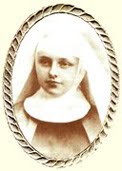
Sister Mary-Mechtilde of the Blessed Sacrament, O.SS.R. of the Monastery of Dublin (1826 – 1866)

Our dear Sister Mary-Mechtilde of the Blessed Sacrament, in the world Josephine Duvivier, was born at Tournai on 11th April 1826. She entered the Convent of the Redemptoristines at Bruges, made her profession there in 1850 and was sent to Ireland in 1859 with a number of Sisters for the foundation of the Monastery of our Order.

She soon became noticed for her solid virtues. Very sensible, and always very pleasant to those who had business with her, she found in her sweet and quiet character a help to exercise great control of herself, especially in disagreeable circumstances. Our dear Sister was very prudent and always acted with discretion. In the different charges that she exercised, she never said anything that was not strictly necessary. The Sisters were few in number at the beginning of the foundation, and our Reverend Mother gave her three tasks to perform. She did them with so much order, tranquillity and exactitude that it might be said that she had nothing to do.

The spirit of order was something innate in Sister Mary-Mechtilde, for when she was a child, she would refuse to eat if the bread was not cut right, and so every work that left her hands had to be perfect. A model of regular observance, her numerous occupations did not prevent her from always being one of the first at the common acts. Faithful in little things, she was so in the great ones, and in the course of a very hard trial that she bore heroically, she did not offer a single complaint, or made the least remark on the manner of what had been done to her. In a previous circumstance, equally painful, she kept the same silence and preserved the same calm. A Sister saw her with tears in her eyes, writing something. “What are you writing?” she asked her, knowing a little of what was going on. Sister Mary-Mechtilde replied: “Not much, but it says a lot.” They learnt a short while later that she had written these two words: “God alone!”

Our beloved Sister was remarkably humble, and set no great value on herself. It was especially in the course of her final illness that this spirit of abnegation showed forth. In 1865, a chill seized her and gave her a cough that never left her and degenerated into consumption. Nonetheless she followed the community exercises and seemed happy with everything. She never complained and never had the desire for any consolation. Reverend Mother said to her sometimes: “You are suffering greatly, my Sister.” “Oh no,” she would reply straight away. Her whole anxiety was not to cause trouble. As space was at a premium amongst us, we had no infirmary, and God permitted that there was no one ill up till then in the house. Sister Mary-Mechtilde was the first. So our dear invalid had to be content with the community room, which also served for other uses and as the recreation room. She took refuge in a small corner. It is useless to say that, because of our indigence, she had more than one mortification to endure, but she never complained. “I’m quite well here” she would reply if anyone showed her compassion on this subject.

However, her state suddenly grew worse. Our Reverend Mother set aside a parlour for use as an infirmary, and Sister Mary-Mechtilde was transported there. The doctor declared that there was no more hope, and Reverend Mother announced to our dear Sister the danger that she was facing, and the advantage she would have in receiving the last sacraments. Sister Mary-Mechtilde replied calmly: “We enter religion in order to die well. I want only the will of God. I desire to see God.” She asked to be confessed, and received the Holy Viaticum and Extreme Unction with a touching piety, following exactly all the prayers that the Community recited. A slight improvement was produced. Our confessor visited the dear invalid a few more times, and was greatly edified by the peace she enjoyed. “She has made her confession as she does every Wednesday”, he said one day to the Reverend Mother, “she has a well-regulated conscience.”

The moment of her last struggle was approaching. The demon came to tempt our good Sister, who took up her cross and struck the table with an extraordinary energy. Reverend Mother arrived, and seeing her so animated, she asked her the reason. “The demon has come to tempt me”, she replied, and looking up at the ceiling, she said: “Look, there’s two of them.” The Superior threw holy water at them and they disappeared.

Her perfect calm permitted her to recall the least prescriptions of the Rule. When Reverend Mother entered the infirmary, the invalid made an effort to get up, and when she was told to remain lying down, she would reply: “Why not a little bit of respect?”

On the eve of her death, Reverend Mother had a dream about her subject. She seemed to see a basket filled with precious stones, on which were written these words: “solid virtues”; and she distinctly heard a voice saying: “Throw plenty of holy water.”

Finally the supreme moment arrived. Our beloved Sister entered her agony. She tenderly embraced the cross, which she pressed to her heart, and held her rosary in her hands. While Reverend Mother and the Sisters were reciting the prayers of the agonizing, our dear invalid followed all the prayers devoutly and with a plain presence of spirit, and constantly repeated the holy names of Jesus, Mary and Joseph. When our Mother suggested to her the most beautiful acts of offering her life, three great tears rolled from her eyes. “My God”, the good Superior then said, “I offer You the last tears of Sister Mary-Mechtilde.” She then cast a last look at Reverend Mother as if to thank her, and as she pronounced the holy Name of Jesus, she peacefully rendered her soul to God. This was on 12th April 1866.

Our dear Sister had been able to say her own Consummatum est in all truth, because, before her death, she had even made the sacrifice of being interred in the common cemetery, as the Community did not as yet possess its own land. So we follow the humble convoy with an affectionate regard in the sweet hope of meeting her again one day to eternally sing the mercies of the Lord.

After her death, the deceased assumed a touching air of sweetness and majesty which filled everyone with admiration. It could have been said that a ray of heavenly glory had already touched her face, and without a doubt, she had already heard the ineffable call of her divine Spouse: Veni de Libano, Sponsa mea, veni, coronaberis [Come from Lebanon, my Bride, and you shall be crowned]..
(Monastery Chronicles)

This necrology is translated from Fleurs de l'Institut des Rédemptoristines by Mr John R. Bradbury. The copyright of this translation is the property of the Redemptoristine Nuns of Maitland, Australia. The integral version of the translated book will be posted here as the necrologies appear.

Saturday, 11 August 2012

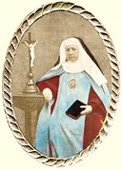
Sister Mary-Seraphim of the Blessed Sacrament, O.SS.R. of the Monastery of Dublin (1835 -1905)

I. First attractions to the religious life

Sister Mary-Seraphim of the Blessed Sacrament was born at Villarney on 6th February 1835. She was the second daughter of Mr. John Thomas Dewitt and Dame. Alice O’Connell, the niece of the great O’Connell who is so well known under the name of the Liberator of Ireland.

Miss Alice Mary O’Connell Dewitt was the standard-bearer for the Daughters of St. Alphonsus in Ireland.

In 1853, the Reverend Redemptorist Fathers were established in their little convent at Bank Place, Limerick. It was there that our future Sister learnt to appreciate the spiritual life by nourishing her ardent soul with the instructions of the good religious Fathers. She often told us that, early in the morning, she would escape from the paternal home in order to be one of the first to adore Jesus in the Blessed Sacrament under the roof of the Sons of St. Alphonsus, and also to pour out her fears and hopes at the feet of the Saviour, as she felt herself attracted to giving herself totally to God and becoming the Spouse of Jesus Christ.

Having heard them speak one day of an Order entirely consecrated to prayer, she conceived the great desire to enter it, and when she learned that these religious were the Daughters of Saint Alphonsus, her desire became all the more ardent. But many difficulties presented themselves. Alice had not yet attained the age of twenty-one, and her only sister was also resolved to embrace the religious life. Both of them had doubts about leaving their father, knowing how much this double sacrifice would cost him. They had already lost their mother some years previously.

On the 2nd of the month of August 1854, a friend of their father’s was preaching in the little church of St. Alphonsus. It was the Reverend Doctor Whelan, the Bishop of Bombay (India). The two sisters decided to ask His Lordship to make their father aware of their intimate desire. He promised to do so. As a religious himself (as he was from the Carmelite Order), he took an even greater interest in their position; and as he had been invited to dinner with the family the next day, the occasion appeared to have presented itself.

The result of the meeting was not in favour of the two sisters. What a disappointment it was when their father declared that he wished to test their vocation further. He promised the oldest that if she persevered in her resolution for another year, he would place no obstacle to her departure. As for Alice, he believed she was still too young to decide her vocation.

This refusal brought dismay to our future Sister, and her delicate health succumbed to it. Her father was so frightened by it and so greatly feared that death would bear his daughter away that he promised her that he himself would conduct her to the sanctuary of her choice, as soon as she recovered her strength. In October 1855, this good Christian, this good father, a new Abraham, brought his two daughters to Belgium. The one entered the convent of the Sisters of Notre Dame at Namur, and the other entered the convent of the Redemptoristines at Bruges as an Educande. Alice was thus the first Daughter of Saint Patrick who enrolled under the banner of Saint Alphonsus.

II. The Entry of Sister Mary-Seraphim into the Order of the Redemptoristines

The spirit of sacrifice which inspired our dear Educande was revealed when she entered the Monastery.

As she did not understand a word of French (she was the first educande who spoke English) she was not able to hold a conversation either with her mistress or even with her confessor without having continual recourse to a dictionary. And she was not able to make herself understood except with difficulty. The change of climate and food also made her suffer greatly, but all of this could not shake her. A visit to the Blessed Sacrament gave her the necessary strength. Jesus, however, Jesus Himself, knowing her generosity, hid from her the sweetness of His presence, but the faith of the courageous applicant did not weaken, and she would often exclaim: “O truly holy Sacrament, in You we truly have everything! Ego autem in Domino gaudebo, et exsultabo in Deo Jesu meo! [But I shall rejoice in the Lord, and I shall exult in Jesus my God!].

This joy, this happiness of heart in its sacrifice was always the character of her piety. Fifty years later, when she was asked one day if she would be happy if the Lord was to suddenly call her to Himself, she replied: “My Beloved is always with me, and I am always with Him.” These words were no more than the echo of her long life, and they were true, from her first days in religious life until her last breath. This was the first aspiration of the day when she prostrated herself before God to adore Him and consecrate all her being to Him.

On 7th January 1857, Mons Malou, the Bishop of Bruges, gave her the holy habit of the Redemptoristines and the name of Sister Mary-Seraphim of the Blessed Sacrament. During her novitiate, she was distinguished by her fervour, her generosity, and above all her obedience. On one occasion, she was told to take a remedy that she imagined was poison. She took it nonetheless, following the example of Saint Alfonso Rodriguez, and told herself like this great saint: “It is good to die in an act of holy obedience.”

On 25th January 1858, her ardent desire to become the Bride of Jesus Crucified was satisfied. The following year the Irish foundation was decided upon and our dear Sister Mary-Seraphim was one of the Sisters chosen to accompany our venerable foundress, the Reverend Mother Mary-Jean of the Cross. In all the trials and difficulties of this foundation, she showed herself as truly devoted, for she had learnt that true contemplation subjugates the senses as well as the search for self. At the ceremony of installation (25th March 1859) many members of the family of the great O’Connell was present, including his sister, Mrs. Moynihan, the grandmother of sister Mary-Seraphim, and her two daughters, Mrs. Fitzsimmon and Mrs. French. Thirty years earlier, the Liberator had, by his claims, as if laid the first stone of the edifice of the religious Orders in Ireland. Providence seemed to be rewarding him by ensuring that one of his little nieces was part of this community in Dublin that he doubtless looked at with love from the highest heaven.

Sister Mary-Seraphim was always a model of religious virtue. Her fervour never slackened, and her constant piety was never separate from her ardent love of regular observance. “Do not fear”, said Father Bridgett somewhere in an address for a religious profession, “that a long familiarity with God will make you love God less than you do now. Certainly it is not so. The knowledge that you have of the graces and perfections of your divine Spouse is very imperfect compared to what you are destined to have. If, in the world where you are occupied by cares, and by alluring pleasures or at least distracting ones, the divine attractions that Jesus has revealed to you are nonetheless powerful enough to show you how those pleasures are vain and insipid, and they have communicated to you a love capable of breaking down all the obstacles of flesh and blood – then we shall not have to wait until penance and prayer have purified more and more the eyes of your soul! Does not Jesus let His delights be revealed to the soul who seeks Him?"

III. Sister Mary-Seraphim’s spirit of faith

Our dear Sister’s spirit of faith kept her elevated towards the region of her divine Spouse. She loved the Divine Office and showed great ardour in reciting it. A short time before her death, she begged the Mistress of Novices to strongly recommend them to put all their voices into it: “I understand nothing”, she said, “except that is a sublime privilege to recite it, and we should spare nothing in order to recite it as it should be.” She was always the first in choir for Matins, even under the weight of her seventy years. She so much loved to be there before the others, that the young Sisters sometimes used a little stratagem to get her to anticipate herself.

Our venerated Mother Mary-Jean of the Cross often told us: “I have had a bas-relief carved and put behind the altar, showing the twenty four oldest Sisters prostrate before the throne of the Lamb. [1]  It is to remind you of the spirit of adoration with which you should recite the Office, and especially Matins.” Sister Mary-Seraphim took this observation strongly to heart: before reciting the Psalms, she would make a profound reverence and had an original little manner of also lifting up her breviary and raising her eyes to heaven.

In the last week of her life she was named hebdomadary for the last time, which caused her a noticeable pleasure. She often repeated the words of Macbeth: “If I must die, I shall die under the yoke.” Feast days and days of recreation were days of prayer for her, and she often went to choir and spoke frequently of the happiness of living under the same roof as the Blessed Sacrament.

Her spirit of faith was also shown in her relationship with her Superiors. Be they young or old, every word they said was considered by Sister Mary-Seraphim as the word of God, and their least desire was fulfilled on the spot. “I do not consider the person in my Superior”, she often said, “All I see in her is the representative of God.” And so she was always joyful and did everything according to her will, since she had no other will than the will of God.

Our dear Sister professed a tender love for our good Mother of Perpetual Succour. “I obtain everything”, she said, “by writing a little letter to the Queen of Heaven.” And when a Sister mentioned to her about being in pain or having some anxiety, she would reply: “It will all come out well, for I shall write a few words to my good Mother.” And everything did come out well.

How can we pass over in silence her filial love for our Father, Saint Alphonsus and the profound interest she took in the Congregation? The work of the missions made her move heaven and earth to gather a rich harvest and gain souls for God. Speaking to the Mistress of Novices, she asked her if she was pleased with her daughters, and added: “Be sure to tell them that they are not here only for themselves, but that they must pray and work for the salvation of souls. May they indeed give everything to Our Lord!” How happy she was to learn that they were profoundly attached to their vocation! “Blessed be God! Blessed be God!” she would then say fervently.

IV. Her confidence in God and her charity towards her neighbour

Sister Mary-Seraphim took an extreme pleasure in reading the works of our Father, Saint Alphonsus, and from them she drew a great love for the virtues that he recommends there so well, and in particular a tender confidence in God. The spirit of prayer penetrated her, and in all her difficulties or trials, in all her spiritual or temporal necessities, she would have recourse to her God with the confidence of a child: “One thought always consoles me”, she would say, “and that is that Our Lord is with us. He is always there.”

She gives us the most beautiful examples of humility, obedience and charity. Always sweet, always cheerful, how happy she showed herself when she was able to render some humble service to her neighbour! Obedience alone could make her lay down the broom for sweeping, and we may say that she never left hold of it until the end of her life. Even when she was losing her strength and eyesight, she never abandoned her charitable occupation, but she would call a young Sister to make sure that she had not left any dust behind. Because she was interested in everything, she would turn with a very good grace to help the Sisters in charge and showed great gratitude for the least services. She was very sensitive and easily moved to sympathy, and so she would say: “I feel everything and always”, and then she would add: “But I am placing myself above everything.” They begged her to slow down a little, but she replied: “We never know how far we can go. I want to go right to the end.”

When she was on her bed of sorrow in the last days of her life, she made this reply to a converse Sister who asked her for some advice: “Devote yourself to the community, and you will have a happy death.”

Her love of prayer and for her neighbour suggested to her that she should pray often and gain indulgences for the souls in Purgatory. She would most carefully collect the funeral notices of relatives, friends and benefactors. On each anniversary, they would reappear on her table at exactly the right time.

All the virtues of Sister Mary-Seraphim were inspired by her love of God. He was the soul of her thoughts and actions, and she recommended this above all to the Novices, during the few years when she had their direction. All her instructions tended to make them love God alone, and this was the supreme end that she unceasingly proposed for their efforts. It was a truly worthy preoccupation for a true daughter of Saint Alphonsus, the holy Doctor who had so well taught the ways of this love.

V. Last sacrifice and death of Sister Mary-Seraphim

One sacrifice remained for our good Sister to make, and she dreaded it. It was that of her love of reading. We know how useful a taste for good reading is for the spiritual life. During the last year of her life, Sister Mary-Seraphim had to renounce the advantage that she drew from it. Our Lord indeed sent her as her last cross this loss of her eyesight which made reading impossible. She endured it patiently and without complaint, put aside her cherished books, and although she was no longer permitted to recite the Divine Office, she always wished to be present in choir to hear it. But the days never seemed long to her. Rosaries succeeded rosaries, fatigue never made itself felt, and our good Sister could say with a smile: “I would never have believed that I could so easily give up books.”

Our Lord, satisfied with her sacrifice, gave her back her eyesight. However, Sister Mary-Seraphim’s health deteriorated. Yet the doctor saw nothing to be worried about, when suddenly, on 14th June 1905, he found our good Sister in serious danger. She was sent immediately to the infirmary, and the next day she received Extreme Unction and the Holy Viaticum. Her ardent piety found an indescribable consolation in it. On the 21st, her confessor, finding her close to her end, gave her a plenary indulgence. That night was a bad one, as a painful suffocation afflicted our good Sister, who suffered it all with an angelic patience, and repeated with no less fervour the pious aspirations that our Reverend Mother suggested to her. The following day was the feast of the Blessed Sacrament. The Lord was most willing to respond to the desires of His servant, and at ten o’clock, she had the happiness of receiving Him for the last time, on this feast that she had always loved so much. Our Reverend Mother and our dear Sisters continued to pray beside her bed, while the dear invalid said to her Superior: “I would not like to deprive my Sisters of the happiness of adoring the Blessed Sacrament exposed in the chapel.” They suggested this beautiful aspiration to her: “O divine Sacrament, we adore You; make us love You more and more.” “Yes”, she replied, “yes, more and more.”

At 1:30 a.m., Sister Mary-Seraphim repeated these aspirations with our Mother: “Jesus, Mary, Joseph, I give you my heart and my soul.” “Sweet Heart of Mary, be my salvation.” These were her last words, and she rendered her beautiful soul to God in peace and holiness. This was on 22nd June 1905. Our good Sister was in her 71st year and had been 48 years in profession.

The Ven. Fr. Passerat said that a professed religious must always remain a novice in her abnegation of will and judgement, with the simplicity of a child, and at this price he promised her constant peace, Paradise on earth and Heaven without Purgatory. Sister Mary-Seraphim practised this recommendation. God, we hope, will have rewarded her for it.
(Monastery Chronicles)

Footnotes
[1] In imitation of the twenty four elders mentioned in the Apocalypse.

This necrology is translated from Fleurs de l'Institut des Rédemptoristines by Mr John R. Bradbury. The copyright of this translation is the property of the Redemptoristine Nuns of Maitland, Australia. The integral version of the translated book will be posted here as the necrologies appear.

Sunday, 29 July 2012

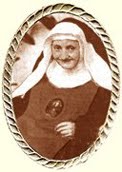
Mother Mary Jean of the Cross, O.SS.R. Foundress of the Monastery of Dublin (1826 – 1902)

Foundation of the Monastery of Dublin

CHAPTER III.
The Last Trials – The Last Years

The spiritual edifice and the material edifice were therefore raised up, and God's eyes dwelt upon them with pleasure. But the Lord has said: “Your ways are not My ways, your thoughts are not My thoughts.” To perfect the courageous soul that had brought so great a work to such a good end, God sent her the cross. “For great souls”, it has been justly said, “Tabor is Calvary”. Mother Mary-Jean of the Cross had her Calvary: her resignation to the will of God and her lively faith made a Tabor of it.

It is indeed a very mysterious thing, this suffering given as a reward for good actions and we cannot assign a better reason for it than the will of God. God wants all His elect to resemble the divine model, Jesus crucified in some way; for His elect of predilection, He wants this resemblance to be more striking. Named Assistant after having been Superior for long years, Mother Mary-Jean showed herself as submissive a daughter as she had been devoted as a Mother; but this change was of small account beside her interior pains and desolations. An illuminated director then wrote to this Mother in terms that we wish to quote: “Jesus is calling you to follow Him in the way strewn with thorns that He walked while on earth when His life was a continual cross. Have confidence: the Master will sustain you. Oh! how consoling it is to think that every test is a mark of love on the part of God, that He has weighed it before imposing the burden of it upon us, and that graces, strength and help are always granted to us in the measure of the sacrifice! Nature may tremble, and you may perhaps say like Jesus in the Garden of the Olives: Father, may this chalice pass far from me! but love must very quickly make you add with your Heart submitted to Our Lord: Not my will, my God, but yours! –Then, when tribulation has purified your soul, it will be free and happy and sing the hymn of its deliverance. May these thoughts of faith sustain you!”

Never were opinions given more opportunely. They were received with gratitude and observed submissively. And then, when some unexpected circumstances determined Mother Mary-Jean of the Cross to leave Ireland, she left (1894) with the same submissiveness to the will of God that she had had in 1845, at the time of her entry into the Order. In fact, a precious friendship asked her to found a new monastery of Redemptoristines in France: the good Mother believed she had to accept. So we can understand with what sadness of heart she departed from the dear monastery of Dublin to which she had given the best part of her life; but if the sacrifice was great, the devotion to God's glory was greater still. Mother Mary-Jean was going to live for a while in the Redemptoristine Convent of Saint-Amand-Les-Eaux, where Mother Marie-Joseph of the Child Jesus was the Superior. It was this worthy nun who had formed the project of which we have spoken, and her great heart thus wished to propagate her Order in this same France that one day was to exile her. Mother Mary-Jean of the Cross responded to her desire, and put all her activity into procuring the realization of it. But God did not permit the success of this attempt. The event proved clearly that Providence itself conducts all affairs. The new foundation was to be only a new prey prepared for the greed of the revolutionary treasury, and it was to sink into the abyss with so many others in the wonderful times that we had to live through. The good Superior of Saint-Amand had the sorrow of seeing her own convent sold at public auction, and be obliged to go into exile with her daughters as a stranger on earth; but God, by a just return, granted her to die on the hospitable soil of Belgium where she had, long years before, begun her religious life; and her supreme consolation was to have assured the future of her daughters. As for Mother Mary-Jean of the Cross, she retired in 1895 to this dear monastery of Velp, whose furnishing she had prepared so well in 1858; and there, in company of beloved Sisters who surrounded her with their affection and respect, with a good Irish converse Sister beside her, who had come into exile with her, she spent her last years in peace and holiness.

Before her death, God reserved her a touching consolation. Called to Tournai in 1893 by the ecclesiastical tribunal collecting information regarding the life and reputation for holiness of the Most Rev. Fr. Joseph Passerat (today Venerable), she made as deep an impression on the judges by the superiority of her spirit, her character and her virtues, as by the importance of her deposition. It was the Ven. Fr. Passerat, it may be remembered, who in 1845 had opened the doors of the Monastery of Bruges to her. It was probably very pleasant for the Reverend Mother to tell everything she knew about the life and virtues of this Servant of God, and she also testified that she herself had felt the effect of his intercession with God. One day she was nearly choked by a big piece of fishbone, so she rubbed her throat with a picture of Fr. Passerat and the bone immediately detached itself, and she was able to remove it.

June 15, 1902 saw the end of the beautiful life whose sketch we have just drawn. For seven years, by her fervour, this good Mother had edified the dear monastery that had offered her such cordial hospitality. Her death was sweet and peaceful. After receiving the last sacraments, for one last time she remembered that dear convent of Dublin that she had loved so much. Her eyes thanked the good Superior of Velp, the Sisters that surrounded her and good Sister Aloysia her inseparable companion and then she returned her beautiful soul to God. She was 77 years of age. Her funeral ceremony was both touching and splendid. Several members of the family of the venerable deceased made it their duty to accompany her mortal remains right to her tomb, and it was in the midst of the general emotion that the body of Mother Mary-Jean of the Cross was confided to the earth.

The Redemptoristine convents, notably those of Dublin and Clapham (London) mixed their regrets with their tributes. The Monastery of Dublin wished to dedicate a very special memorial to their pious foundress. They erected a monument to her in the Sisters’ cemetery, and a beautiful inscription, engraved on white marble, recalls her good work there forever.

Let us not finish these pages without saying some words about the high esteem that some very distinguished personages had for Mother Mary-Jean of the Cross. His Eminence Cardinal Cullen looked upon her as a person who was both pious and intelligent, and ensured that the Holy See confirmed her for many years in her position as Superior. – Cardinal MacCabe, his successor in the seat of Dublin, had the same esteem for her and professed the same admiration for her good character. The Venerable successor of these two Prelates paid an outstanding tribute to this good Mother when he said of her: “Look at her soul. No matter what side you turn it, you will always see it as clear a diamond.”

The Most Rev. Fr. Mauron, the Superior General of the Community of the Most Holy Redeemer, helped Mother Mary-Jean of the Cross with his advice. You could fill a great volume with his correspondence with this servant of God. –The Rev. Fr. Coffin, the Redemptorist who died as the Bishop of Southwark, Rev. Fr. Bridgett and Rev. Fr. Harbison all shared the same sentiments. And finally there were also men of the world who paid homage to her perfect understanding of even temporal matters. The notary Rouch said one day: “Madame the Superior is the equal of everyone by her intelligence, knowledge and prudence and it is with a consummate wisdom that she manages the temporal affairs of her community.”

The Most Rev. Fr. Raus, the Redemptorist Superior General, had the opportunity, in 1904, of visiting the monastery and church of the Sisters of Dublin. After examining everything in detail, he did not hesitate to say these beautiful words: “I already had the highest esteem for Mother Mary-Jean of the Cross; now I esteem her even more."

This necrology is translated from Fleurs de l'Institut des Rédemptoristines by Mr John R. Bradbury. The copyright of this translation is the property of the Redemptoristine Nuns of Maitland, Australia. The integral version of the translated book will be posted here as the necrologies appear.

Friday, 20 July 2012

Mother Mary Jean of the Cross, O.SS.R. Foundress of the Monastery of Dublin (1826 – 1902)

Foundation of the Monastery of Dublin

CHAPTER II. The Monastery and the
church of the Redemptoristines of Dublin.

Virtues of the good Mother

Twelve years had passed since the entry of the Redemptoristines in Dublin, and they still occupied only a provisional home. In 1871, the moment seemed to have come for Mother Mary-Jean of the Cross to build a definitive Monastery. For this purpose, the Most Rev. Fr. Nicolas Mauron, Rector Major of the Community of the Most Holy Redeemer, wrote to her on 1st January 1872: “I am most happy to bless the enterprise to which, after so many years of waiting, you believe you can now put your hand. You have done well to be patient during so long a time; because, in this kind of business, urgency does not attract God's blessings. For the same reason, you have also done well not to bind yourself too early to begin a foundation in England, especially in a locality that would seem not very desirable. It is important for you to establish yourself well in Dublin, and consolidate yourself well there before beginning any new foundation, of which it would be prudent to dream only when you in fact have a superfluity of good subjects. I would like to hope that this delay according to God's spirit will not be an obstacle to the vocation of the lady you have mentioned to me. A well-established Monastery is worth two which are suffering from the lack of personnel, and which almost always means the decline of observance and the loss of its spirit.”

These beautiful words encouraged the good Superior. The Cardinal Archbishop of Dublin, Mons. Cullen, approved the choice of land, the plan of the monastery and the chapel, drawn up by a famous architect, Mr. Ashlin, and on 18th July 1893, he solemnly laid the first stone of the new convent. A gracious detail: the builder had had the measurements taken of the land that the new monastery and the church would occupy, and the Sisters had pegged them out with long sticks painted white, on each of which they had written an invocation from the Litanies of the Most Holy Virgin. The Most Rev. Fr. Coffin, Provincial of the Redemptorists of England, and Fathers. Bridgett and Harbisons were present, as well as a numerous clergy and a considerable crowd. Once the first stone had been laid, Father Bridgett gave a magnificent speech about the role of the contemplative Orders in the world.

Thanks to the builder’s activity, constantly stimulated by the zeal of the Mother Superior, the work was rapidly brought to a good end. On 30th June 1875, at five o'clock in the morning, the Redemptoristines left their temporary home and went there in procession, led by two eminent members of the clergy, to take possession of their new Monastery. The holy Mass was celebrated, the nuns received communion, and until 2nd July, the convent was open to the crowd avid to visit it. On that day, the Cardinal established the enclosure, and the Sisters, to their greatest joy, withdrew forever into their pious solitude. With what gratitude their hearts now turned towards her who had prepared them a retreat so well adapted to their life of prayer! With what rejoicing they began the Divine Office henceforth in this chapel, a real jewel of art, where their prayers were to attract upon Ireland and the world most abundant favours!

The church merits us spending some moments upon it, for it cost so much work for Mother Mary-Jean of the Cross! She elicited the grants of so many generous souls! She received the visit of so many pious souls, so many hearts that suffered and so many artists anxious to contemplate a masterpiece!

It is dedicated to Saint Alphonsus, and the long street that leads to the Monastery has received the name of Saint Alphonsus Road. The church is indeed worthy of the holy Doctor by its rich ornamentation and the piety that it inspires, for devotion to the Most Holy Sacrament, the Most Holy Virgin, Saint Joseph, the holy Doctor and Saint Gerard Majella seem to have established their home there. The main altar is richly sculptured in white marble; on the front, the Last Supper is engraved in bas-relief and decorated with precious marble. The whole of it is the homage of a pious person totally devoted to Saint Alphonsus.

Around the sanctuary, great pictures represent the holy Doctor preaching to the shepherds and the highlanders of Scala; the Bishop of Saint-Agatha praying before the Blessed Sacrament; and Saint Alphonsus rapt in ecstasy before the picture of the Most Holy Virgin. Above the high altar, Saint Alphonsus is represented glorious in Heaven: he is praying to the Divine Redeemer and pointing with his finger to the Most Holy Virgin who is in an attitude of supplication. At the bottom of the picture, an angel is holding the Rules of the Institute of the Most Holy Redeemer in his hands.

In front of the nuns’ grille, a beautiful painting attracts attention: it is Saint Alphonsus giving the Rule to the Redemptoristine Nuns. The life of the divine Saviour is carved in bas-relief right around the church and below it are the stations of the Way of the Cross. On the window arcades are busts of the twelve apostles, in medallions; then, back to back on columns of marble, the wooden statues of Saint John the Evangelist, Saint Teresa, Saint Francis de Sales and the Irish Saint Bridget, sculptured and ornamented in Munich.

Above the tabernacle rises a dome supported by four columns of red marble: two angels on their knees adore the Blessed Sacrament exposed. The door of the tabernacle is surmounted by a cross decorated with precious stones; inside the door, on a silver plaque, the Sacred Heart of Our Lord is engraved, and it is surrounded with as much hearts as the community possesses members.

A beautiful altar dedicated to Our Lady of Perpetual Help is also the offering of a pious soul. The white marble of which it is made, the mosaics with which it is decorated, the ex-votos of gold and silver that surround it, offer an enchanting vision. Finally the altar of Saint Joseph, also in white marble, completes this beautiful whole.

This is but a feeble and incomplete description: however, it will suffice, we hope, to give an idea of the zeal deployed by Mother Mary-Jean of the Cross, for the beauty of the house of the Lord.

Now let us speak of virtues of the good Superior.

* * * * *

Benefactors are not to be forgotten in a religious Order, and so Mother Mary-Jean of the Cross carefully cultivated this beautiful virtue of gratitude which is so pleasing to both God and men. She prayed and had others pray for all the people who had contributed by their offerings to the building of the monastery and the church, and to its embellishment. The generous O'Brien family was in the first rank and then a noble lady, Mrs. Ainsworth, who was to enter the Monastery later as a nun. Let us speak now of this Sister Mary-Anne Liguori of Jesus Crucified, to whom we shall later dedicate a special note. She entered the Monastery of Dublin, and for five years, gave the example of the most beautiful virtues there. She had the happiness of being attended at her death by her worthy Superior, whose most maternal zeal for the sick and the agonizing we have already praised. Let us listen to Mrs. Ainsworth’s historian on this point. “The maternal love and the assiduous care of the good Superior”, he says, “redoubled when one of her daughters was about to die. She would then install herself in a little room next to the infirmary so as to be close to the dear departing. In spite of her sorrow, in spite of her fatigue, she knew how to remain strong and admirable in this supreme moment. When Sister Mary-Anne Liguori had arrived at her last moments, Mother Mary-Jean of the Cross spoke these sublime words to her: “Finally, my dear Sister, the happy moment has come, and Jesus Himself is coming to find you. The Most Holy Virgin, Saint Joseph and Saint Alphonsus are going to present you to Him. Take your Crucifix that you have loved so much, take your Rosary: these are your passports to eternity.” Then she herself put the blessed candle into the hands of the dying Sister and recited the prayers of the agonising in a gentle and firm voice.”

“A Prioress”, wrote Saint Alphonsus, “must also be a Prioress in love, which means the first in loving God; and this is the ruling that I am giving you.” [1]

Mother Mary-Jean of the Cross was indeed the first to love God while observing her Rule. The beauty of God's house doubtless concerned her to the highest degree, and no one could say what vigilance she exercised so that all was worthy there of the divine Host in the tabernacle and so that the Divine Office would be recited there with piety; but the beauty of the interior house, that is to say the kingdom of God's love in her and in her daughters excited her solicitude even more still. Her devotion to the Blessed Sacrament was exquisite: once she was at the foot of the tabernacle, we may say that no one knew how to draw her away from it. On Holy Thursday, it was with fiery words that she reminded her Sisters of the institution of the Blessed Eucharist; on Good Friday, the Way of the Cross inspired from her the accents of the most tender love towards the divine Master crucified for love of us; in a word, by her words, by her examples and by the good order she established, she preached always and everywhere of this divine love which is sufficient for all and which is perfection itself. And so she spread a delightful peace around herself, and the most tender charity united all hearts to her. The Most Rev. Fr. Mauron congratulated her about it one day in these terms: “I rejoice that all the Sisters are very fervent and united to each other by the spirit of charity; and in a word, occupied in their Monastery by rendering the spiritual edifice ever more perfect by their sanctification, and by knowing and appropriating the spirit of Saint Alphonsus more and more.”

Love of the poor was also a distinctive feature of the worthy Superior. She always took keenly to heart the interests of the poor Irish people, greatly admiring their faith, their respect in God's house, and their patience in their hard privations, and so in winter she distributed many clothes to the poor wretches who implored her charity; and her daughters continued after her this noble exercise in generosity towards Christ's suffering members.

An admirable thing! The worries and the expenses of all kind that the building of her convent imposed on her did not stop her from helping the Redemptoristines of Italy, robbed by the Italian government. The Most Rev. Fr. Mauron congratulated her more than once on this. He wrote to her one day: “I have just received the small sum you are sending to your poor Sisters in Vibonati. Knowing that you have to cope with your building expenses at the moment, I would not have dared to ask or hope for generosity on your part. When I will make known to your Sisters in Vibonati the position in which you find yourself, they will be even more grateful to you because of it.” Another day, he also told her: “I shall send the sum in question to the Superior of Saint-Agatha without delay. It is a great act of charity that you have shown towards this community: it is most pleasing to God and to Saint Alphonsus, and they will certainly bless it. It was thanks to this Monastery, founded and maintained by Saint Alphonsus with so much solicitude, that the Order of the Redemptoristines crossed the mountains and was propagated as far as Dublin. Scala was its cradle, and Saint-Agatha the propagator.”

We have already said how much Mother Mary-Jean of the Cross inspired the love of the Church in her community. Love of the Pope was inseparable from it, and so devotion to the Pope (to use Father Faber’s expression) was fully alive in the monastery. Pius IX, for his part, deigned one day to reply to her in a charming manner. This was in 1867 and the victory of Mentana had just rewarded the bravery of the pontifical warriors. No doubt the good Superior had sent the Sovereign Pontiff the expression of the filial devotion of her community; because the Most Rev. Fr. Mauron wrote to her on the 17th December: “Yesterday I had the honour of being admitted an audience with His Holiness. I then told him, for his consolation, how the Redemptoristines had been praying with fervour and constancy for his sacred person and for the Church, and I asked him for an abundant and special blessing for your community. His Holiness was most happy to oblige. Finally, following your request, I presented him with the enclosed portrait, while asking it to write down some words on it. Immediately, with this very paternal grace that characterizes him, the Holy Father wrote on the back of the picture: Die 16 decemb. 1867. Quocumque tendit Jesus, virgines sequuntur, that is to say: Everywhere Jesus goes, the virgins follow Him. – I do not doubt that these beautiful words that the Holy Father addresses to you directly, will be a fertile topic of meditations for you. Perhaps it will not be indifferent to you to know that the Holy Father looked attentively at the photograph and told me that he thought it was a good one.” [2]

Great was the joy of the community of Dublin when it had the honour of receiving the visit of some delegate of the Holy See. This is how in 1875, on the occasion of the centenary of O'Connell, when Cardinal Franchi was sent by Pius IX to represent him at the splendid feasts celebrating this occasion, it was an indescribable happiness for the community to see this eminent Cardinal coming to speak with a very paternal goodness about the troubles of the Church and the beloved Pontiff. He recommended all the Sisters to pray with ardour for these sacred interests and show themselves, in this as in all the rest, the true daughters of Saint Alphonsus. Then, blessing them as he departed, His Eminence congratulated the Superior for having raised to the glory of God so beautiful a church, and gave her a magnificent cross in memory of his visit.

Footnotes
[1] Letters of St. Alphonsus, Vol. I, p. 421
[2] Le Révérendissime Père Nicolas Mauron, chapitre XX

This necrology is translated from Fleurs de l'Institut des Rédemptoristines by Mr John R. Bradbury. The copyright of this translation is the property of the Redemptoristine Nuns of Maitland, Australia. The integral version of the translated book will be posted here as the necrologies appear.

Thursday, 5 July 2012

Mother Mary Jean of the Cross, O.SS.R. Foundress of the Monastery of Dublin (1826 – 1902)

Foundation of the Monastery of Dublin

CHAPTER I. CHILDHOOD OF JULIE VERHELST.
She enters the convent of the Redemptoristines at Bruges

She was indeed a charming child, this little Julie Verhelst who, in 1830, when she was scarcely four years old, was brought to the church on Christmas day at the very moment when the great bell announced the midnight Mass. She knelt down on the pavement, as if totally penetrated already by the grandeur of the mystery that was being celebrated, and prayed fervently. A little later, endowed as she was with a rare intelligence, an admirable uprightness of heart, and a profound piety, she watched so well over her two young brothers and her four sisters that when she was present, they did not dare permit themselves the smallest lie or the least evasion. It was indeed one of the characteristic features of her life. Her soul was always as pure as crystal, and the truth shone forth in all her actions.

Julie Verhelst was born in Courtrai in 1826, of well respected and perfect Christian parents. Through her agreeable nature, her charming pleasantries, and the happy company in her of the rarest qualities of mind and spirit, she was soon the delight of her parents and family. But the Spouse of Virgins was very soon to reserve this chosen soul for Himself. From her first communion in 1837, the sweet child felt a keen attraction to the religious life. The excellent education she received confirmed her in this thought; and when Father Paul Reyners, Redemptorist, made her aware, in the course of a retreat, of the existence of the Order of the Redemptoristines, she felt God calling her to be one of the daughters of Saint Alphonsus. The religious who was then governing the Redemptoristine Convent of Bruges was called Sister Marie-Alphonse of the Will of God. It was she who welcomed the young lady’s first overtures. And she in turn was greatly impressed by this interview. “I believed I was in the presence of Saint Teresa”, she told her mother, “so struck was I by the greatness of her soul and the profound faith with which she spoke of the greatness of the religious vocation.” Mother Marie-Alphonse promised the postulant she would receive her as soon as the will of God became manifest and certain obstacles overcome. Providence did not delay in opening the way.

On 2nd July of the year 1845, on the feast of the Visitation of the Most Holy Virgin, Julie-Marie-Josephine Verhelst, in company of four other young ladies of good family, trampled with their feet on the greatness of the world with its deceptive charms, and took this first step in one day becoming the brides of Christ, their only love. This was at the monastery of Bruges. After greeting them, the Venerable Fr. Joseph Passerat spoke to them in detail; then he led the postulants to the door of the enclosure, took it upon himself to knock on it for them, and when Mother Marie-Alphonse had made the customary demands, he introduced them into the monastery to the chant of In exitu Israel de Aegypto [On the exit of Israel from Egypt].

The ceremony for the taking of the habit took place for the five candidates one year later, that is, on 22nd July 1846: all of them had given brilliant proof of their virtue, but she who was later to be called Sister Mary-Jean of the Cross stood out from all the others by her blind obedience, her spirit of sacrifice, and a piety so full of grace and unction that one could not help feeling attracted to her. The Bishop of Bruges was the celebrant, and after a special sermon given by Fr. Joseph Reyners, he blessed the white veils and the holy habit, and presented them to the novices by saying: “May the Passion of Our Lord Christ be stamped on your heart and in all your senses.”

The generous Novice then saw the path of the actual novitiate open up before her. Under the guidance of Mother Marie-Philomène, she made new and rapid progress in the practice of solid virtue. The Rule of the Redemptoristines requires them to imitate the virtues of the Most Holy Redeemer, reproduce His hidden life in Nazareth as much as possible in themselves, and participate by their prayers and their sacrifices in His apostolic life, for the great work of the salvation of the souls.

As humble as she was courageous, Sister Mary-Jean of the Cross did not place any limits to her ardour. Accustomed to doing nothing by halves, she continued to follow the royal path of complete devotion to her heavenly Spouse, and she always had a horror of the narrow calculations of a shared life, and a heart that is not all for God. “Virtue”, said Saint Mary-Magdalen of Pazzi, “has nothing feminine but the name, and taken in the sense of religious perfection, this word means heroism and complete immolation of self to be united to the divine model, Jesus crucified.”

This is indeed what our Novice had understood, so she was amply rewarded when, on 15th October 1847, she was permitted to pronounce the holy vows of poverty, chastity, obedience, and perpetual enclosure.

* * * * *

The obedience of the newly professed soon had occasion to be tested.

One day she went to ask Mother Marie-Alphonse for a book of spiritual reading, and received this reply from her Superior: “Certainly, but before I do so, you must learn the first eight chapters of Spiritual Combat by heart, and recite them to me”. Mother Mary-Jean of the Cross bowed her head, learned the eight chapters by heart, recited them, and then received a book of readings.

A more important occasion presented itself: it was about the tasks to be done. As Saint Alphonsus says, it is often something that causes the greatest problems to Superiors, because they do not always find obedient souls. The young professed did not seek anything and did not refuse anything, and when she was named assistant-bursar and portress, she fulfilled these functions with tact and a remarkable ability. The converse Sisters greatly liked and respected Mother Mary-Jean of the Cross, and they gave her all their confidence. This good Mother in fact regulated their different tasks so that they would all help each other with a quite fraternal charity. She herself would procure for each one of them what was necessary for her task, gladly took upon herself the writing of their letters, gave them their spiritual readings, and marvellously possessed the precious talent of restoring their spirits by one of those words that go straight to the heart. And so none of them ever recoiled before works most painful to nature, and their hearts rose effortlessly to God to offer Him lovingly the tribute of their obedience.

After one responsibility came another. The task of Housekeeper later on called forth the qualities of the Mother Mary-Jean of the Cross and that of Mistress of Novices showed she had a rare dexterity in the government of souls. “All the good of a convent”, said Saint Alphonsus, “depends on the education of the Novices, who eventually will have to govern it”. The good examples of the devout Mistress, her impartiality and her constancy in firmly instilling knowledge and observance of the Rule promptly won her the confidence and affection of her daughters. For in fact they were so, as their Mistress showed herself a vigilant and tender mother in regard to them, forming them little by little to solid virtue, and endeavouring to dilate and rejoice their hearts and make the yoke of the Lord seem sweet and soft to them. Thus the Monastery of Bruges had the happiness of possessing a number of fervid souls, delicious fruits, worthy of the tree that had born them.

The foundation of the Convent of Brussels-Malines took place in 1855. It was from Bruges, to the number of fourteen, that came the Redemptoristines who established it. Mother Mary-Jean of the Cross had no part in it; but in 1858, when it was proposed to open a new monastery at Velp, in Holland, it was she who was assigned to prepare it. Assisted by two converse Sisters, she set to work with her usual activity, and only a few weeks were sufficient for her to put the house in state to receive the Superior and the four Sisters designated for the foundation. When they arrived, they found the cells all ready, the chapel well prepared, the kitchen in order and the cellar itself abounding with provisions, but the Sister Procurator’s purse no longer contained even a cent, so much had she wanted to do everything well!

But there was now a new foundation that would require the care of Mother Mary-Jean of the Cross. This time, it is as Superior that she will appear to us. The tasks exercised by her up till now were all to prepare her for a more difficult and meritorious life still.

* * * * *

It was to Dublin, the capital of the island of the Saints, that the good Mother would be going to found a monastery of Rédemptoristines there. God wanted Ireland, this country so devoted to the Most Holy Redeemer and to His Most Holy Mother, to have its own Virgins consecrated to none other than the imitation of these two admirable models.

Recommended to Cardinal Cullen by the illustrious Mons. Malou, Bishop of Bruges, Mother Mary-Jean of the Cross departed from Bruges under the guidance of Reverend Mother Marie-Philomène, her Superior, with four Sisters intended to be the core of the nascent community. On 25th March 1859, on the feast of the Annunciation, the new arrivals were solemnly installed in their provisional home. Cardinal Archbishop, the Most Rev. Fr. de Held, Provincial of the Belgian Redemptorists, the Rev. Fr. de Buggenoms, Rector of Limerick, numerous priests and all the notabilities of Dublin, enhanced the ceremony by their presence. An eloquent sermon by Father de Buggenoms reviewed the merits of the contemplative life, and showed the happy fruits that it produces in the Church.

It was a great joy for the Sisters to see their number soon increasing. Fine vocations were declared straight away, including that of the eldest daughter of Mr. O'Brien. Her family was one of the most illustrious and revered in Ireland: it recalled the heroic times when the Catholics of this country had, at the cost of a thousand sacrifices, defended their faith and their priests against the most atrocious persecutions. Several others, in whose the veins the blood of the martyrs also flowed, joined themselves to her, and Mother Mary-Jean of the Cross soon understood that Heaven was for it, in the midst of the unavoidable contradictions that it had to undergo. Did she not know indeed, that in the cross is life, salvation, and resurrection? Saint Joseph, to whom she prayed with ardour, had he not sent her some unexpected help? Finally, in the very house where she lived, a good servant of God had once predicted that some cloistered nuns, dressed in red and blue, would come there to live one day.

These divine favours encouraged the Mother Superior, and thanks to her example and thanks to her exhortations, the new Monastery was soon established on the basis of the most perfect regularity. With her firm but gentle authority, she captivated all hearts, and knew, by a thousand means that only virtue knows, how to prepare them for the most generous sacrifices. Her attention to giving pleasure had the secrets and resources that a mother's heart alone can imagine. If a sister was sick, she did not leave her side and the physician could not give an order whose execution she did not supervise. If the illness was prolonged, she would ensure that the patient was not deprived of Holy Communion, and finally, when the death came to take away one of her daughters, she did not abandon her! Her faith and love followed the soul unto eternity, and she assured her of prompt and numerous suffrages.

The tender solicitude of Mother Mary-Jean of the Cross was given without distinction to all her Sisters. She sometimes even appeared to give a certain preference to the converse Sisters, placed great value on their work, praised their devotion, and most of all, never permitted them to be deprived of their spiritual exercises. “God”, she said, “must be served with great fidelity to everything that the Rule prescribes for the Converse as well as for the choir Sisters.” Thus she conformed herself to the recommendation so often made by Saint Alphonsus and so she maintained in her community the spirit of fervour, of mutual charity, and of the common imitation of the virtues of the Most Holy Redeemer.

The love of prayer and love of the Church soon became the soul of the new Monastery. It was the result of the example and exhortations of the good Superior. As a worthy daughter of the Doctor of prayer, she gave to this holy exercise every moment which she was able to find, and there was the secret of her power over God's heart and her influence over the hearts of those she governed. But her prayer was never a selfish prayer, either for herself, or for her daughters. Without forgetting the interests of their souls, these daughters learnt from their pious Mother to pray a great deal for the Church. With what care, for example, did they dedicate the prayers and good works of every day of the week to a completely apostolic intention! With what ardour did Mother Mary-Jean of the Cross remind them of these sublime intentions!

Let us permit ourselves to mention them here, as they show us what prayer is in contemplative monasteries, and the beauty of this life consecrated entirely to the good of others.

“On Sundays, all prayers, communions, penances and works will be offered for the Sovereign Pontiff, the exaltation of the holy Church, the Sacred College of Cardinals, all Prelates, the diocesan bishop, and all Christian Princes.

“On Mondays, for all sinners, heretics, Jews and pagans, so that they may attain the light of the true faith.

“On Tuesdays, for all Orders of religious men and women, so that the Lord may give them the spirit of their vocation.

“On Wednesdays, for all evangelical workers and for all fathers and mothers of a family.

“On Thursdays, for the four states of souls: for those who are in purgatory, for the innocents, for the agonising; for the children who are to be born, while asking for them to receive the grace of holy Baptism.

“On Fridays, for the perfection of our own community, and for the growth of the spirit of the Order and all its subjects.

“On Saturdays, for all the relatives of the Sisters, for our spiritual and temporal benefactors, and for all those who are devoted to the Most Blessed Virgin Mary.”


This necrology is translated from Fleurs de l'Institut des Rédemptoristines by Mr John R. Bradbury. The copyright of this translation is the property of the Redemptoristine Nuns of Maitland, Australia. The integral version of the translated book will be posted here as the necrologies appear.

Friday, 15 June 2012

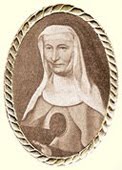
Sister Marie-Gertrude of Jesus, O.SS.R. of the Monastery of Louvain (1858 – 1888)

Sister Marie-Gertrude was born in Malmédy (Prussian Rhineland) on 14th April 1858. At the age of four she lost her father. Left alone, her mother chose a pious young person to educate her four small daughters. Emma, the third in the family, was of a weak and delicate complexion and showed a happy disposition towards piety. At the time of her first Communion a sudden illness put her life in danger and she prepared herself to make the sacrifice of her life, “quite happy,” she said, “to be going to see God.” But the hour had not yet come. Emma's health recovered and she made her first Communion with great devotion.

At the age of eighteen, Emma was sent to the Ladies of the Sacred Heart at Jette to finish her education there. Deprived of all the little indulgences of which she had been the object, and in view of the sickly and languid state of her childhood years, Emma could not endure the discipline of the Boarding school and stayed there only three months. Her mother then addressed herself to Miss * * *, the director of a house of education in Brussels, and begged her to be kind enough to receive her daughter as a boarder. Emma was admitted there and found in Miss M * * *, the sister of the Director, a second mother, who was pleased to form her in piety. Docile to her opinions, Emma began to be disgusted by the world and touched by grace, and so she conceived the project of entering the convent.

It was with these happy dispositions that the young lady went back to her family in Liége, where her mother had been staying for two years. Following the advice of her worthy mistress, Emma then chose a Redemptorist Father for her confessor. Divine Providence let her find a sure and illumined guide in Father * * *. Under the wise direction of this holy religious, she exercised herself in the practice of the virtues and made new progress in piety, in spite of the opposition and the semi-persecution that her mother forced her to undergo. Mrs. * * *, although a good Christian, was very opposed to a religious vocation and dreaded it for her daughter. Her fears sometimes made her a little difficult, but Emma patiently bore all her observations. After her return to Liége, she was received into the Community of the Holy Virgin and a little later, into the Third Order of Saint Francis. In concert with her younger sister Fanny who shared her tastes, Emma used pious ruses to deliver herself to her exercises of piety without the knowledge of her family. A love of prayer brought the two girls to transform all places where they found themselves into an oratory; they sometimes locked themselves into a cupboard to recite their rosaries, did their meditation in a carriage or on the railway, and when they were forced to go to the theatre, they withdrew to the bottom of the stall to pray there. When Emma and Fanny went on vacation to Malmédy, the rev. vicar, who knew of their love for Jesus in the Host, wishing to procure them the happiness of receiving communion frequently without attracting attention, had recourse to a little stratagem to call them to the church. When there was no one there, he would place a flowering plant at the window of the presbytery. Every morning the two sisters took a look. When they saw the happy sign, they hastened to go to the church to receive their beloved Lord.

Emma spent five years to Liége, always internally nourishing the desire to consecrate herself to God without being able to do so. With grace pressing her more urgently, she resolved to delay no longer in responding to the call of the Lord and asked her spiritual father to indicate the Order to her in which she could serve the divine Master with the most perfection. The Rev. Father * * * told her about the Redemptoristines. Emma would have liked to present herself to them immediately, but her wise director ordered her to wait one more year. This decision greatly afflicted the dear child and her grief increased even more when, some time later, Mrs. * * * announced to her that she had decided to go and live in Cologne where her two eldest girls had lived since their marriage. For poor Emma it was a real catastrophe, because being far from her director made her fear the extinction of her pious projects. But the apostle has said: “Diligentibus Deum omnia cooperantur in bonum.” – (Everything contributes to the good of those who love God). It was in a foreign country that Emma was to find the zealous guide who would help her defeat all obstacles by his advice. Fanny continued to share the same ideas, so the two sisters, on the opinion of their common director, began a novena in the Sacred Heart of Jesus. On the ninth day they made a request in writing which they placed in their mother's apartment. Eight days passed in an inexpressible anxiety for the two sisters. Mrs. * * * kept her silence, but during this time she consulted her brother who arrived from Malmédy. Emma and Fanny were called in and Mr. * * * informed them of their mother's consent. He said that Emma could enter religion immediately, but that Fanny had to wait six months.

The two girls had previously written to the Superior of the Redemptoristines of Louvain, and could not to present themselves without first sending them their portrait, so they hastened therefore to communicate the happy news to them.

On 19th February 1884, Emma entered the monastery of Louvain with the most fervent dispositions. From the very first day, her great spirit of poverty was noticed, when she gave up possession of the small objects she had brought, and handed them over to the Mistress of Educandes, not wanting, she said, to have more objects for her usage that the Professed Nuns.

However, as frequently happens, after some months of religion, the nature wished to rebel against grace, and Emma's childish character reappeared. She always appreciated the grace of her vocation and showed herself faithful to it, but her weakness of character and her penchant to natural affections were an obstacle to her perfection. However this was an opportunity for merit to her, because she worked to overcome her little faults. Admitted to the vesting on 19th February 1885, Emma received the name of Sister Marie-Gertrude of Jesus. A short time later, the young Novice was seized by an obstinate cough and a chest illness declared itself at the same time as an infection of her larynx. Her state began to worsen and the Reverend Mother warned Mr. * * * who asked for a consultation. It took place on 15th September, and from then on two physicians came together each week to visit the patient.

Towards the end of December, the Reverend Mother wished to procure to the dear Novice, whose death appeared imminent, the consolation of dying as the Bride of Jesus, and asked Mons the archbishop for permission to let her make her holy vows under condition, which His Eminence granted. On Sunday 4th January 1885 after asking for pardon, Sister Marie-Gertrude pronounced her holy vows in presence of the Community and received Extreme-Unction. Her happiness in being united to Jesus by closer ties seemed to have rallied her forces and her state improved, but it was for a short time. Soon the illness took its course and they had to abandon any hope of preserving her longer. The hour of the reward was about to sound for their dear Sister. She had suffered patiently and had never prayed to obtain her cure, preferring to abandon herself to God's good pleasure. Renouncing human consolations and out of respect for the Enclosure for which she had just taken her vows, she heroically refused to see her mother, who, by a parent's intervention, had obtained from Mons the archbishop permission to enter the Monastery to embrace her daughter one last time.

On the 20th, at about nine o’clock in the evening, the dear Novice called the Sister Infirmarian and told her in a feeble voice: “I believe I am going to die.” Indeed the agony was beginning. She then asked the Sister Infirmarian to thank all people who had helped her on her behalf, and to send a last farewell to her dear mother. At about eleven o’clock, the Community assembled at the bedside of the dying Novice, who preserved a perfect calmness to the end, joining in the pious aspirations that were suggested to her. She had distinguished herself during her short religious life by her obedience and her fidelity to the least observances. Shortly after midnight, on 21st January 1886, Sister Marie-Gertrude expired, and her innocent and pure soul went to be united to the choir of Virgins, to repeat with the lovable Saint Agnes, whose feast was beginning: “I am already contemplating what I desired, and I am already in possession of what I hoped for. I am united in Heaven to Jesus Christ whom I loved on earth with all my affection.”
(Monastery Chronicles)

This necrology is translated from Fleurs de l'Institut des Rédemptoristines by Mr John R. Bradbury. The copyright of this translation is the property of the Redemptoristine Nuns of Maitland, Australia. The integral version of the translated book will be posted here as the necrologies appear.

Sunday, 3 June 2012

Sister Marie-Bernard of Jesus, O.SS.R. of the Monastery of Louvain (1872 – 1899)

Dear Sister Marie-Bernard of Jesus, in the world Miss Odile-Marie-Alphonsine Séren, was born of devout and honourable parents in Profondeville, a charming little village of Between-Sambre-and-Meuse, not far from the city of Namur, on 9th May 1872. She lost her mother at the age of four. Her worthy father confided her with her younger sister and her two brothers to the devoted care of her aunts and an old and faithful domestic servant. When his little Odile made her First Communion, he sent her to board with the Sisters of Saint Mary in Namur, where she spent several years. Once her education had finished, she went back to the paternal home, good and serious no doubt but not extraordinarily pious. Her clothes and worldly entertainment gave her some pleasure, but for fear of having a religious vocation she avoided paying a visit to her former Mistresses. This was however what God had reserved for her in His infinite mercy and to attain His goal. He made use of an apparently petty incident. As lady and mistress of the house, since she was the family's eldest daughter and because her father had abandoned the care of the house to her, Miss Odile could act as she wished and dispose of everything as she saw fit. But in December 1893 it was her whim to celebrate the feast of Christmas as joyously as possible, which she justly regarded as the greatest solemnity of the year. Consequently, she undertook the organization of a magnificent dinner that she wanted to offer her relatives and acquaintances. Once the great preparations were finished, she sent her invitations to everyone expecting a great success. A terrible disappointment awaited her. Influenza, an illness that was everywhere at this time, all of a sudden ravaged the district of Namur and mainly affected Miss Odile’s guests, evidently by the providential permission of God Almighty, who holds the elements and events at the service of His intentions. Jealous of this soul, whose whole and absolute possession He coveted, He decreed that this misfortune that He had brought about so opportunely, would be the generating principle of the choice of life that He wanted her to make. Since they were all more or less confined to bed due to this epidemic, her relatives and friends were forced to send apologies and decline the invitation. Great was the young lady’s disappointment at seeing her beautiful project suddenly founder, and she started thinking about the fragility of the pleasures here below, was disgusted by the world and resolved to leave it forever. The Lord, who was watching over her, immediately sent her help for her weakness and her inexperience in the ways of the Spirit, by sending two good and valiant Religious Redemptorists to Profondeville to give a mission there in the month of January 1894.

The eloquent sermons of the missionaries achieved what grace had begun in this soul and finally determined her to embrace the religious state. She opened herself up to the Reverend Father * * *, who, after having put her somewhat to the test, encouraged and approved her resolution. It only remained for her to know what Order she had to enter… she turned with confidence to glorious Saint Joseph whom she greatly loved and who soon saved her from distress, because on 19th March, his feast-day, he revealed to her internally that God wanted her in the Order of the Most Holy Redeemer. Once she heard the divine call and had it confirmed by a wise director, the dear child hesitated no more, but went to her father to inform him of her desires and ask him for his consent, which, we may say, to the praise of this respectable and truly Christian man, was granted to her very easily. Full of gratitude towards Heaven, she made it her duty to present herself to the Redemptoristines of Louvain, who made her very welcome, accepted her with joy, and fixed her entry for the following 31st May, the feast of Our Lady of the Sacred Heart. When this beautiful day arose, the excited young lady, tearing herself from the arms of her father, her sister and her beloved brother, generously sacrificed all expectations of this world. She bade an eternal farewell to the world which had charmed her for an instant and entered the enclosure of our monastery with a firm step, under the very eyes of her tearful relatives, to enrol herself under the banner of Jesus our Saviour. Feeling herself in her true home, from the very first hour she tasted how kind the Lord is to those who abandon everything for love of Him. Sister Marie-Bernard was one of these great and noble souls who, once in God, never withdraw and never look back. And so she sighed ardently for the blessed day when she could bind herself forever to the service of the King of kings, by taking the holy vows of Poverty, Chastity, Obedience and Perpetual Enclosure. She prepared herself with great devotion, by applying herself to becoming an exemplary Novice, irreproachable in all regards. Once the time of probation had passed, she had the signal grace of seeing her wishes fulfilled. On 11th June 1896, the minister of the Lord united her irrevocably to the Spouse of Virgins, after she had sworn fidelity to Him by holy Profession. This date, blessed before all others for our dear Sister, was never erased from her memory, because no one could ever say how much she loved to think and to speak of it. In the words of her first confessor in religion, Sister Marie-Bernard was indeed born to be a Redemptoristine and daughter of Saint Alphonsus, whom she cherished as her father and founder. She applied herself especially to resembling him by her tender and filial devotion to the Blessed Virgin Mary. Born in the month of May and consecrated to the Madonna, she took pleasure in glorying in it and talking about it to her Sisters. She prepared herself for it by fervent novenas for each one of her feasts and readily seized every opportunity to prove her love for the Queen of Heaven. It was at her request that she was given the beautiful name of Marie-Bernard of Jesus upon taking the habit, because it had already been made illustrious by little Bernadette, the visionary of Lourdes, the privileged child of the Immaculate Virgin Mary, but especially because it was the name of one of the greatest servants of the august Mother of God, the glorious Saint Bernard.

Before entering in religion, our dear Sister had wanted to visit one of Mary's most famous sanctuaries, the grotto of Lourdes. She had brought back the most wonderful impressions of it, and she was never happy until Our Lady of Lourdes was made the subject of conversations at recreation during her Novitiate. It was a happy coincidence, as all the Novices had seen like her, the visit of predilection and the little valley sanctified by apparitions of the Virgin without stain. Thanks no doubt to the protection of her heavenly Mother, who loves those who love her according to the words that the Holy Church puts on their lips, Sister Marie-Bernard was honoured to wear the name and habit of the Redemptoristines while progressing each day in the practice of the virtues. She distinguished herself especially by a simple and solid piety, by her exactitude, her regularity, her modesty and her humility. Calm and peaceable, she appeared not to notice what could try her patience as she focussed on the holy relationship she maintained with Jesus present in her heart; because she was an interior and singularly recollected soul, who scrupulously observed all the little pious customs proper to our holy Order.

The liturgical ceremonies and the sacred chants delighted her although she was not naturally enthusiastic. The Divine Office was all her delight and prayer her consolation. A particularly believing soul, a soul of duty, she fulfilled all her obligations conscientiously. No matter what the difficulties, she never consented, at any cost, to the omission of the least observance, unless her Superiors commanded her otherwise. A lover of holy poverty, she edified her Sisters by her detachment from the things of this world, diverting her eyes from the ephemeral goods of the earth to place all her affections in the Lord who alone was sufficient for her. While still a Novice, she disencumbered herself of anything which she could rigorously do without, placing no importance on the small objects which young religious sometimes hold dear. Always content with whatever she was given, she never allowed herself to complain. At most, some devout pictures excited her desire, especially those representing the Blessed Virgin and the holy Child Jesus, whom she loved with a childlike love. Being one day at the table of her Mother Mistress who was copying the chapter of a book called: “Poor Jesus and poor I” the dear Sister repeated these words with an unspeakable satisfaction, adding: “Yes, indeed I can say that in all truth.”

They thought she had a presentiment of a premature death, because nothing could ever captivate her soul during her religious life. Her precocious wisdom made her long for the imperishable goods of the other life that she made every effort to acquire by multiplying her acts of virtues and mortification. She singularly loved the hidden life, estimating herself happy to be able to practice it and imitate the Saint Family, especially the divine Workman of Nazareth. This is why she had great devotion to Saint Joseph, the patron of contemplative souls. A faithful observer of silence, she spoke only from necessity and always in a low and soft voice. Extremely serious and reserved, she had a religious bearing, always trying to efface herself and to avoid people’s eyes. Thus her Novitiate passed in the sustained exercise of the monastic virtues. In community our dear Sister never declined from her first fervour, and her good dispositions always remained.

In August 1897, she was named Assistant Housekeeper and she acquitted herself of her new functions to general satisfaction. She made herself liked by the Converse Sisters through her goodness, meekness, affability, and readiness to help them when she/it had the leisure. She did so with calmness, without delay and without undue haste. She was so charitable and devoted that she sacrificed her recreations and even her rest to oblige the Community that she sincerely loved. She would pleasantly say at mealtimes, “I am going to accomplish the precept of the divine Master, by giving food to those who are hungry and drink to those who are thirsty.” Being obliged, because of her employment, to dine at the second table, if it happened that the kitchen was short of meat, or something else, our good Sister deprived herself spontaneously of her portion and if she had been served, she passed her plate on to one of her Sisters. Many times she was seen coming in from the garden soaked through, when torrential rain had surprised her while she was gathering fruit or vegetables.

Nonetheless, she did not complain: her zeal and her courage made her quite compliant and helpful when it was a matter of the interests of her dear Sisters, whom she helped with good grace as frequently as she could. So we may say that she spent herself generously in the service of the Monastery. And in the evening, after a rough day, when she could have a moment of recreation, she happily profited from this by asking after her Sisters and exchanging a pleasant word with them. Although she had a character that was melancholy rather than jovial, like all children who never knew a Mother's caresses, she knew how to laugh and have fun with her Sisters, if need be play little tricks on them and lend herself amiably to their innocent jokes. The next day she would get back with renewed ardour to her laborious work. But soon, alas, her strength betrayed her and she was no longer in any state to fulfil the requirements of her tasks.

Suffering from a stubborn and troubling cough, she declined from day to day. Her complexion, her features, her gait, all in her seemed to display the secret devastations of the pitiless illness that was to carry her away. Yet the dear Sister suspected nothing, and so as not to frighten her too much by condemning her to idleness, the Reverend Mother entrusted the refectory to her, and it was there that she exhausted the rest of her powers. She kept going as long as she could remain standing. Endowed with much moral energy, she wished, in spite of her extreme weakness, to still attend all the conventual exercises, and force herself until the end to do penance in the refectory according to the Rule.

Seeing that our dear Sister was sinking rapidly, the Reverend Mother managed, under some good pretext, to confine her to the infirmary. First of all she refused to accept the gravity of her state. She often had beautiful dreams for the following year. But her illness worsened from day to day and she finally understood that she had consumption and death was rapidly approaching. They made use of this to suggest Extreme-Unction to her, which she accepted with joy. She received this Sacrament and the Holy Eucharist with all the fervour of her soul, after asking pardon for all her faults from the Community, with a calmness and a humility that edified us. From this moment on, far from still wanting to be cured, our dear patient called for death with all her heart so as to go and enjoy her Jesus. She spoke only now of heaven and asked for someone to sing her some canticles. As it was the month of March, she began some prayers in honour of Saint Joseph, so as to obtain from him the grace of dying on the day of his feast. The good Saint seemed first to grant it, because in the evening of 19th March there was a crisis of a more alarming character than the others. The Community was convened to recite the prayers of the agonising. The Reverend Mother sent for the Rev. Father de Kerchove, our confessor, who arrived in all haste. After addressing a few pious words to her, he leaned over her bed and said to her: “Do you not know, Sister Marie-Bernard, that I would like to be in your place!” “I will not change places with you,” she answered, as she still had all her presence of mind, “as I have worked far too hard to get here.” This reflection made the whole Community laugh. “So you will pray a lot for us up there, especially for your Sisters,” continued the Rev. Father Confessor. “My Sisters? I love them! They are Angels of charity,” she said with a very expressive gesture. Her dry lips betrayed the thirst that tortured them, so they offered her something to drink. “No, no,” she said, “Jesus on the Cross also endured thirst,” and then she murmured softly: “Good Jesus, come and find your poor child.” Feeling life returning, she told us sadly: “I have missed this train and I will have to wait for the next one.” The Reverend Mother then advised her to abandon herself to the divine good pleasure, which she immediately did. Wednesday 22nd March 1899, on the feast of Our Lady of Foggia, who is particularly honoured in our Community, she fell asleep peacefully in the Lord at about 7 o’clock in the morning, after a short agony, in the midst of the prayers and tears of her Sisters whom she had edified during the five years she spent in the midst of them. The funeral of our good Sister Marie-Bernard took place on 25th March, on the feast of Mary's Annunciation, who herself wished to close the casket of her much-beloved child, just as she had opened her cradle on 9th May 1872 on the feast of the Ascension of Our Lord.

This necrology is translated from Fleurs de l'Institut des Rédemptoristines by Mr John R. Bradbury. The copyright of this translation is the property of the Redemptoristine Nuns of Maitland, Australia. The integral version of the translated book will be posted here as the necrologies appear.

Monday, 21 May 2012

Sister Marie-Marguerite of the Holy Family, O.SS.R. of the Monastery of Louvain (1851 - 1882)

Louise-Marie-Thérèse Van Velthoven, the daughter of Mr. Pierre Van Velthoven and Mrs. Marie-Thérèse Van Gelmeten, was born at Antwerp on 1st January 1851. Her parents, as good Christians, made sure their three children were given an excellent education. Louise, the youngest, attended the class of the Sisters of Notre-Dame from her tenderest years. Later, at the time of her First Communion, she became a boarder with the Ladies of Christian Instruction. Endowed with a cheerful spirit, she enlivened her companions there by her impishness and her love of play. A leaning towards vanity and coquetry was always noticed in her. After leaving the boarding-school, far from decreasing, these little faults increased, to the point that she delivered herself to petulance, when her vain desires were not immediately satisfied. Having a proud character, she studied her least movements and her every step, in order to attract attention, esteem and affection…

At about the age of 25 she was sought after in marriage, but at the time of signing the contract, the parties could not agree, and the project of union lapsed, which led young Louise to think seriously… She put herself under the direction of a Reverend Redemptorist Father, who reignited her taste for piety and made her appreciate the blessing of virginity. Grace, at the same time, touched her heart, and, open to its attraction, she resolved to consecrate herself to the Spouse of Virgins. She made rapid progress in virtue, asked to be admitted to the Redemptoristine Sisters of Louvain [1], and made her entry there on 1st May 1877. From the very next day, her passions that had appeared to be asleep, woke up strong and vigorous, and caused her violent struggles. She understood that a fierce struggle had opened up for her, but she determined, with God's grace, to vanquish or die. In truth, we may say that, from this moment until her death, our dear Sister valiantly fought the obstacles and temptations that the enemy of good suggested to her. Wishing to make up for lost time and prove her love for Jesus Christ, she applied all her strengths to recollection and the practice of all the virtues. In a word, her life was a perpetual constraint.

The first year of testing being finished, she was admitted on the unanimity of the voices, to put on the livery of the Most Holy Redeemer on 1st April 1878, and changed her name from Louise to that of Sister M. Marguerite of the Holy Family. She spent the year of her Novitiate with the same fervour and was admitted to holy Profession on 23rd April 1879…

Our dear Sister was distinguished by her great devotion to the august Trinity of the earth and dedicated herself to them as their little servant. Her heart was an oratory where, as in the interior of Nazareth, she lived under the eyes of Jesus, Mary and Joseph, making it her happiness to often prepare them pleasant surprises, by the practice of different acts of the virtues, and by the victories that she won over herself. When she finished her Novitiate, she entered the Community. Her primitive fervour was preserved intact, and she applied herself to the practice of the hidden virtues, opportunities for which frequently appear in the common life.

When for one or another reason, she could not attend recreation, she did not enquire about what had happened, finding in this act of abnegation a flower to offer the dear Child Jesus. She confessed to her least faults in the refectory, and asked pardon of it with a touching humility.

Our Lord was satisfied of the good will of our dear Sister and seemed to want to help her expiate her former vanities, so He sent her an illness that was both painful and humiliating for her. All the glands in her head, neck and throat swelled up so enormously, that it was both a painful and frightening spectacle to see… Resigned to God's holy will and courageous in supporting her infirmity, her patience never failed. She was scrupulously obedient and submitted to the least desires of her Superior, as well as to the doctor’s least prescriptions. In spite of everything, all the remedies were useless, her illness kept getting worse and she understood, from the swelling of her legs and her lack of blood circulation, that her pilgrimage on this earth of exile was coming to its end. Nevertheless, our dear Sister continued to be amongst us, and attend the common acts, until 22nd November, the feast of Saint Cécile. From then on she kept to her room. On 5th December, the physician warned us that it was time to administer the Sacraments to her. She received them with joy and fervour, calling with all her soul for the hour when she would be able to go to be united forever with her divine Spouse. And this is what made her say continually: “Come, Lord Jesus, come.” On 7th December, after the greetings, Reverend Father Verhaege, of the Congregation of the Sacred Heart, and Director of the Community, visited our dear invalid. He gave her the Holy Communion, and also the apostolic blessing.

Until ten o’clock in the evening, our dear Reverend Mother, the Mother Vicar and the Sisters infirmarian remained praying with her, after which our good Sister Marie-Marguerite asked them to retire, in order to take some rest, adding that as soon the time was right, she would have them called…

She spent the whole night in prayer and at about five o’clock in the morning, she sent for the Reverend Mother. When she entered the room, she said to her: “My Mother, the agony is beginning, soon you won't have your Grietje any more!” Indeed, the symptoms of her approaching end were appearing. The Community was assembled and the prayers of the Agonizing were recited… The dear dying Sister, who enjoyed her presence of mind until the last moment, joined in and responded with a clear and distinct voice, and, casting her eyes around her bedside, she gave an amiable smile in all Sisters as a sign of farewell, thanked them again for the good care she had received, and assured them that she would not forget them when she was in Heaven… The prayers continued. From time to time she interrupted us, making one or another remark, like this: “The entire earth has disappeared for me, only my God remains for me! ...” Some minutes later she added: “Now I can hear nothing, but I am united to everything that the Reverend Mother says.” Finally, some moments before her death, she said in a weak voice, but still intelligible: “Long live Jesus, Jesus, Jesus!!!” They were her last words. We added “Long live Mary, Mary, Mary!!!” And at six o'clock, the Virgin without stain, whose Church was celebrating the Immaculate Conception (on 8th December 1882) came to find her child to present her to her divine Son. It was the anniversary of her consecration as the child of Mary…

Straight after her death, the excessive swelling of her face that made her hardly recognizable at the end of her life suddenly disappeared, and our dear Sister regained her natural freshness. The legal physician, who came to verify her death, witnessed his surprise that the fourth finger of her right hand, where she had so faithfully worn her ring as a sign of her alliance with Our Lord, had remained flexible, and made us aware that it was a very unusual circumstance… Her calm and radiant air, during the two days that she was laid out, attracted us constantly to her, and so it was with a great deal of distress that we brought ourselves to close the coffin… We retired saying to each other: “May my soul die the death of the just.”
Footnotes

[1] This Monastery was founded in 1874.

This necrology is translated from Fleurs de l'Institut des Rédemptoristines by Mr John R. Bradbury. The copyright of this translation is the property of the Redemptoristine Nuns of Maitland, Australia. The integral version of the translated book will be posted here as the necrologies appear.

Sunday, 6 May 2012

Sister Marie-Cécile of the Blessed Sacrament, O.SS.R. of the Monastery of Malines (1836 – 1898)

Our dear Sister, in the world Miss Cornélie-Marie-Joséphine Peyrot, belonged to a very honourable family in Antwerp. Her mother was allied very closely to Mons. Corneille Van Bommel, the bishop of Liege, from where the name of Cornélie comes, that she gave to her daughter.

Sister Marie-Cécile entered the monastery on 2nd July 1863 and received the habit the following year. Endowed with a beautiful character, and cheerful and charitable, her manner pleased and produced a good impression. As she had a heart of gold, full of goodness, kindness and compassion, as soon as she saw or suspected some pain, she immediately tried to ease it.

In this good Sister no self-seeking was seen. Although she possessed a superior talent as a musician, with a remarkably fine voice, she did not wish to shine in the world, but faithful to the voice of grace, she came to consecrate herself to God in our Monastery, where, following the example of her Patron, Saint Cécile, she employed her magnificent talent to sing God's praises. Singing was little developed amongst us at this time because of a dearth of voices, so she was happy later on when new vocations brought her some reinforcements. She had hardly revived the spirits of the new and existing singers than it pleasing God to come and suddenly take our dear Sister and assure us her efficacious assistance in heaven.

Nothing forewarned us that her death was so close. Just before Holy Week in the year 1898, a general unwellness seized our good Sister. On Palm Sunday she came once more to sing the Hosanna filio David with us, and on Holy Thursday, she accompanied the great Mass. Pain accompanied by fever seized her the following day, and on Easter Tuesday she suddenly died. The rupture of an aneurism, said the doctors, put an end to her life. Having contributed greatly, for the space of thirty-five years, to the beauty of the Divine Office, she went to sing the eternal Alleluia in heaven..)

This necrology is translated from Fleurs de l'Institut des Rédemptoristines by Mr John R. Bradbury. The copyright of this translation is the property of the Redemptoristine Nuns of Maitland, Australia. The integral version of the translated book will be posted here as the necrologies appear.

  © Blogger templates The Professional Template by Ourblogtemplates.com 2008

Back to TOP