Sunday, 21 April 2013

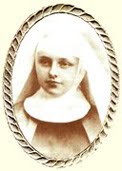
Sister Marie-Cecile of the Precious Blood, O.SS.R. of the Monastery of Vienna (1821 – 1849)

Born Jeanne Koch

Sister Marie-Cecile of the Precious Blood was born at Innsbruck (Tyrol) on 24th June 1821, of parents of an ordinary station in life. Brought up piously by her mother, little Jeanne, from the moment of her first communion, felt herself so strongly attracted to the religious life that even then she made a vow of perpetual chastity. Her love of prayer was already extraordinary. At the age of twelve, she entered the Third Order of Saint Francis, and as her confessor recognized the signs of a vocation to the contemplative life in her, she learned to play the organ, so that she might be admitted one day into a monastery, in spite of lacking a sufficient dowry. But at just that very time, the Convent of the Redemptoristines in Vienna was looking for an educande who understood music. So Jeanne succeeded, with the help of her other qualities, in being admitted. She was then seventeen years of age.

Pious indeed though she may have been, she did not cease to severely test the patience of the Mother Mistress through the impetuosity and noisy vivacity of her character. But her good will, aided by the grace of God, triumphed over this defect, and ten months after her entry into the monastery, Jeanne was as though transformed! During her novitiate she was seen to make astonishing progress in virtue. Her love of prayer became a grace of high contemplation, and she received extraordinary favours from heaven. Her devotion to the Holy Child Jesus made her in her turn resemble an innocent child. Her candour and the purity of her soul were reflected in her features and in her eyes. Almost every year, the approach of Christmas saw her become completely ill, so much did she long for this touching feast! Her heart would beat violently, thinking of the coming of the Saviour of mankind, and she even went so far as to start spitting blood, so great was her emotion. But once the feast actually arrived she recovered her former health. She displayed the same ardour for the Blessed Sacrament of the altar. She was often seen remaining motionless for hours on end before the holy Tabernacle, and whenever she took Communion, she was transported so far out of herself that for several hours she was quite unable to take any food.

Sister Marie-Celeste’s virtues were the best guarantee of the heavenly origin of these favours. Her love of regular observance was admirable. Her humility made her give preference to performing the most distasteful tasks, in spite of the opposition of her character, which was by nature somewhat proud. Insatiable for mortification, she persuaded her confessor to intercede with her Superior to give her a little more liberty to appease her thirst for penance. She had been encouraged in it, she said, by Jesus Christ Himself. And yet her obedience was the greatest of her other virtues.

The novices had the custom, on 25th of the month, to write a letter to the Holy Child Jesus in which they expressed their desires. Sister Marie-Cecile continued this custom after her profession, but she would always give her letter to her Superior to read and approve. One day when she had just accomplished this act, she met a Sister who asked her why she had so joyful an air. She replied: “It is because I have just read out to my Superior my letter to the Holy Child Jesus, but next month, I will bring it to you.” And in fact, the following month, this Sister had become the Superior. In addition to this it was noted that Sister Marie-Cecile knew many things that she could not have known naturally, and she often even knew of the thoughts and dispositions of others.

* * * * *

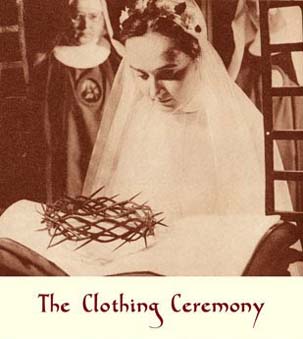
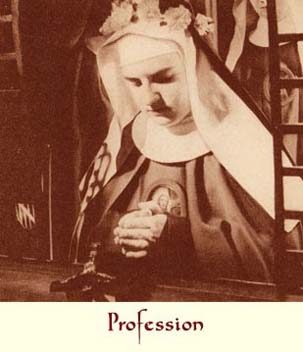
Sister Marie-Cecile had received the holy habit on 20th August 1839. She had to wait until 20th August 1842 to make her profession, since the laws of Austria required this delay. And so the close union that she contracted with the divine Redeemer caused her to make new progress in perfection. For their part, her Superiors thought of making a more direct use of her talents. The Mistress of Novices asked her for spiritual exercises for the times of Advent and Lent. The young professed acquitted herself of this task with success. Charged with care of the educandes, she succeeded marvellously in forming them well. A Sister, greatly troubled in both her body and soul, was confided to her care, and she healed her in both respects. However, these different tasks and the macerations she inflicted on herself, adversely altered her health. She became so feeble that, to play the organ, she had need of a support to sustain her. She often lost sleep, but her infirmities in no way altered the vivacity of her spirit and the joy of her heart. If they pitied her over her insomnia, she would reply: “I was not alone.”

The Revolution of 1848 was the last and supreme trial for the poor Sister. Driven from her convent, she had to take refuge in a private house, and then painfully find her way to Innsbruck, her native town, and ask for shelter from her married sister who, poor herself, could not, in spite of her excellent heart, give her all the help necessary. Sister Marie-Cecile, ill, bed-ridden, consumptive, often subject to spitting up blood, also saw herself separated from her Superior and her Sisters in religion. But this pain, for her the most bitter one, was the triumph of her love for her divine Spouse. Her resignation was heroic, and the Sisters of Mercy in Innsbruck, who gave her shelter in their monastery, admired in her the patience and charity of a saint. She died only slowly, but the joy of soon contemplating Him whom she loved so much shone out on her face. When she had received the last sacraments, Father Ladinski, a Redemptorist, had her renew her vows of religion by pronouncing the consecrating formula with her. But he deliberately put the vow of obedience in the last place. When he arrived at the word Obedience, he stopped and said to the dying woman: “Sister Marie-Cecile, you have always loved obedience, so practise it now in this supreme moment: die now through obedience and the love of Our Lord.” At the same instant, she inclined her head and rendered her soul to God. This was on 30th March 1849, on the feast of the Compassion of the Blessed Virgin.

The virginal body of Sister Marie-Cecile, clad in her Redemptoristine habit, was then laid out in the monastery parlour. An incredible number of the faithful from all classes of society hurried to these precious remains and venerated the humble bride of Jesus crucified. Her funeral was more solemn than that of a princess. The divine Saviour glorified in this world she who had vowed all her love to Him.

This necrology is translated from Fleurs de l'Institut des Rédemptoristines by Mr John R. Bradbury. The copyright of this translation is the property of the Redemptoristine Nuns of Maitland, Australia. The integral version of the translated book will be posted here as the necrologies appear.

Saturday, 6 April 2013

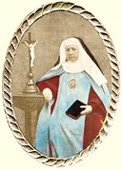
Mother Maria-Benedicta of the Holy Trinity, O.SS.R. Superior of the Monastery of Vienna (1791 - 1852)

* * MONASTERY OF VIENNA * *

Superior of the Monastery of Vienna [1]
Born Maria Rizy

Sister Maria-Benedicta Rizy was born in Vienna on 13th October 1791, and received the name of Maria at baptism. Her father was a lawyer and occupied an honourable rank in Viennese society. For two years, the young lady’s confessor was the Rev. Father Clement-Maria Hofbauer, now canonised. After his death, she entrusted the direction of her soul to Father Madlener, a man of great virtue, and finally, when her confessor had to change his residence, she chose as her spiritual guide the Venerable Father Passerat, the successor of the Rev. Father Clement-Maria Hofbauer, as Vicar General of the Redemptorists beyond the Alps.

It is not astonishing that under so holy a direction, the young Maria led a most exemplary life in the world. For a period of time she was the governess of the two daughters of Count Gilleis. The Countess and her two daughters, one of whom embraced the religious state, have retained a grateful memory of her. She herself, on 23rd December 1824, entered the little establishment founded by the Ven. Father Passerat and called Saint Mary of the Refuge, which was the origin of the first Redemptoristine monastery beyond the Alps. The Superior of that establishment was then a French woman called Eugenie Dijon, later Mother Marie-Alphonse of the Will of God. Maria Rizy had reached the age of thirty three. She was the fourth of the first Redemptoristines in Austria.

Her knowledge and talents were extraordinary. She spoke German, French, Italian, Latin and English fluently. Painting, drawing and music, both vocal and instrumental, were all familiar to her. She even excelled in musical composition and poetry. She was perfectly instructed in all the feminine works and in all the branches of teaching. Estate management, the management of livestock, gardening, culinary art, and even medicine and jurisprudence all fell within the circle of her learning. All these gifts the young Maria consecrated exclusively and forever to the glory of God and the good of her Order.

Something even more astonishing was that these gifts of the spirit in no way harmed the qualities of her heart. On the contrary, she was so sensitive to the ills of others that she experienced an almost irresistible attraction to helping her neighbour. Thus she would say quite rightly that God had given her, according to her own expression, a hospitable heart.

In the autumn of 1830, the two Mothers Eugenie Dijon and Antonia, Countess of Welsersheimb, went to St. Agatha of the Goths and were comprehensively instructed, in this Redemptoristine monastery, in all the practices of their Order, and they resided there until 8th February 1832. During their absence, and even after their return, Maria Rizy exercised the functions of Superior with great prudence and charity. It was she who took the first steps to introduce the Order of the Redemptoristines to Vienna. It was she who established the enclosure, and it was under her auspices that the first solemnity of the taking of the habit took place, on 25th January 1831. On that day she received the name of Maria-Benedicta of the Most Holy Trinity. As we know, the two absent Sisters received their habits in Rome itself from the hands of Cardinal Odescalchi. She herself made her profession on 30th January 1832, and on the following 25th February, when their first canonical election took place, she was named as Superior.

Then especially, it was a very hard task. In fact, everything had to be started and learnt: the choir office, the ecclesiastical chant, the observance of the Rules and Constitutions, the Ceremonial and the community customs. To these were added a multitude of material and financial difficulties. However, Mother Maria-Benedicta triumphed over everything and displayed an extraordinary skill, an admirable activity, and a confidence in God that nothing could shake.

She exercised this prodigious activity in spite of great infirmities, and what was even more precious, with a great calm and self-possession. She therefore succeeded in introducing a very exact observance, without, however, making herself odious or disagreeable to anyone. Her benevolence and affable manners helped her to win the sympathies of even those many people who, until then, had placed little esteem on religious in general and the Redemptoristines in particular.

We understand that after all this vocations began to multiply around her, coming from Austria, Saxony, Poland, Bavaria and Tyrol and even the Rhineland. Many of them even came from the ranks of the nobility. Mother Maria-Benedicta was thus able to attempt a new foundation in the little town of Stein, in the Diocese of Saint Hippolyte. She went there on 7th October 1839, bringing five religious choir Sisters and two converse with her. Several educandes soon joined her. This town of Stein was dear to the foundress, as she had spent a great part of her youth there and hoped to be very useful to it through the prayers of her Sisters. The revolution of 1848 was to dash all her hopes and suppressed this house just as it destroyed the one in the capital.

* * * * *

Mother Maria-Benedicta then withdrew with some of her Sisters to Eggenberg. The Princess of Lowenstein provided for her subsistence, and the Redemptorist Fathers lent them the help of their spiritual direction. Her hope of being reunited with her Sisters in another monastery was to be disappointed. She submitted in this too, to the will of God, and not long afterwards, saw in the aggravation of her infirmities, the heralding of her approaching end. On one occasion, during the night, she had to call the converse Sister who was taking care of her, and became the object of the special attention of Providence. Indeed, the converse, who herself was ill, was at that moment suffering an attack of nerves. “My God!” she cried out aloud. “You can see what my good Superior is suffering! She has made so many sacrifices for you, so give me the strength to come to her aid. If this is done, then I consent to suffer anew.” Her prayer was heard. She immediately recovered her strength, rendered the service required of her, and then fell prey again to her illness.

On 17th May 1852, Mother Maria-Benedicta received the last sacraments. She humbly asked pardon of the Sisters who had run to her from all sides. As if to reward her for her life of sacrifices, the divine Redeemer filled her at that moment with His heavenly consolations, and on the following day she went to sleep peacefully in the Lord. She was then in the 61st year of her age.

* * * * *

As a worthy daughter of Saint Alphonsus, Mother Maria-Benedicta was always inspired by a lively faith and a great spirit of prayer. The Divine Office was dear to her, and she would recite it fervently for the intentions of the Church. Like all the souls enraptured by the beauties of our holy faith, she would enthusiastically recite the Apostolic Symbol, and the touching mysteries of Religion filled her with the sweetest affections. Her delicate conscience made her avoid the least faults, but her filial confidence in God made her love Him as a Father. Finally, her extraordinary talents left her always humble and distrustful of herself, and in the example of her blessed Father, she showed herself always sweet and resigned in suffering, charitable towards her neighbour, and severe and mortified to herself. She most surely was one of the principal columns of the Redemptoristine Institute, and her intercession in heaven will continue to affirm it, propagate it, and make it work zealously for the salvation of souls..

Footnotes

[1] On the foundation of this monastery, see the work by Father Nimal, already quoted.

This necrology is translated from Fleurs de l'Institut des Rédemptoristines by Mr John R. Bradbury. The copyright of this translation is the property of the Redemptoristine Nuns of Maitland, Australia. The integral version of the translated book will be posted here as the necrologies appear.

Thursday, 21 March 2013

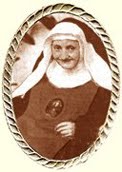
Sister Marie-Marguerite of the Sacred Heart of Jesus, O.SS.R. Of the Monastery of Velp (1821 – 1883)

In the world : Caroline-Marguerite-Elisabeth
Van Rijckevorsel [1]


It was under the protection of our father, Saint Alphonsus, that is to say, on the anniversary day of his blessed death, that our future Redemptoristine came into the world. Miss Caroline Marguerite Elisabeth Van Rijckevorsel was born at Rotterdam on 1st August 1821. Her father, Baron James-Joseph Van Rijckevorsel, and her mother, Mrs. Henriette Petronilla Van Oosthuisen, were good and fervent Catholics, who prided themselves on practising their religion in a Protestant country. Their union was richly blessed by the birth of seven sons and little Caroline. Their mother was snatched away rather quickly by death, but Baron Van Rijckevorsel had had a daughter from his first marriage who was like a second mother to her brothers and sister. And also, our good Sister Marie-Marguerite told us later on what grief she had and how much she wept when a servant girl told her one day that Miss Louise was not her real sister. Their affections prevailed, however, and when, later on, Louise had married Mr. Gustave Dommers van Polderveld, and Caroline had become the humble Sister Marie-Marguerite of the Sacred Heart of Jesus, their friendship always remained both strong and affectionate.

Young Caroline had her education at the Sacred Heart of Jette, and upon her return to the paternal home, she saw herself surrounded by the affection of all her brothers. She said later on: “They all came to consult me.” This affection for their little sister never decreased, and for her part, she was always keenly interested in the welfare of her brothers. But young Caroline had heard the call of the Lord, and stimulated perhaps by the example of her brother John Rijckevorsel, who became a Redemptorist, she directed her choice towards the convent of the Redemptoristines founded recently at Bruges by the Reverend Mother Marie-Alphonsus of the Will of God.

Baron Van Rijckevorsel was too good a Catholic to oppose the pious desire of his cherished daughter. At the age of 21, she entered the Convent of Bruges on 10th April 1842. Her dowry, which was considerable, came at the right time to support this newly established house. After an exemplary educandate and novitiate, she received the holy habit of the Order on 26th July 1843, and was called Sister Marie-Marguerite of the Sacred heart of Jesus. Her profession took place on 12th August 1844. She made herself very useful in a community which was being formed. She was pleased to tell us that, on leaving the novitiate, she was employed as an aide in the sacristy. The Sister who was in charge had such a great love of poverty that she ended up by wanting the impossible. So one day she expected her aide to patch up a tin bucket which was used to hold the holy water and in which the salt had worn holes in the bottom. The young Sister accepted the task (I think that it was a test, she told us); but how was she to repair all the holes? She did the best she could, but she could not do it as well as the Sister Sacristan wanted.

In 1858, when the foundation at Velp was decided, Baron Van Rijckevorsel asked Mons the Archbishop Zwijsen to send his daughter there. The Reverend Mother Marie-Philomene, the Superior at Bruges, acquiesced to the wishes of the Prelate and Baron Van Rijckevorsel. The little house in the country popularly known as “Bronkhorst Castle” was bought in his name. His great fortune had been employed at Bruges in the construction of the church and the convent. On 19th June 1858, young Sister Marie-Marguerite left with the Sisters for the new foundation, where she was to fulfil the task of Vicar. After sixteen years of absence, she was once again on the road to her own country, so generously sacrificed to obey the call of the divine Redeemer.

This nascent community was to give her the occasion to disclose many virtues, the love she had for her holy vocation and the devotion of which she was capable. If, at Bruges, a Sister, without wishing it perhaps, had made her exercise holy poverty, here, in this nascent foundation, the practice of it was a daily event. But the Sister never made any remark complaining of it. On the contrary, enjoying good health, she was content with everything and knew how to enliven with a good word the meagre festive meals of the poor community.

The dear Mother Vicar had an active and courageous character and was the soul of everything. As the only Dutch woman in the monastery, she was a special help to her Superior in the affairs of outside and with correspondence. They did not even possess the holy Rule in Dutch. The dear Mother Vicar set herself to the work and made the desired translation, and so they could then have it read out in the refectory, and at the prescribed times for the converse Sisters, who did not understand all the readings in French. Inside the monastery, she was the organist and it was her duty to support the recitation of the Divine Office.

When it was a matter of giving the holy habit to the first novice, it was Mother Vicar again who was given the task of making the costume. However, I believe she went to ask for help from her companions, but as none of them had been employed at this task at Bruges, she had to try to do it by herself. And Mother Vicar succeeded, so she was named as the first Vestiarian. This was a good occasion for her to practise holy poverty for herself, and she went on doing so the rest of her life, as all the clothes that this dear Mother wore were poor and patched.

Charged with supervision of the garden, she knew how to make herself loved and respected by the good workmen. Once it happened after the change of offices, when she was no longer the Vicar, she begged her companion to tell the gardener not to go on giving her the title. This good man, who understood nothing of the religious formalities, replied in a rather discontented tone: “When things are going well, why change them?” He did his best, but all too often habit got the upper hand.

Named Housekeeper, she had once again to be busy with service persons. She could then be seen accompanying the workmen with her bell in her hand, bringing a ladder or other tools, in order to spare them the trouble of having to find them, and to prevent the Sisters having to meet them. She was truly Sister Martha through her devotion. At different times, the water levels were very high at Velp, and the convent would then experience great damage. The cellars would be submerged and all the provisions had to be brought out of them. Our good Sister Marie-Marguerite was always there directing the removals, and either by day or by night, she would bring help wherever it was necessary. Inspired by a great devotion for Saint Joseph, as Housekeeper, she entrusted her poor work-box to him (it was a former glove-box). On the inside a beautiful picture of the holy Patriarch was glued. On 19th March, the day of his feast was always celebrated in the Robing Room, which also served as her cell (this was at the beginning of the foundation). After Compline, which was said at three o’clock, we went past there on our way to choir. The door of the Robing Room was open and anyone could enter. Our dear Sister had improvised a decoration for her privileged Saint. The little wooden statue was surrounded with flowers and lights, the vases were of cardboard, bobbins served as candlesticks, and also, and this made this meeting place more dear to us still, the ends of little candles or tapers which served to light up the feast, were ordinarily (with the permission of the Reverend Mother Superior), adroitly taken by the good Sister from the Sacristan. She, at this time, was her former first Sacristan Mistress from Bruges, known for her extreme parsimony. You could not easily obtain even a candle end from her, but Sister Marie-Marguerite knew how to help herself without her noticing. When everyone was gathered in the Robing Room, they then began to pray to the good Saint Joseph, and this heavenly provider, for his part, made sure that, in spite of their great poverty, there was no lack of anything necessary.

The good God brought some pleasant surprises to the courageous and fervent Sister Marie-Marguerite from her noble family. Right at the beginning, when the Sisters arrived at Velp, Mrs. Louise Dommers came to see her dear Caroline and brought her some beautiful camellia plants. These plants were old acquaintances, and she received them with joy. She had nursed these plants after her return from the boarding school, and when she left for the convent, Louise had been put in charge, and now, by a delicate attention, they had come back to their former mistress, and for a long time to come the beautiful flowers were the ornaments of our little chapel.

Later on, Baron Van Rijckevorsel made a present to the community of a beautiful white chasuble, and a beautiful antependium (altar frontal) for the altar, matched to the chasuble. One day Rev. Father John came to say the Holy Mass, and the family attended. The pious Baron considered it an honour to be the servant of his son, the priest, and it was a great consolation for our dear Sister Marie-Marguerite. A short time later, the revered old man went to heaven to receive the reward of his good works.

One year (it was in 1863) Rev. Father John, who had been doing all he could to help the community, wrote to his sister: “At about Christmas, you will have a visit from one of our greatest benefactors. He wants to come to Velp, but he wants you to receive him in all simplicity.” Good news, but somewhat embarrassing, as they always wanted to have something to offer visitors arriving unexpectedly. A visit to Velp in the middle of winter, with nothing done in advance, would not be very pleasant. Out of prudence, Reverend Mother warned the Sister Housekeeper so that she would not be taken unawares. While they were waiting, the imagination of the Sisters, and especially that of our dear Sister Marie-Marguerite, had full play, and in more than one recreation, it was the subject of a very heated conversation. Every time the bell rang at some unexpected hour, it was a warning to their curiosity held in suspense.

Finally, on 27th December, during the evening recreation, the bell rang at the turn. A little box had just arrived. The Reverend Mother had it brought into the community room and they were able to open it. All the Sisters were there waiting, and finally their curiosity was satisfied… But what a surprise! They saw a charming Child Jesus appear (from Munich) lying on straw. The joy of all the Sisters was not to be described. The Converse Sisters were called, and in the blink of an eye, everyone was kneeling around the divine little Redeemer, who was indeed the great Benefactor promised. We gratefully remembered the promise made by Rev. Father John and the delicacy with which he accompanied his beautiful gift. The pretty statue is still well preserved and it decorates the convent chapel.

With the separation from Bruges (in temporal matters) decided by Monsignor in 1865, the community was reduced to its own resources, always insufficient to provide for the needs of its members. But Providence looked after them, and the family of Sister Marie-Marguerite came to our aid by providing coal and provisions. This goodness of her family filled the good Sister with courage and inspired her fervour in the service of the good Master and her devotion to her dear community.

On the feast of Saint Nicholas, which is very popular and general in Holland, one of her sisters-in-law always sent her a box filled with cakes. Her whole pleasure was in being able to send the box on with a little surprise for her little nephews and nieces. With what joy and gratitude did she receive the little objects that the Sisters, with the permission of Reverend Mother, offered her on this occasion! It could be said that she was receiving real treasures, and so our good Reverend Mother made sure that the box was well supplied, and that all these dear people had good reason to praise good Saint Nicholas of Velp.

The 12th August 1869 was also a good day for our dear Sister. She celebrated the jubilee of her twenty five years of profession. Her brothers and her sister made it their duty to come and congratulate their Caroline and share in her happiness. She received many lovely presents for the chapel, and the day was a true family feast for everyone. This was the last time that she saw her family reunited, for soon death took away the eldest of her brothers, Baron Pierre Van Rijckevorsel.

Sister Marie-Marguerite loved and valued her holy vocation. Faithful to regular observance, in spite of her numerous occupations of every kind, she was always present at the Divine Office in choir and at the community acts. Her piety was inspired by a lively faith. She had very little time available for her private devotions, and so, whenever she had a moment of leisure, for example, in the five minutes before the Office or when she was the auditrix, she could be seen holding her little manual, a souvenir from her boarding school, and reciting one or another little office of the Sacred Heart or the Immaculate Conception. After her death, they found a very devout picture of the Sacred Heart in this little book, together with one of Saint Joseph with little Jesus. She was always one of the Sisters who, on carnival days, spent the night of Holy Thursday in prayer, or on other occasions when the Superior gave her special permission.

As she was brought up at Jette, devotion to the Sacred Heart of Jesus was dear to her, and her joy was great when they decided that our future chapel would be consecrated to her. She displayed all her zeal in contributing to the costs of the building. As permission had been given to place some pictures to this effect, she set herself to paint some pictures and have them placed by her acquaintances and her family. Great was her joy when the chapel was built and Mons. Godschalk, the Bishop of Bois-le-Duc, came to bless the bells. One of these bells was given by Mr. Auguste Van Rijckevorsel and Madame Dowager of Thomas Van Rijckevorsel, born Baroness Van Landschode. Her brother and sister-in-law were her Godfather and Godmother. Her devotion to the Blessed Virgin was that of all the children of Saint Alphonsus. She loved this good Mother with a filial love. From her brother, Mr. Cornil Van Rijckevorsel, she received a beautiful Calvary with the Mother of sorrows, and this was placed on the altar in the first little chapel. At her jubilee, she was given a lovely Immaculate Virgin and another Calvary group.

In the midst of these multiple occupations, our good Sister Marie-Marguerite needed a little rest of the spirit, and besides, recreation was a common act. One day, the Reverend Capuchin Fathers ordered some of our work for their sacristy – some chasubles and antependiums, which had to be made of tapestry in part. Great was the joy of our good Sister – it was providential! She wished to help with the embroidery. For a long time she had had to say farewell to these works that she had loved so much formerly. And now she could be seen at work, even during recreation (where we are allowed to be busy with some kind of manual work), but counting the points and having recreation did not go together, and our good Sister Marie-Marguerite was obliged to undo the little bit that she had been able to do in recreation, during the time of silence. This amused us, but our innocent humour did not disconcert her.

She was hard on herself and did not spare herself in anything, but if, with her good health, she could struggle against fatigue, she was nonetheless charitable towards the sick. Sometimes, in recreation, she told us laughing: “Father would say, ‘My children have no nerves.’” However, on occasions, it was easy to see that she had not been deprived of them, but her strong nature and manly virtue were able to overcome them.

Later on, when the community was beginning to be formed, she was always ready to exercise the young Sisters in the chanting of the Divine Office or help the young organists in their difficulties. Once it happened that one of them, finding herself at the organ, was stumped by a difficult passage. She wanted to have recourse to her charitable mistress, but where to find her? The summoning of the Sisters by the bell was not yet organised… Finally, she saw Sister Marie-Marguerite in the garden busy digging, in her full gardener’s costume, big boots, and big grey apron. As soon as the young Sister begged her to come and help her, she laughed and left her laborious work and came and sat down at the organ.

Another Sister, made Housekeeper, often had recourse to her experience, and Sister Marie-Marguerite always helped her with the same charity in her difficulties, and with a word of encouragement to revive her confidence in good Saint Joseph and have abandonment to the divine Providence.

Very often, when Reverend Mother Marie-Cherubine was preoccupied with the future of the nascent community, and “built castles in Spain” as a diversion away from some rather discouraging thoughts about the slow prosperity of the convent, our good Sister Marie-Marguerite told her: “I don’t think I’ll die before the chapel is built!” It was a dream, it seems, the realisation of which would probably not be seen soon.

But, in 1879 and 1880, in a most providential way, the chapel was built. Did our good Sister recall her prediction? I do not know, but at about this same time, her health declined. At first she resisted the illness. Having in fact never been ill before, she did not know how to care for herself or let others care for her. One day, she gave great concerns to the Sister Infirmarian. This Sister had given her a bottle and told her she had to take a spoonful according to the doctor’s prescription, but Sister Marie-Marguerite had the thought that if she drank it too quickly, it would not last very long – it would be far too quick. As she thought, so she did. Later on, the Infirmarian came up to her and recommended to her patient to be exact in taking her medicine. “Oh, it’s finished,” replied the Sister, “here’s the empty bottle.” One can imagine the shock and anxiety of good Sister Marie-Therese. The invalid did not move. The Infirmarian prayed and the good God permitted that this great imprudence did not lead to a harmful outcome, but the Infirmarian now knew who she was dealing with and took appropriate measures in consequence. The dear invalid was wasting away before her eyes, but was still trying to keep going, especially to the community acts. Her swollen feet would not longer fit into her shoes, so Reverend Mother bought a pair of slippers for her. One day she arrived at recreation arm in arm with a Sister who was leading her, walking with heavy steps and telling everyone who wanted to hear her: “Our Mother has given me a pair of slippers.” She still wanted to amuse the Sisters.

At the jubilee feast of the foundation of the convent and the twenty fifth anniversary of the Superiority of Reverend Mother Marie-Cherubine, on 19th July 1883, our dear Sister Marie-Marguerite, already very ill, went to the refectory again, but could only drink a glass of water. Her stomach, eaten away by cancer, was refusing all nourishment and she was suffering from hunger. At table she sat down in her place in order to participate in the common joy, but on different occasions she was obliged to leave the room. Shortly afterwards she was forced to keep to her cell, and as the cold weather came early, they got her to accept a heated room. At the beginning of the month of October, she had a severe crisis that terrified the Infirmarians, and the last sacraments were administered to her. However, her illness settled down and the community began its great retreat. In the first few days, the Very Reverend Father G. Wulfingh came to confess the invalids. At the request of the Infirmarian he also went to Sister Marie-Marguerite. She had a long conversation with the good Father, who was to come back the next day and bring her Holy Communion. The Sister charged with the care of the sick came at about 8:30 and said a few words to her about communion the next day. Sister Marie-Marguerite seemed comfortable and said to her: “I am going to sleep now.” The Sister went to the other end of the room to recite her Office. Shortly afterwards, she could hear that the dear invalid was breathing quite heavily. She went up to her. A great change had in fact happened in her state. The Infirmarians came running. They hastened to get the Reverend Father who was still praying in the chapel. When the Touriere came to tell him that Sister Marie-Marguerite was dying, he could not believe her. “But she was speaking so well to me just this afternoon,” he said. Then he went to see the dear invalid and could only give her a final absolution, and then recite the De Profundis. The good Jesus had come to find his faithful and fervent Spouse. This was on 18th October 1883, at about nine o’clock in the evening.

Footnotes
[1] From the Monastery Chronicles.

This necrology is translated from Fleurs de l'Institut des Rédemptoristines by Mr John R. Bradbury. The copyright of this translation is the property of the Redemptoristine Nuns of Maitland, Australia. The integral version of the translated book will be posted here as the necrologies appear.

Thursday, 21 February 2013

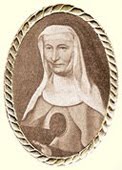
Mother Marie-Cherubine, O.SS.R. Foundress of the Monastery of Velp (1812 – 1887)


Foundress of the Convent of the Redemptoristines of Velp, near Grave, founded in 1858


Chapter IX.
The last illness and precious death
of Mother Marie Cherubine.

The month of April 1887 was coming to an end, when the community was unexpectedly thrown into great trouble. The feebleness of their good Mother had grown to the point that her doctor considered it necessary to have the last sacraments administered to her. Let us now listen to the chronicle of the House:

“The holy ceremony took place in the morning, after the recitation of the Little Hours of the Breviary. The religious were extremely sad. The Reverend Mother was very calm, and her spirit serene. She followed the sacred rite with the greatest piety, joining in all the prayers, and considered us with a look full of benevolence.

“However, the illness took a turn for the better, and on 27th April, the good Mother was out of danger, even though she was still suffering. She had cancer of the stomach, and as far as food was concerned, she could scarcely take anything other than a liquid, and even then with a great deal of difficulty. But her virtue was nothing short of admirable. She was always happy, never letting the least complaint escape her, and she was continually occupied in prayer or meditation. When someone asked her: “My Mother, are you suffering?” she would reply: “Oh, nothing in comparison with what our good Jesus suffered.” Sometimes she manifested her desire to suffer a great deal to please God and to obtain the salvation of immortal souls.

“Fervent prayers were addressed to heaven, and it seemed that God still wished to leave us our good Mother for a while for our happiness and joy. And in fact, we saw our dear invalid at choir during the months of June and July. She took communion and heard Mass with us. Soon her strength permitted her to give us some pious conferences on the strict observance of the Rule, and especially on her preferred subject – charity and mutual support, and on the love of prayer.

“She also exhorted us to always seek our support and strength in God, and ask from Him the courage to bear our daily pains and crosses of every day, with profit for heaven.

“She even attended the recitation of the Divine Office, as she still had her voice and a great zeal for the good order of the choir.

“On 2nd October, the feast of the Holy Angels, the day when the community celebrated Reverend Mother Marie Cherubine’s feast day, the dear invalid still had the strength to come to the recreation room to receive the Sisters’ good wishes.

“One month later, on 6th November, they celebrated the 40th anniversary of her religious profession. The good Mother was still able to talk with her daughters, and ardently spoke of the great happiness of belonging to God, and excited a zeal in them that burned more and more for the service of their heavenly Spouse. It was noticed, however, that her strength was waning. The illness had undermined her constitution and the end was not too far away. So we prepared ourselves to make the sacrifice of our much-beloved Mother, if this was the will of God, as in fact it would be a great sacrifice for us.

“During those same days a very young Sister fell seriously ill, to the point where they had to administer the last sacraments to her. Sister Marie-Julie (this was her name) keenly desired to see her cherished Mother one more time, and she in her turn, although she herself was very ill, could not refuse to console her daughter. So she went to see her and console her by her encouraging words.

“For our good Mother the death of this good little Sister on 21st November was a very painful blow. After this day, all she did was decline, and on 5th December, she received the last sacraments for a second time. The dear invalid was, as always, an admirable model of patience and resignation to the will of God. For each Sister who visited her, she still had some words of encouragement. The 19th December was a day of great suffering and much pain. The doctor and the Sisters did everything they could to calm her down. If sometimes the patient seemed to be out of her mind, her spirit however remained clear and penetrating, and right up to her last moment she showed by signs that she understood everything that was said to her.

“The community confessor, a Reverend Capuchin Father from Velp, came frequently to see the patient. He recited the prayers of the agonising with the Sisters. Sometimes the good Mother would herself make the sign of the cross, and they could hear her saying little ejaculatory prayers in a feeble voice, such as: “My Lord and my God!” or utter acts of charity or abandonment to the divine will.

“Thus the 19th and 20th December passed. In those days, the extraordinary confessor of the House came to visit the dying Mother. He was most edified to see the beautiful and peaceful disposition of the good Mother in her last days.

“On the following day, 21st December, the feast of St. Thomas the apostle, she received Holy communion. This day was to be the last in her life here below. Soon she would receive the crown of the eternal happiness for which she had sacrificed everything else on this earth.

“In the evening, at about 10.15 p.m., her attendant noticed that the end was approaching. For the last time, all the spiritual daughters of Mother Marie Cherubine came and knelt down before her to assist her with their prayers in this last moment, which was so important and solemn. The confessor was also present to give her a last absolution.

“While everyone was entreating the Father of Mercy to welcome her into His eternal home, at about 10.45 p.m., the good Mother Marie Cherubine peacefully rendered her beautiful soul to her Creator. Immediately her features took on an expression of sweet serenity which told all the persons present that the dear Mother was already enjoying the contemplation of the divine Majesty.

“This was truly a case for applying the words of Holy Scripture: “Blessed are the dead who die in the Lord!”

This is how Mother Marie Cherubine went to receive from the hand of God the reward that she had merited because of everything she had done and suffered for Him. As He said Himself: “Whoever leaves her house, her father and mother, brothers and sisters in My name, will receive a hundredfold in the eternal life.”

For twenty nine years, the community of Velp had found in her a Mother full of charity, so it was in no way astonishing that she was wept by all her Sisters and that the love of her daughters followed her to the tomb.

When her body had been reclothed in the red robe, the blue scapular and the mantle of the same colour, the bier was brought into the lower choir. There, the Sisters took turns to come and pray day and night, right up to the moment of the funeral. These days were thus days of prayer for the repose of the soul of the good Mother. And also, adds the chronicles of the community, the Sisters, from their prayers, were able to draw the consolation and strength they needed to make the generous sacrifice that God required from them.

The 24th December 1887 was the day of the funeral. After the chanting of the Libera, the priest celebrating, followed by two acolytes, entered the enclosure to conduct the body to its last resting place. It was carried there by eight of the older Choir Sisters, while the other Sisters followed, chanting the Psalm Miserere.

At the cemetery, when the ordinary ceremonies were completed, her desolate daughters said their farewell to their Mother whom they could never forget, while they waited for the moment when they would be with her again in the beautiful homeland, where she herself would not forget her dear children at Velp.

The following inscription was engraved later on her tomb:

In the pious memory
of our Very Reverend Mother
MARIE CHERUBINE OF THE HOLY SPIRIT,
foundress, and, for twenty nine years,
the Superior of this convent,
deceased on 21st December 1887,
at the age of 75 years.
Everything to everyone, she did not live for herself,
But for God and the Sisters
confided to her care.
May she rest in peace!

And indeed she had been everything to everyone, to gain them all for Jesus Christ.

Like a true Mother, she knew how to direct her house with a skilful hand and showed herself in everything as an excellent Superior. By her gentle direction and her pleasant manner, she gained the affection and esteem of all the Sisters and enjoyed their entire confidence, as one of their directors attests. A Reverend Capuchin Father who for a long time had the spiritual direction of the Convent of Velp has also left us this witness in her favour: “Mother Marie Cherubine has always appeared to me as an excellent religious, a prudent Superior, and remarkable by her wise direction and her great charity, and thus she was loved and esteemed by all her Sisters. I have never heard the least complaint, or detected the least discontent in regard to her. Everyone, on the contrary, sings her praises.”

To finish with, let us take note of a letter addressed to the Sisters of Velp by a priest who later became the Bishop of Surinam – Mons. Wulfingh, who had known Mother Marie Cherubine and appreciated her virtues:

“My Reverend Sisters,
“Your good Mother has thus left you for heaven! Our good God has finally called her to Himself, and she, who during her life, knew only the most perfect obedience and the most generous accomplishment of the will of the Sovereign Master, has responded immediately to the voice that called her. It is assuredly a great loss, that of a Mother who, for so many years, was devoted to the good of the community in general and the wellbeing of each Sister in particular. But it is no less certain that those who truly wish to be saints, have a precious death in the eyes of the Lord: “Pretiosa in conspectu Domini mors sanctorum ejus” [Precious in the sight of the Lord is the death of His saints]. This is very much the case of the dear departed. Her death is for her only the beginning of the true life.

“Indeed, your Mother is dead, but she continues to live amongst you. Her spirit of charity, by which she was truly everything to everyone; her spirit of regular discipline, which made her a model to imitate even by the most fervent; her spirit of generosity, which brought her to sacrifice herself for everyone in general and for each one in particular, and this spirit that excited you to walk in her footsteps along the path she pioneered. She herself goes ahead of you to encourage you to follow her, and to always consider her examples as a precious treasure.

“She is dead, your good Mother, but she lives on in you, or rather, she has begun to live more than ever in you. Was her life on earth anything else than a life of continual and fervent prayer which obtained everything from the good God? Now she is with this God whom she loved so much during her life. She contemplates Him in His glory, and from there she can see the needs of her great family in Velp in this valley of tears. She can see what is necessary for each one of her children to sanctify and save them, and she is praying unceasingly for all of you in order to obtain a superabundance of graces for each one of you.

“She is dead, your good Mother, but nonetheless she does not cease speaking to your heart and telling you: “Love one another, that your life may be a supernatural one, a life entirely consecrated to God, and remain always “cor unum et anima una” – one single heart and one single spirit, as I myself have given you the example by my words and especially by my actions.

“But is this good Mother really with God at this moment? And is she now already enjoying the happiness of the elect? Who can tell, my dear Sisters. Only God knows. We only know on the one hand that nothing can enter heaven which is not perfectly pure in the eyes of the Lord, and on the other hand, that those who have had charge of others will undoubtedly receive a greater and richer reward than others, but also that they will have to render a more rigorous account.

“In consequence, pray for your good Mother, my dear Sisters, pray well for her. Do not forget her for an instant, as you know how good she was! Pray, so that if she is not yet in heaven, the good God will open it to her soon, and give her the imperishable crown of Paradise.

“As for yourselves, my dear Sisters, show the whole world that you are the daughters of a holy Mother. Imitate the virtues of which she has given you the example, and thus she will live again in each one of you…”

From this we can get an idea of the general esteem which the dear deceased enjoyed.

To sum up: Mother Marie Cherubine was a model of religious perfection for her spiritual daughters, and quite rightly, one of her Sisters, who knew her perfectly in her final years, has said of her: “She will always be a venerated Mother for the Community of Velp, and a sure patron with God for her family.”

I should like to end this short notice with the words of the pious Thomas a Kempis, in the Life by one of his fellow brothers: Pauca dicere charitas expostulat, ne margarita in agro dominico diutius lateat, sed pro aedificatione plurimorum ad lucem veniat: - “Charity demands that a precious pearl should not remain long buried in the fields of the Lord, but should come to the light for the edification of a great number.”

May this be so, and then the author’s wishes will be fulfilled!

This necrology is translated from Fleurs de l'Institut des Rédemptoristines by Mr John R. Bradbury. The copyright of this translation is the property of the Redemptoristine Nuns of Maitland, Australia. The integral version of the translated book will be posted here as the necrologies appear.

Sunday, 3 February 2013

Mother Marie-Cherubine, O.SS.R. Foundress of the Monastery of Velp (1812 – 1887)


Foundress of the Convent of the Redemptoristines of Velp, near Grave, founded in 1858


Chapter VIII. A Jubilee.
Last years of Mother Marie Cherubine – Her virtues

Mother Marie Cherubine, thanks to her devotion, her abilities, her tact in the direction of souls and her pleasant manner, was thus venerated and cherished by her Sisters and the people who surrounded her - in a word, by her daughters and all those who knew her. So it is not astonishing that she was re-elected several times on the unanimity of the voices as the Superior of the community.

This is how she always remained at the head of this community that she herself had brought from Bruges, and to which she had consecrated all her cares, her life, her strength and her talents. And so she was venerated and cherished as a mother, in the full sense of the term. Everyone experienced the effects of her maternal charity and solicitude. No Sister was an exception, and this is why everyone, absolutely everyone, loved her with all the tenderness a child has for its mother. They were able to show this to her especially clearly in a solemn circumstance. Let us borrow the account of the good mother’s Jubilee from the Monastery Chronicle.

“20th July 1883. We in the community will never forget this memorable date, and it will always be happily remembered. It was the 25th anniversary of the foundation of this convent, and also the 25th anniversary of the Superiority of the Reverend Mother Cherubine, our foundress. Through the medium of Father Nicholas Mauron, the Superior General of the Redemptorist Fathers, His Holiness Leo XIII granted a plenary indulgence to every faithful who took Holy Communion in our chapel and prayed for the intentions of the Sovereign Pontiff, otherwise, 300 days of indulgence, on each day of the octave, for those who came to pray in our chapel.

“Through the efforts of Rev. Father Justin, Capuchin, who for twelve years had been the Sisters’ confessor, the chapel was decorated tastefully by means of draperies, standards and placards on which sentences were written, etc.

“The Reverend Mother prepared herself for the solemnity by a retreat of several days, and the religious had the opportunity to prepare and decorate the convent the best way possible. As a witness to the esteem they had for the Jubilarian, some precious gifts were offered for the chapel and the house.

“At 8 o’clock, there was a solemn Mass with three priests. The sermon was given by Rev. Father Athanase, Capuchin. Twenty-five years beforehand, His Reverence had assisted at the foundation of the Monastery. The preacher reminded his listeners about everything that had been done concerning the establishment, with the grace of God, during these long years, and through the devoted care of good Mother Marie Cherubine.

“After the Mass, the Reverend Mother, accompanied by the founding Sisters, five Choir Sisters and two converse, was conducted solemnly to the recreation room, to the chant of the Benedictus. Everything there was decorated magnificently. The Sisters were welcomed there with many chants and compliments. This day was truly a day of thanksgiving and joy for us, and will remain forever engraved upon our memories. Our Mother also received the signs of their cordial participation in the feast from her family and her acquaintances from outside. On this occasion, the good Mother also received a letter from the hand of Cardinal Deschamps, and many letters of congratulation came from elsewhere, including from the other convents of the Congregation established in Holland and in other places.”

The thoughts running through Mother Marie Cherubine’s mind in these circumstances are well described in this extract from a letter addressed by her to one of her former spiritual daughters, and now (1883) the Superior of another community of the same Congregation.

“Here,” she told her, “everything at this moment is topsy-turvy. It is a mysterious time when I must remain in my cell. The double jubilee, that of the foundation and that (alas!) of the Superior, requires it, they tell me. I beg you, my good Mother, intervene here in my favour, and show me your filial affection in imploring for me the great mercy of the best of Fathers. Pray also that in future, all the moments of my life will be consecrated to this one thing that alone is important: my sanctification. I also await from your community a prayer for myself and for this dear house…”

So therefore this double jubilee was a magnificent and memorable feast. It could not have been otherwise, and the bonds that united the children to this excellent Superior and this charitable Mother, became even closer.

Mother Marie Cherubine, in spite of her age, continued to watch zealously over the exact observance of the Rule, and herself to progress in the way of perfection. Being everything to everyone and leading all her subordinates to God, this was her only purpose and the motive behind all her works and all her sacrifices. “None of the Sisters who were under her wise direction,” one of her daughters tells us, “could ever forget the tenderness with which she elevated our hearts to God, and the affectionate zeal with which she knew how to encourage those who were afflicted with sufferings, not just spiritual, but also corporal. Then she would lift up their courage with her thoughts of faith and generosity. She was careful to direct them all following God’s wishes and the character of each one of them in particular. She granted her daughters everything she could in order to help them in the practice of virtue and make them correspond to their vocation. As a true disciple of Saint Alphonsus, she also wanted a continual prayer to be in the hearts and on the lips of everyone who was under her direction.”

Prayer - this is a characteristic of the spiritual life. All the time she could dispose of, she consecrated to prayer. This was the life of her soul, and no pretext was capable of making her neglect this holy exercise.

To her esteem of prayer she joined her love of the word of God, Holy Scripture, which for her was always an abundant spring, where she would go to quench the thirst of her soul. It mattered little to her by whose mouth it was communicated to her. Sometimes it happened that the community was not too satisfied by one or another preacher. As for her, she was always content. It was always enough for her to hear God spoken of. Just the name of God offered her a subject sufficient for meditation.

Her life was also a life of mortification. Even when she had reached an advanced age and was bent over because of her sufferings and her fatigue, she could be heard every evening beating her poor old body with blows of the discipline. Feeble as she was, she could no longer eat the common food, and yet even on this point she would try to mortify herself. If one of the Sisters should bring her some special food, which her filial love had led her to prepare with a great deal of care, the good Superior, to mortify herself, would put it adroitly to one side, and when the Sisters were assembled in the chapel to recite the Office, she would call one of the converse Sisters and give it to her, convinced that this food would be more useful to her than to herself.

The religious who looked after her in her last illness has told us something that proves her truly maternal love for her children. Sometimes her fever was so severe that she fell into a delirium. One evening when she was being devoured by an ardent fever, she imagined that the bell was calling the Sisters to the Office in choir. She immediately got up and tried to get dressed: “It is time to go to Office,” she cried. “I must be there, let me go.” The Sister infirmarian did not know how to calm her, when the thought came to her to tell her: “My Mother, oh, be good enough to listen to me for a moment. I have a pain which is tormenting me greatly.” At that moment, to the great astonishment of the Sister, the good Mother recovered her habitual tenderness and asked her in a tone of profound compassion what was troubling her. Then, as if she had recovered her senses, she spoke to her with so much tenderness and told her such consoling words that the memory of them has never been effaced from the Sister’s memory. So great was her charity for her daughters and for her neighbour!

As her feebleness always kept on increasing with the number of her years, she more than once expressed the desire to see herself discharged of the burden of her Superiority. We have found one of her letters on this point that she addressed to the Superior of another community.

“Pray,” she told her, “pray for me and for our dear Community, as I hope that in the month of October 1882, I shall be discharged from my burden. I have borne it for a very long time for the love of the will of God. This is why I often tell my former Sisters that they should choose the Mother Vicar as their Superior. There is much to recommend her. She is prudent and intelligent. But she is opposed, on the pretext of the feebleness of her health. I do not dare to speak to her any more about it myself. The thought of it alone would make her ill. So let us pray together for this affair to have a happy outcome.”

Mother Marie Cherubine was nonetheless elected once again. She had to submit to the will of the community, which was happy to be under her wise and prudent direction. So she accepted the burden of the Superiority again that God had imposed on her, as she sought in everything and above everything, His divine will. And she carried this yoke that was so heavy for her in submission until her death, that is to say, for the space of twenty nine years.

Beginning in 1884, the good Mother’s health became feeble in a remarkable manner, and they had to make her take the necessary rest. But it was so painful for her not to be able to follow the community acts that she was in a hurry to get back to them. In this way too she was a model of strict observance to the holy Rule.

One day, as a result of her advanced age, (she was seventy years old), she had the misfortune of falling down while she was climbing the stairs, and she dislocated her shoulder. Not a single complaint came from her lips, nothing betrayed her internal suffering, and nothing could make her lose her calm and her habitual meekness. This was fresh proof of her high degree of perfection and her complete abandonment to the holy will of God.

Little by little her strength diminished to the point where, at the beginning of the year 1887, she gave the early signs that her end was more or less near. Mother Marie Cherubine was then about seventy five. The time had come for her to receive the rewards of her pains, cares and virtues.

But God wanted to purify her soul even further in the crucible of suffering. Having thus found the treasure of the pure gold of charity, she could now be united more intimately with Him for whom she alone had searched while on earth, and to whom for so many long years she had consecrated her heart and her whole life. Nothing now attached her to the world, and with the royal Chanter she could say: “As the thirsty hart sighs after the spring of living water, so my heart desires You, O my God.” (Ps. 41:2).

For a few more months yet, Mother Cherubine would have to endure great sufferings, and for a few more months yet, her daughters were able to contemplate the admirable examples of their worthy and much-beloved Superior, and then they became the witnesses of this death of which Holy Scripture speaks when it says that it is precious in the eyes of the Lord.

This necrology is translated from Fleurs de l'Institut des Rédemptoristines by Mr John R. Bradbury. The copyright of this translation is the property of the Redemptoristine Nuns of Maitland, Australia. The integral version of the translated book will be posted here as the necrologies appear.

Sunday, 13 January 2013

Mother Marie-Cherubine, O.SS.R. Foundress of the Monastery of Velp (1812 – 1887)


Foundress of the Convent of the Redemptoristines of Velp, near Grave, founded in 1858


Chapter VII. The royal way of the cross.

This is what St. Thomas a Kempis calls the way of suffering: “In the cross is our salvation,” he said, “in it is our life… in it is the crown of the virtues, in it is perfection and sanctity.”

These words Mother Marie Cherubine put faithfully into practice when she found herself afflicted with the cross we have spoken of. But what a model of patience and resignation did the community of Velp then find it had! Never did a single word of complaint ever pass her lips, not even when her illness made her suffer most cruelly.

At Velp itself and in the other Redemptoristine houses fervent prayers were addressed to God for the complete recovery of their beloved Mother, and to the joy of all the Sisters, these prayers were heard.

However, her triennium was coming to its end, and according to the Rule, the Mother had to be deposed, unless the Bishop would grant the necessary dispensation for the renewal of the choice made beforehand. This dispensation was willingly granted, and Mother Marie Cherubine was unanimously re-elected.

This was because everyone loved her as a veritable Mother, and everyone was convinced of the devotion and excellent qualities of this Superior.

The cure we have spoken about and which so rejoiced the community, unfortunately was only a passing one. In 1871, the illness reappeared, this time in a more alarming way. The doctor diagnosed cataracts on her eyes. He thought that an operation was necessary, and recommended it be done by a distinguished specialist, Professor Mooren of Dusseldorf. Permission from the ecclesiastical authority was granted, and the good Mother left the enclosure and set off for Dusseldorf in the company of Sister Marie-Therese, who had distinguished herself several times as a good infirmarian, and very experienced in nursing the sick. No doubt it cost the two religious dearly to leave their dear cells, but obedience demanded the sacrifice. It was enough to make them bear it cheerfully.

However, an unexpected obstacle awaited our travellers at Dusseldorf. Mr. Mooren found that the cataracts were not sufficiently developed and that he would have to delay the operation for at least another year. And so they had to return to Velp. They arrived there the following day.

A year of trials and sufferings opened up before Mother Marie Cherubine. Her sight got worse and diminished more and more, to the point where she became almost blind and was no longer in a state to carry out her habitual tasks.

Nonetheless, as always, she was a model of patience and loving submission to the will of God. The chronicle of the house says: “This time was a time of privations of every kind for our good Mother, and a time of many little sacrifices to offer every day to her divine Spouse. But she knew how to hide all this from her Sisters so well that they were never able to notice in her the least change of humour or the least impatience.” Although she was scarcely able to do them any more, the nonetheless wished to follow the regular exercises, both in choir with the Breviary, and in the refectory and recreation room.

Finally the cataracts grew to maturity, and the operation could be attempted. The Archbishop gave his benevolent dispensation of enclosure, and once again they left for Dusseldorf.

Always full of devotion to her Superior, Sister Marie-Therese accompanied her as in the previous year. In view of her perfect knowledge of the German language, the blind Mother was able to confide herself to her in all respects.

The two travellers left their convent on 1st July 1872. The ardent prayers of her daughters accompanied the good Mother, and worked a holy violence against heaven to obtain a prompt and perfect cure. Professor Mooren welcomed them most charitably. A carriage was waiting for them at the railway station and brought them to the convent of the Sisters of the Cross, where they found Mr. Mooren.

He immediately examined her eyes and found them in the state he wanted them, and promised to come the next day to do the operation.

To the great satisfaction of everyone, the operation was successful, and Sister Marie-Therese, full of joy, was able to announce the good news to her fellow Sisters at Velp. What a consolation for the community! The religious went immediately to witness their gratitude to Our Lord Jesus Christ in His sacrament of love, and also before the image of Our Lady of Perpetual Succour. They also informed the other communities who, since they had taken part in the trial, now merited participating in the common joy.

Soon a letter arrived from Sister Marie-Therese, describing to them with what courage, patience and admirable abandonment Mother Marie Cherubine had endured the operation, and how at Dusseldorf, everyone had been edified by her piety, her pleasant manner and her complete resignation to the will of God, to such a degree that everyone held her in special esteem. Professor Mooren and his assistants also held her in veneration and rejoiced in the success of the operation, which they attributed to the numerous and fervent prayers that her dear daughters had addressed to Heaven for their good Mother.

The Sisters of the Holy Cross also did whatever was possible, by their assiduous care, to hasten the recovery of their patient, and loved to spend a few moments in her company to be edified. They found a real satisfaction in listening to the edifying words and encouragements of Mother Marie Cherubine.

At Velp, everything was joy and gratitude towards God. They felt the absence of the mother of their family, and they longed for her return. The letters from Sister Marie-Therese, announcing the continuation of the happy results of the operation, gave them to understand that their return would take place in time for the feast of Saint Alphonsus on 2nd August.

Such indeed was the plan of the two travellers, but Mr. Mooren judged it necessary for the patient to rest a few more days under his supervision, in order to decide what spectacles she would need, and thus prevent her from having to make a third trip. This news greatly disappointed the Sisters at Velp who were impatiently awaiting their good Mother.

However, the illness, against all expectations, followed so favourable a course that on 3rd August, the day after the feast of Saint Alphonsus, the travellers were allowed to return. So on this day, in the afternoon, they arrived at Velp. In their transports of the most cordial joy, all the Sisters hastened to congratulate their good Mother, whom they now discovered in the midst of them completely cured. It is in no way astonishing that days of rejoicing followed. Each one in particular wanted to see their good Superior in order to congratulate her. Everyone took the most precise care to make sure that the light was not too bright, and for this purpose great curtains were hung at all the windows of the house.

To the great satisfaction of the Sisters, a complete cure was confirmed, and Mother Marie Cherubine was able to continue her ordinary occupations.

This is how God made His faithful servant follow the royal way of the cross, and this is how she came out victorious from the combat, endowed with merits for eternity, and with God’s blessing for herself and for those who had lavished their care upon her.

Thus in the life of Mother Marie Cherubine there were some rather dark days, but there were also some serene days that served to inspire her with the great courage she needed to advance along the way of perfection.

This necrology is translated from Fleurs de l'Institut des Rédemptoristines by Mr John R. Bradbury. The copyright of this translation is the property of the Redemptoristine Nuns of Maitland, Australia. The integral version of the translated book will be posted here as the necrologies appear.

Sunday, 30 December 2012

Mother Marie-Cherubine, O.SS.R. Foundress of the Monastery of Velp (1812 – 1887)


Foundress of the Convent of the Redemptoristines of Velp, near Grave, founded in 1858


Chapter VI. The zealous Superior.

Sister Marie-Cherubine, in view of the little esteem she had of her own person, had in no way dreamed of becoming the Superior of the new foundation, but it was soon evident that the choice was a most happy one.

The reader will remember that, at the time of her profession, Sister Marie-Cherubine had received this addition to her name: “of the Holy Spirit”. More than ever now she had need of the lights of the Holy Spirit, so more than ever she addressed herself to this divine consoler to implore His help, and she unceasingly had recourse to this “Father of the poor, distributor of the heavenly gifts.” This is what she said one day in a meeting she had with one of her daughters. “We must often invoke the Holy Spirit with confidence,” she said, “and thus we shall always obtain light and strength in one manner or another.” Full of confidence in this powerful protector, Mother Marie-Cherubine had accepted the task that obedience had imposed on her. It was most especially during the beginning of her superiority that she had need of this confidence and this entire abandonment to the dispositions of the divine Providence, for, as in every new foundation, she often had to overcome great difficulties. “The poverty of the convent,” said one of the foundresses, “was, in the beginning, very pressing, and we lacked even the most necessary things, but Mother Marie Cherubine was always full of abandonment to the will of God. Calm and resigned, she sought her strength and consolation in prayer.”

She had the greatest zeal for the observance of the Rule, as far as it was then possible. She herself gave the example of it, and so all her daughters competed ardently in the accomplishment of their duties, inspired as they were even more by the good example of their Mother than by her words.

Early in the morning, when the community awoke, she was the first in the oratory, making the Way of the Cross, and during the day, one could be sure to find her in the chapel during her free moments. This spirit of prayer appeared most clearly in her zeal for the Divine Office. She would recite her breviary with great piety and great attention, she knew most of it by heart, and later on, when she had become almost blind, she could still lend her assistance when it was needed. During the novenas and octaves on the great feasts, she was completely plunged in the contemplation of the mysteries which were the objects of them. “Even the strongest of our Sisters,” one of her daughters avowed frankly, “could not pray in as continuous and devoted a manner as our Reverend Mother did.” The importance that she placed on prayer she showed one day on the occasion of her patronymic feast. She knew that the Sisters were preparing a surprise for her, and like a good Mother, she let them do it. “I will agree to everything, my children,” she told them, “provided that you do not neglect a single prayer because of it.”

Another proof that the spirit of prayer ruled in the little community of Velp is this passage from a letter from the Mother Superior of Bruges. “It is always with delight,” she said in it, “that I receive news of your house of Velp, as I believe, and I rejoice in it, that it is a sanctuary of piety, where you love and console our good Saviour.”

Mother Marie-Cherubine was also in the habit of conversing familiarly with God, and her heart was entirely consecrated to her Creator. One of her spiritual daughters, who had become the Superior of another community, one day received the following letter from her: “My dear and good Sister, so it has been given to me to engage a few moments with my best and former daughter, in whom I always take the most lively interest… I have not forgotten the beautiful and consoling feast of Pentecost that I spent with you. When praying for all of us, I also prayed for you, that the love of God may remain fixed in our hearts and that the divine Paraclete may be the only one to find entry into our souls, as He alone can lead us to Jesus, and make us know His love and the whole price of His grace. May He also make us always progress in love and piety towards the Blessed Sacrament, where He keeps and protects us here at Velp as much as at S. – A..!

“We know that it is Him alone who attracts us, and makes every sacrifice easy for us. May His Sacred Heart be the place of our reunion. Let us love one another mutually with a pure and sincere love, and let us help one another to live truly united in Him.

“What a joy it is for me to learn that M… is receiving good vocations! Generally speaking we can say that, in spite of the malice of the times, there are still many good souls. The good God is so merciful and so kind that the virtue and piety of a few souls make Him forget the wickedness of a thousand others. However, this does not exempt us from doing everything we possibly can to prevent evil. For you, as for us, I ask God for good and solid vocations. Last Saturday a good and talented young lady from Amsterdam made her entry here. She is 22. Thanks be to God, she has a good voice and a strong chest. I think she will be an excellent acquisition for us, as she seems disposed to everything…

“Here everything is going well. The garden looks very pretty. We have a good gardener. She knows neither pain nor weariness when it comes to procuring beautiful flowers for the Blessed Sacrament.

“I must leave you now, by good and dear Sister. The clock is calling us to Vespers. My sincerest greetings to all your good fellow Sisters.

“Ever in God, Jesus and Mary.
“I am in their love
“Your devoted Sister in Jesus Christ.
“Sister Marie-Cherubine of the Holy Spirit.”

Prayer ordinarily goes hand in hand with mortification, in such a way that it can be said: Those who pray well mortify themselves well. Mother Marie Cherubine was also a model on this point. Severe upon herself, she was not content with interior mortification, but also practised exterior or corporal mortification. She observed the feasts of the Church and those of the Rule with the greatest exactitude. Inspired by a great ardour for her own sanctification, she knew how to communicate this ardour to the hearts of her subordinates. She maintained the spirit of mutual charity which makes community life so agreeable. Like a true mother, she watched over the domestics of the house in order to ensure their well-being. Everyone who knew her and had any kind of dealings with her gave testimony of her that she was everything to everyone in order to gain them all for Jesus Christ. All the Sisters, without exception, felt happy under her wise and prudent direction, as she governed less by orders and constraints than by the heart. Always full of charity towards everyone, she knew, in the greatest adversities, how to preserve her natural good humour and remain always sweet and calm.

In the early days of the foundation, many things of prime necessity were lacking, and Mother Marie Cherubine could not always give her children the things they needed. Like a true mother, she wept more over them than over her own personal needs.

One day they found her weeping in the garden, weeping in secret before God because of the extreme necessity in which she found herself. Some of the Sister noticed her, and seeing that she was weeping, they asked her the cause of her sadness. “Oh!” she replied, “it is so painful for me not to be able to give my daughters what they need any more!”

Another time, they were woken up too early in the morning by the bell. Mother Marie Cherubine was the first to notice it, when she was already dressed. She immediately ran to all the Sisters to tell them that they still had one more hour of rest before them. As for herself, she went into the Oratory to spend that hour in prayer there,

She never departed from this manner of acting in all simplicity with her subordinates. It so happened, that through surprise or negligence, one or another piece of crockery was broken. The good Mother evidently did not give any evidence of satisfaction, which can be easily understood given the penury of the house. But then one day, Mother appeared in the kitchen, and in some sort of calamity she herself broke a brand new plate! The whole community was attracted by the noise and came running in all haste, excited by the novelty of the event, and realised with a scarcely restrained joy that it was Mother herself who had broken a plate! Then they all began laughing with all their hearts, and Mother herself was not the last one to do so.

It was always a sweet and agreeable task for her to spread her favours around her. But on the other hand, it cost her a great deal to have to be occupied by obligation with things disagreeable to corrupt nature, for example, having to hold a Chapter of faults. Then she had to do such violence to her good heart and her humility that the night beforehand she would not be able to sleep. The more she was convinced that no one had more need than her of being humbled, the more she regarded herself as the least and most imperfect of all the Sisters of the house!

She was a mother full of charity towards all without exception, and especially for the converse Sisters. She always had some very maternal things to say to them. And she could often be seen coming to their aid in their work, helping them to peel the potatoes, wash and prepare the vegetables, etc. “She considered herself as good for nothing.” This is the testimony given of her by a Sister who is still alive and has already been quoted in this notice.

This charity for her neighbour first of all embraced her spiritual daughters. But she also showed it in her conduct towards strangers who came to the house. She willingly entered into conversations with them, because she always had a few words of consolation to give them. However, she always regretted the time that she had to spend in the parlour.

Her pleasant and considerate manner of acting often helped her to gain the hearts of her postulants, and encouraged their parents to willingly make the sacrifice of a child, who, they said, would find such a good Mother in the convent. And when the postulants had decided to enter, she knew how to encourage them and strengthen them in their resolve in such a winning manner that they willingly made every sacrifice to hasten their arrival in the monastery. One day she wrote to a postulant: “Hasten to come to the abode of peace. You no longer have anything to do with the world. Jesus Christ is calling you.”

So it is in no way astonishing that so good and charitable a Mother was loved and venerated by her daughters, or that they lived happy and in peace under her gentle authority, and that the number of vocations gradually increased. And the buildings also had to be extended and various other changes made.

Let us not think, however, that there was any lack of crosses, or that everything prospered in the community. We shall soon see that God wished once again to open the royal road of suffering to Mother Marie Cherubine, and that she was thus to prepare her heavenly crown, as it is by all sorts of tribulations that we must enter into the Kingdom of God.

The means which God wished to make use of to test and purify His faithful servant was an eye infection that He sent her in 1865.

This necrology is translated from Fleurs de l'Institut des Rédemptoristines by Mr John R. Bradbury. The copyright of this translation is the property of the Redemptoristine Nuns of Maitland, Australia. The integral version of the translated book will be posted here as the necrologies appear.

Sunday, 16 December 2012

Mother Marie-Cherubine, O.SS.R. Foundress of the Monastery of Velp (1812 – 1887)


Foundress of the Convent of the Redemptoristines of Velp, near Grave, founded in 1858


Chapter V. The new foundation.

After the Revolution of 1848 most of the countries of Europe did not cease to find themselves in a situation of uncertainty and trouble. Liberal governments, while proclaiming themselves to be the defenders of liberty for all, granted this liberty to all the sects but refused it to the Catholic religion, which they tried to oppress in every fashion.

This was the case in Belgium. There they bore down especially upon religious Congregations, which they said deceitfully, were working against the progress of civilisation and did no more than spread ignorance and “bigotry” everywhere.

The result for the religious was difficult and perilous times against which they had to defend themselves. And then in 1857 the Belgian parliament passed a “law against religious”, which was soon reduced in practice to Brussels, Antwerp and a few other places.

The Redemptoristines of Bruges feared with good reason that they would be troubled in their situation which had hitherto been peaceful, and Mons. Malou, the Bishop of Bruges, believed he had to warn them himself of the danger they were running. Filled with a paternal solicitude, it advised them to seek a place abroad where they could live at least temporarily. The good Sisters cast their eyes upon England or Ireland, but they could not then hope to find a convenient establishment in those countries.

But good Providence would once again show its predilection for the spiritual daughters of Saint Alphonsus.

At an hour’s distance from the town of Grave in Holland, there was a village of 600 inhabitants called Velp. It was a solitary place and far from the noise of the world. Dotted in the midst of the fields, the cottages and houses of the countryside could be seen. Everywhere a pleasant and peaceful calm reigned. So it was in no way astonishing that the sons of St. Francis, in the 17th century, founded a monastery in this blessed spot that still exists today.

In 1858 there was also a little manor house there which bore the name of “Bronkhorst”. The building had a considerable garden, it was all surrounded by a stretch of water, and it occupied an area of about two hectares. A distinguished Prelate, Mons. de la Geneste, a protonotary of Pius IX, was the owner. The Mother-Superior of Bruges, Marie-Philomene, learnt that this property was for sale. The circumstances in which she knew of it deserve to be reported.

In the Belgian Province of the Congregation of the Most Holy Redeemer, there was a Dutch Father of the name of Van der Meulen, the brother in law of the burgomaster of the commune of Velp. However, Mons. de la Geneste had confided the care of this property to him, and at this moment, the month of October 1857, this Redemptorist Father was back in his native country. He paid a visit to his brother in law and learnt from him that the manor of Bronkhorst was for sale.

As quickly as he could, he made Mother Marie-Philomene aware of all this, while obtaining from the burgomaster his promise to conclude the purchase from Mons. de la Geneste. But he also had to obtain permission from the Archbishop of Utrecht, Mons. Zwysen, to establish the Congregation of the Redemptoristines in his diocese.

On the advice of Mons. Malou, Mother Marie Philomene wrote to Mons. Zwysen to beg him to be good enough to consent to the new foundation. His permission, full of benevolence, was transmitted to her several months later. A short while later, the sale was concluded, and the necessary work could begin. The burgomaster took direction of it and work began straight away to turn the little manor house into a suitable convent.

Mons Malou expressed the desire for the Superior of Bruges and one of her Sisters to go themselves to Velp to supervise both the work and order things well, and the two religious were received by the burgomaster with the greatest benevolence.

On 19th – 22nd April they decided the places for the grille in the parlour, the choir, the cloister, etc., and hastened on the completion of the work to such a degree that it was hoped that the new foundation would be completely ready by the month of July.

Mother Marie Philomene was then able to inform Mons. Zwysen that she hoped to see the house put in order for the octave of the feast of the patron saint of the Congregation, that of the Most Holy Redeemer (3rd Sunday of July), in order to place under the protection of the divine Saviour the work undertaken for the glory of God and the salvation of souls. His Lordship announced his satisfaction and then, at Bruges, they were able to begin getting ready for the departure of the founding Sisters.

Mons. Malou had decided that the choice of these Sisters would be made by the Superior and her counsel. In the community, they were asking who would be the Superior of the new foundation. On this subject no one had less concern about it than Sister Marie-Cherubine, the whole time the establishment of Velp was going forward.

Finally the moment came to make the choice of the founding Sisters. On 8th July 1858, the Community assembled to hear the nominations… After the opening prayers and some preliminary remarks, Mother Marie-Philomene then pronounced the names of the foundresses. “The Superior,” she said, “would be Sister Marie-Cherubine of the Holy Spirit.” Scarcely had she heard these words than she looked around her quite astonished, as if she was looking for the Sister designated, and forgot to fall upon her knees as a sign of submission, which is what was done in such circumstances. So the Sisters sitting beside her then had to tell her: “It’s you, my Sister, so go down on your knees!” This is how little the good Sister thought that she would be charged with this task, so honourable, but so important and onerous!

The Mother Superior noticed her confusion and began to encourage her by assuring her that, if she accepted her charge through obedience and with confidence, God would support her. Her companions would also assist her by their devotion.

Her companions and fellow Sisters were:

Sister Marie-Marguerite of the Sacred Heart of Jesus (Miss Caroline Marguerite Elisabeth Van Rijckervorsel, of Rotterdam) as Sister Vicar.
Sister Marie-Anne-Josepha (Miss Caroline Dupont, of Liege).
Sister Marie-Eulalia of Jesus (Miss Marie Jougen, of Mons).
Sister Marie-Felicity of the Blessed Sacrament (Miss Wilhelmina Lefevre, the daughter of Mr. Lefevre, a professor at the University of Ghent).

Next two converse Sisters:

Sister Angela of the Holy Family (Miss Mathilda Ansieur, of Zwerssele, West Flanders).
Sister Julie de Volder, a converse educande Sister, of Hooglede, (West Flanders).

These were the foundresses of the new Monastery of Velp.

The 19th July was then designated as the day for the religious to depart. Mother Marie-Philomene herself led the little colony, which arrived at its destination on the 20th of the same month. The Dean of Velp, A. Pulzers, blessed the chapel, the house and the garden. The Holy Mass was celebrated for the first time in the new convent on the 22nd. The a great solemn Mass was sung by the Dean, whose assistants were the Redemptorist Father Van der Meulen and the Father Guardian of the Capuchin Fathers, Father Athanase. On the 26th, the enclosure was solemnly established, and the following day, Mother Marie-Cherubine and her assistant Sisters were invested with their functions by Mother Marie-Philomene.

When everything had been done, Mother Marie-Philomene returned to Bruges, on 29th July. Straight after her departure, the Sisters made their submission to the new Superior, and the community of Velp was thus constituted like all the other communities of Redemptoristines. A new career then opened up for Mother Marie-Cherubine.

This necrology is translated from Fleurs de l'Institut des Rédemptoristines by Mr John R. Bradbury. The copyright of this translation is the property of the Redemptoristine Nuns of Maitland, Australia. The integral version of the translated book will be posted here as the necrologies appear.

Sunday, 2 December 2012

Mother Marie-Cherubine, O.SS.R. Foundress of the Monastery of Velp (1812 – 1887)


Foundress of the Convent of the Redemptoristines of Velp, near Grave, founded in 1858


Chapter IV. Re-entry into the house of the Lord.

We have seen that Miss Celestine Platton had asked for her admission into the community of the Redemptoristines of Bruges in 1844. Some Redemptoristines had in fact come from Vienna in 1841, having as their Mother Superior Marie-Alphonse of the Will of God. She had received her religious habit at Saint Agatha of the Goths, the very place where Saint Alphonsus had formerly shown himself as a model bishop.

When this worthy religious learnt that the Revolution had chased all the children of Saint Alphonsus from the capital of Austria, she wished to receive into her own community all the Sisters of Rennweg Street, but the prudence of Monsignor the Bishop of Bruges permitted her to take only three of them.

As Sister Marie-Cherubine saw herself coming back to her own country following the persecution in Vienna, she believed that, in these sad circumstances, she would do well to ask to be attached to the Community of Bruges, where she already had one of her own sisters, Marie-Claire of the Holy Sacrament. So she humbly begged her Superior at Aix-la-Chapelle to permit her to withdraw into the convent of the Redemptoristines at Bruges, even if it was in the quality of a converse Sister.

This last proposition was not accepted, but it is an evident proof not only of Marie-Cherubine’s love for the cloistered life, but also of her profound humility. The community of Bruges was happy to receive her as a Choir Sister, as Marie-Cherubine would be an excellent acquisition for their house. She arrived there on 20th April, Holy Thursday in the year 1848, towards midday.

The welcome given to her was one of great warmth. She had been so severely tested, she had suffered so much, and now she was coming to find a refuge with her fellow Sisters! Scarcely had the Sister at the door set eyes upon her than she ran to the bell to announce her arrival. All the religious, clad in their blue mantles, with a candle in their hands, went solemnly to the door of the enclosure to give their welcome to Sister Marie-Cherubine. They all greeted her and embraced her cordially, and after the sincerest congratulations, they led her to the choir chanting the beautiful canticle: “Ecce quam bonum”. How beautiful it is, how agreeable it is for Sisters to dwell together in the house of the Lord and be there but one heart and one soul! (Ps. 132:1). Then the Reverend Mother Superior herself showed her the cell that had been set aside for her.

After leaving Vienna, Marie-Cherubine had not been able to wear her religious habit, because it would have attracted too much attention, but now she could put off her secular costume in order to once more put on the habit of the spiritual daughters of Saint Alphonsus. From now on she could live in community as before, follow all the regular exercises, and in a word, be a religious in all the significance of the term. What happiness, after such painful struggles, and after such cruel persecutions! A new horizon was opening before her, the sombre revolution had disappeared and heaven had become serene again. With courage and fervour she once more began her life as a true daughter of Saint Alphonsus. The events had given her an experience of things and had attached her with all her heart and all her soul to her beautiful and dear vocation. And then, after a few days of rest, she ardently applied herself to the community exercises, and all the religious who knew her have testified that she was a model of obedience, humility and loving kindness to all her fellow Sisters.

One of them, now very aged but still in this world, who saw her close up, declares “that she was the first in observance of the holy Rules and inspired by a special fervour in the recitation of the Divine Office, which she would never have omitted for no matter what reason, because she found her whole happiness in being able to be close to her heavenly Spouse.”

However, trials of a new kind would soon fall upon Sister Marie-Cherubine. This time the crosses came to her from the part of her Superiors. It was found good, the notes that were written about her tell us, to test her virtue. For this reason, it was made their task to humble and reprimand her at every chapter of faults. They even made her begin her Educandate and her Novitiate all over again, even though she had already made her profession. “But,” says the Sister whose witness we have reported above, “she accepted everything with the best grace in the world, as no sacrifice was too much, provided that she could remain in her vocation.” So with the most profound humility she once more did all the exercises of the Educandes and Novices, always placing herself as the least of all, and by her exemplary conduct she was an example to her Sisters, to the point that often, and even now, she was the object of their conversations.

This trial, we cannot doubt, was placed upon her to augment her merits and make them more agreeable to the Heart of Our Lord, who united Himself even more intimately with His creature the more she was humbled. Marie-Cherubine thus came out of the combat even greater and more truly glorious than the conqueror who is glorified by his triumph over his enemies, as the greatest victory that we can win is surely the one we win over ourselves.

These humiliations elevated Sister Marie-Cherubine in the eyes of God, and they also increased the esteem that her fellow Sisters had conceived for her. The same Sister says: “All of them esteemed and cherished her. Her Superiors held her in particular esteem, and indeed, some years later, in 1858, they imposed upon her the honourable, but also very heavy task of founding a new Monastery in Holland and being its Superior.”

This necrology is translated from Fleurs de l'Institut des Rédemptoristines by Mr John R. Bradbury. The copyright of this translation is the property of the Redemptoristine Nuns of Maitland, Australia. The integral version of the translated book will be posted here as the necrologies appear.

  © Blogger templates The Professional Template by Ourblogtemplates.com 2008

Back to TOP